
EV board approves adjustments to EV3–EV3.5 measures to boost Thailand as regional hub
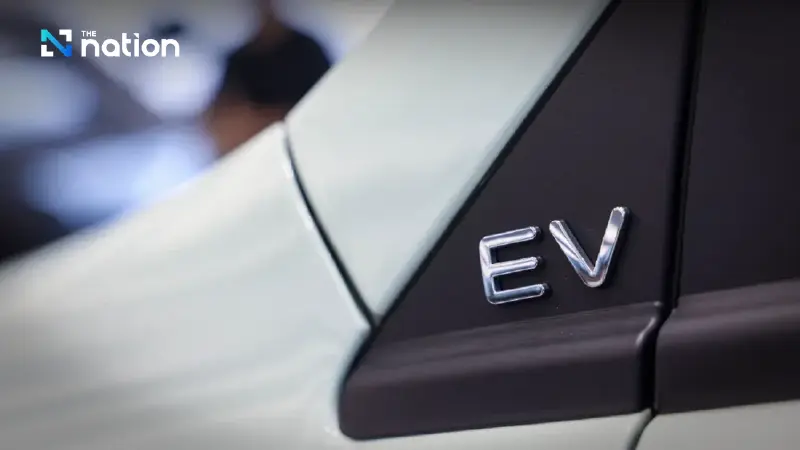


The EV board approves adjustments to EV3 and EV3.5 incentives to align with market conditions, including extended registration periods and export promotions to prevent oversupply.
Narit Therdsteerasukdi, Secretary-General of the Board of Investment (BOI) and secretary of the National Electric Vehicle Committee, announced that on Tuesday (November 25), the new EV board, chaired by Deputy Prime Minister and Finance Minister Ekniti Nitithanprapas, approved revisions to the EV3 and EV3.5 incentive schemes.
The revisions aim to align with global and domestic market conditions, focusing on two main areas: increasing flexibility for operators and mitigating the risk of oversupply in the local market.

Enhancing flexibility for the industry
The updated measures include several key changes:
- Extending the registration period for domestically produced electric vehicles until January of the following year to accommodate end-of-year sales.
- Revising the subsidy payment terms to delay disbursements if manufacturers fail to meet scheduled targets.
- Easing EV3 production compensation requirements by allowing factories under the EV3.5 scheme to participate in compensation production.
- Extending the deadline for counting foreign battery cell materials until June 2026, with a cap of 10% of the factory price.
- Establishing new guidelines for hybrid electric vehicle (HEV) manufacturers, covering carbon emission standards, local parts usage, and safety testing at the ATTRIC centre.
Mitigating market oversupply risks
The EV board approved measures to control vehicle supply, including:
- Increasing export incentives by counting each vehicle exported as 1.5 vehicles produced for compensation, thus reducing oversupply risks. Exports can be reported until June of the following year.
- Allowing manufacturers to exit the scheme by returning excise tax discounts with penalties if they have not received subsidies, thereby reducing production compensation burdens.

Continuous growth in EV registrations
The latest figures show a 59% growth in electric vehicle registrations in the first nine months of 2025, totaling 87,112 battery electric vehicles (BEVs). Registrations under the EV3 and EV3.5 schemes reached 238,183 vehicles, with 32 companies participating in EV3 and 11 in EV3.5.
As of October 2025, investments in the EV industry totalled 140 billion baht, covering BEV production, battery manufacturing, key components, and charging stations.
This includes 21 BEV projects worth 40.44 billion baht, 54 battery production projects worth 79.47 billion baht, 45 key component projects worth 10 billion baht, and 32 charging and battery-swapping stations worth 6.06 billion baht.
Narit confirmed that both Thailand's and the global EV industry's growth trajectory supports the country's ambition to become a regional EV manufacturing hub.
The updated measures will help stabilise the domestic market, provide flexibility for operators, and create new opportunities in the global automotive supply chain, especially for Thai parts manufacturers, he concluded.
