
From Carbon Villain to Green Blueprint: Inside SCG's Playbook
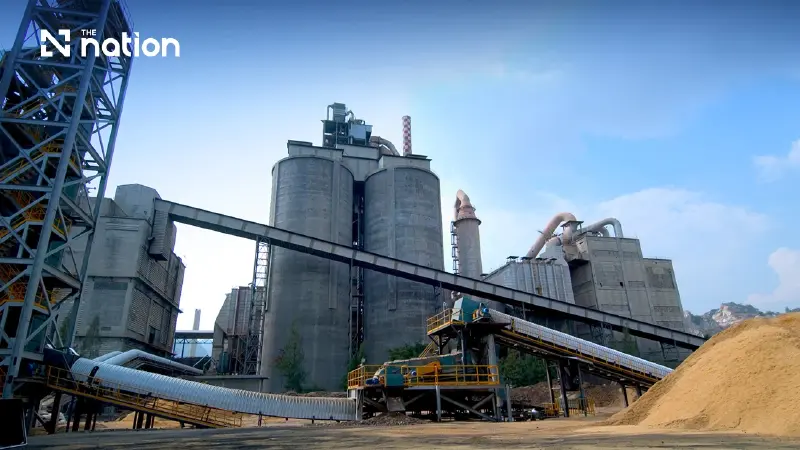


Inside the technology, alliances and workforce reforms that turned Thailand's biggest cement maker into a sustainability benchmark
- SCG's green transition is framed as a commercial survival strategy, proactively responding to international carbon regulations like the EU's Carbon Border Adjustment Mechanism (CBAM) to remain competitive.
- The company's core technological approach involves developing a multi-generational ladder of low-carbon cement products while shifting its energy mix from coal to alternative fuels and renewables.
- A key strategy involves building broad alliances, from working with industry rivals to update building codes to creating a "public-private-people partnership" in Saraburi province to align industrial, governmental, and community interests.
- The playbook includes significant investment in its workforce through internal ESG training programs, supplier education, and initiatives that empower younger employees to drive innovation.
Inside the technology, alliances and workforce reforms that turned Thailand's biggest cement maker into a sustainability benchmark.
Cement has an image problem. It is grey, dusty, and — depending on whose estimate you trust — responsible for somewhere between 5 and 8 per cent of the world's carbon dioxide emissions, more than global aviation and shipping combined.
It is also, inconveniently, indispensable. No credible substitute exists at scale for the material that pours the foundations, tower blocks and motorways of a still-urbanising planet.
That contradiction sits at the heart of a candid interview with Thammasak Sethaudom, president and chief executive of Siam Cement Group (SCG), Thailand's oldest and largest industrial conglomerate, in which he lays out a case that reads less like a sustainability pledge and more like a survival plan.
"Cement is not the problem," he argues. "The problem is high-carbon cement."
It is a distinction SCG is betting its future on, and one that will frame discussion at an upcoming roundtable examining whether the region's heaviest industries can decarbonise fast enough to remain competitive — rather than simply compliant.

A regulatory clock that does not stop
The urgency is not abstract. The European Union's Carbon Border Adjustment Mechanism (CBAM) entered its definitive phase on 1 January 2026, meaning importers of cement, steel, aluminium, fertilisers and other carbon-intensive goods must now purchase certificates reflecting the emissions embedded in what they bring into the bloc.
Free allowances for EU producers are being phased out in parallel through to 2034.

For an export-exposed economy such as Thailand's, where cement and building materials form a substantial share of industrial output, the mechanism turns a tonne of carbon into a line item that customers overseas can see, price and reject.
Thammasak says SCG saw this coming years before CBAM became fully operational and frames the company's early move into low-carbon cement, recycled plastics and paper not as goodwill but as commercial insurance.
"We are not doing this because it looks good," he says. "We are doing this because emissions data is about to matter as much as accounting data."
His warning: suppliers and smaller manufacturers who have not begun tracking Scope 2 and Scope 3 emissions risk finding themselves locked out of markets that increasingly demand carbon transparency as a condition of trade, not a marketing extra.

The maths behind "low-carbon" cement
SCG's pitch rests on a graduated technology ladder. Generation 1 low-carbon cement cuts emissions by roughly 10 per cent against conventional products; Generation 2 by up to 20 per cent; Generation 3, launched late last year, by around 40 per cent.
A fourth generation, still in development, is designed to cut emissions by as much as 90 per cent, though Sethaudom concedes it remains expensive until production scales up.
Today, he says, between 80 and 85 per cent of SCG's domestic cement sales are already Generation 1 or 2 products — cement sold at broadly comparable prices to the conventional kind, he insists, rather than as a green premium good.
The transition has meant weaning kilns off coal in favour of biomass, agricultural waste, refuse-derived fuel and industrial waste, a shift SCG says has already cut coal use by more than half, with a full phase-out targeted within a few years.

Waste heat recovery, solar farms and rooftop solar have been added to the energy mix. Whether this qualifies as transformation or merely delay depends on how quickly Generation 4 becomes commercially viable — a question the company has yet to answer with a firm date.
There is also a less flattering chapter buried in the story: SCG's low-carbon cement, once developed, could not initially be used in high-rise construction because building codes had not caught up, and a single company lobbying regulators to change standards risked being seen — fairly or not — as engineering a monopoly.
The solution was to bring the entire Thai Cement Manufacturers Association along, reshaping industry-wide standards rather than seeking a unilateral advantage. It is a reminder that decarbonising a heavy industry is as much a regulatory and political project as a technical one.

Saraburi: a sandbox with a supply chain attached
The clearest test case sits in Saraburi province, which produces more than 70 per cent of Thailand's cement and has been designated the country's first low-carbon "sandbox" city.
Rather than treating decarbonisation as a single-factory problem, SCG has stitched together a coalition spanning provincial government, the interior and energy ministries, farmers, tourism operators and rival industrial players under what Thammasak calls a "public-private-people partnership" — deliberately adding the missing "P" to the conventional PPP model.

His reasoning is blunt: an initiative perceived as benefiting only private companies will not survive contact with local politics.
Farmers who stop burning crop stubble and instead sell it as kiln fuel reduce the seasonal PM2.5 haze that depresses tourism; industry gets cheaper alternative fuel; residents get cleaner air and, SCG hopes, a reason to support rather than resist the transition.
Whether that alignment of interests holds once subsidies or attention fade is precisely the sort of durability question a roundtable audience should be pressing him on.

Digital tools, modest ambitions
SCG's digital push is notably unglamorous by AI hype standards. Energy-optimisation software applied to kiln operations saved the company several hundred million baht last year in direct costs, rising to several billion baht when combined with logistics optimisation — routing delivery trucks so that the last item unloaded is the first one loaded, cutting wasted mileage.
Robotics in ceramics manufacturing, meanwhile, produces thinner, more precise sanitary ware that uses less clay, less firing energy and generates less waste — incidentally also yielding sleeker, more minimalist bathroom fittings, though Thammasak is careful to note labour-cost savings are a secondary benefit, not the main one.
It is a useful corrective to the assumption that industrial AI is primarily about jobs; here, it is about material and thermal efficiency.

Grooming believers, not just employees
Perhaps the most revealing section of the interview concerns people rather than plants.
SCG runs a "Go Together" supplier and customer education programme and an internal Net Zero Acceleration Programme (NZAP) that trains an emerging cadre of in-house ESG specialists — intensive enough, Thammasak says, that participants now study voluntarily on weekends rather than resisting mandatory sessions, because the incentive has shifted from compliance to opportunity.
A parallel "organisation of opportunity" scheme lets younger staff pitch business ideas and run them with real budgets, internal-startup style, rather than waiting years for promotion.
University interns, meanwhile, are placed with live clients rather than classroom simulations, deliberately exposed to blunt customer feedback that a professor's kindly critique never delivers.
SCG has also begun funding scholarships to study and work in China — an unfashionable choice next to Europe or America among Thai graduates — betting on a 10-to-20-year view of ASEAN-China economic integration rather than a five-year horizon.

The uncomfortable questions still on the table
None of this settles the sector's larger dilemma. Global cement demand shows no sign of shrinking, and Thammasak himself argues the industry has "at least another 50 years" of growth ahead of it — a forecast that sits uneasily alongside a 2050 net-zero target and raises the question of whether efficiency gains can outpace volume growth.
Generation 4 cement's cost curve remains unproven at scale. And a transition built on public-private-people goodwill in one province is not automatically replicable nationwide, let alone across ASEAN economies with weaker regulatory capacity or less corporate muscle than SCG's.
Thammasak's closing appeal to the government — for public procurement to favour Thai-made green products — is itself an acknowledgement that market demand for low-carbon materials cannot yet be taken for granted, even at home.
That gap between technological readiness and market pull is likely to be one of the sharpest fault lines when policymakers, financiers and industrialists sit down at the forthcoming sustainability roundtable to ask whether Southeast Asia's heavy industries are genuinely reinventing themselves or merely buying time.
This is the sixth article in a series exploring Thailand's sustainability transition ahead of a roundtable of business and policy leaders, convening in late September to discuss how the country can turn climate pressure into competitive advantage.
