
Revenue Dept holds public hearing on 1,000-baht departure tax until Oct 29
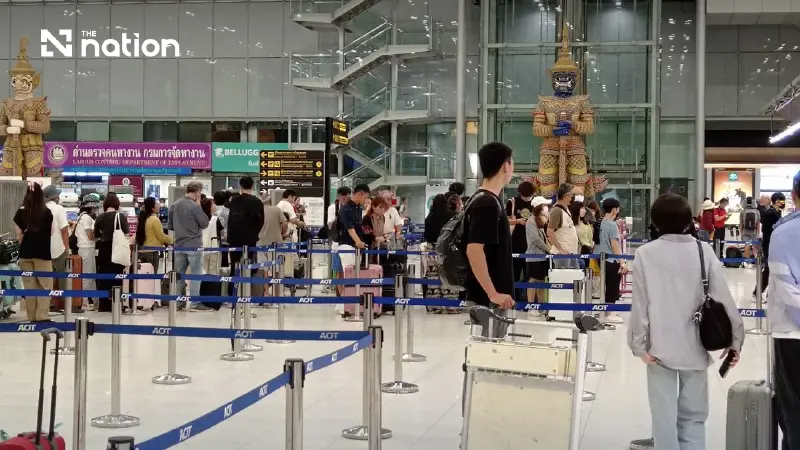


Thailand's Revenue Department is seeking views on a proposed departure tax covering all nationalities, with initial exemptions for land and sea travel.
- Thailand is holding a public consultation until October 29, 2026, on a proposed 1,000-baht departure tax for passengers leaving the country by air.
- The proposed tax would apply to all nationalities, including Thai citizens and foreign visitors, but would initially only be collected for air travel.
- Certain travelers, such as children under two, official government guests, and transit passengers, would be exempt from the levy.
- The tax has not yet been approved or implemented; if enacted, it would be collected by airlines during ticket purchase.
Thailand's Revenue Department is holding a public consultation from September 30 to October 29, 2026, on proposed legislation that would introduce a 1,000-baht tax on passengers leaving the country by air, regardless of nationality.
The proposed Departure Tax Act would require travellers to pay the levy each time they depart Thailand, subject to exemptions. Although the draft legislation would permit a maximum charge of 5,000 baht per departure, the initial rate for air travel would be set at 1,000 baht.
The consultation is being conducted through the government's central legal consultation website, law.go.th, giving the public an opportunity to comment on the proposed legislation before further consideration.
The tax has not been approved or introduced, and the consultation does not establish a date when travellers would begin paying it.


Who would pay Thailand's proposed departure tax?
Under the Revenue Department's proposal, the departure tax would apply to people of all nationalities travelling out of Thailand, including Thai citizens, foreign residents and international visitors.
The legislation would mark a change from Thailand's existing departure-tax framework, which was introduced in 1983 and originally covered Thai nationals and foreign nationals authorised to reside in the country.
For the initial phase, the government proposes collecting the tax only from passengers leaving Thailand by air. Travellers departing by land or sea would remain exempt.
Transport personnel travelling as part of their duties for a carrier, without being required to pay a fare, would also fall outside the proposed tax.
The proposed rate would be determined by ministerial regulation, subject to a statutory ceiling of 5,000 baht per departure. This ceiling would not be the initial amount charged to air passengers.


Which air passengers would be exempt from the tax?
The Revenue Department proposes using the same exemption criteria that apply to the Passenger Service Charge (PSC), meaning certain categories of air passengers would not be required to pay the departure tax.
The proposed exemptions cover:
- The King, Queen, specified members of the Royal Family and their entourages.
- The Supreme Patriarch and members of his entourage.
- Foreign heads of state and their accompanying delegations.
- Guests of the King or Queen and their accompanying delegations.
- Official guests of the government and their accompanying delegations.
- Children aged two years or younger.
- Inspection teams from the Organisation for the Prohibition of Chemical Weapons.
- Passengers travelling on Thai or foreign government aircraft, or other aircraft used for government missions.
- International transit passengers who remain within designated transit passenger areas.
- Domestic transit passengers required to remain within an airport while changing aircraft.
These exemptions would be established through ministerial regulations if the proposed legislation becomes law.
Airlines and ticket agents would collect the departure tax
Under the proposed collection system, passengers would pay the departure tax before leaving Thailand, with airlines or other transport operators and their ticketing agents collecting it alongside the fare.
This arrangement would mean eligible passengers generally pay the additional charge when purchasing their tickets rather than making a separate payment immediately before departure.
For travel arrangements where no ticket is purchased or issued, or where no fare is collected through a transport operator or ticketing agent, payment would follow procedures established by the director-general of the Revenue Department.
The proposal would also protect travellers who book before the legislation takes effect. Tickets purchased before the commencement date would be exempt from the new tax, even when the journey takes place after the law has entered into force.


Why is Thailand considering the return of a departure tax?
Thailand previously introduced a departure tax under the Emergency Decree on Tax on Departures from the Kingdom, B.E. 2526 (1983), which came into force on December 28, 1983.
The measure was originally intended to prevent excessive foreign currency from leaving Thailand and help safeguard the country's balance of payments.
Under the original system, Thai nationals and foreign nationals authorised to reside in Thailand were charged 1,000 baht for each departure by air and 500 baht for departures by land or sea.
The government subsequently introduced exemptions for land and sea travel from May 1, 1986, followed by air travel from July 1, 1991.
The Finance Ministry has now instructed the Revenue Department to reconsider departure taxation as part of the government's policy of making more effective use of available resources while maintaining fiscal discipline.
According to the proposal, the government wants greater flexibility to manage potential emergencies in the future. Unlike the earlier framework, the new legislation would extend the tax's scope to departing travellers of all nationalities.
When could the proposed departure tax take effect?
The draft legislation provides for the law to enter into force 180 days after publication in the Royal Gazette, if enacted.
The proposal would also authorise tax officials to assess and collect unpaid taxes, penalties and surcharges, issue summonses or orders, and search for or seize relevant accounts, documents and evidence.
A failure to pay or remit the required tax could result in a penalty equivalent to twice the tax due, alongside a surcharge of 1.5% per month or part of a month, calculated on the outstanding tax excluding penalties.
The draft also proposes sanctions for tax evasion or attempted evasion through false statements, fabricated evidence or other methods, as well as for obstructing officials, failing to cooperate or failing to fulfil statutory obligations. Certain violations could be subject to administrative fines.
The Revenue Department is accepting public comments until October 29, 2026. The proposed rates, exemptions and collection arrangements remain subject to the legislative process, and no new departure tax is currently being collected under the proposal.
