
Trump distances himself from Republican defeats as Democrats win Congress
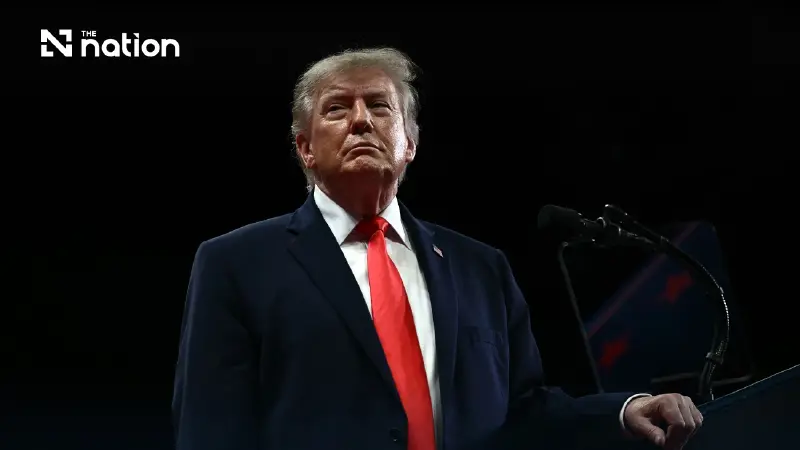


Trump rejects responsibility for Republican midterm defeats after Democrats take the US House and Senate, blaming candidates and standing by the Iran war.
US President Donald Trump has rejected responsibility for the Republican Party’s sweeping midterm election defeats, blaming unsuccessful candidates after Democrats secured control of both the House of Representatives and the Senate.
The results on November 3, 2026, marked a major political setback for Trump, leaving his administration facing a Democratic-controlled Congress for the remainder of his presidency.
Despite growing criticism from both parties that voters had rejected his record in office, Trump maintained that the outcome did not reflect dissatisfaction with his leadership.
“But I don’t view it as a hit on me,” Trump told Fox News during a live telephone interview.
He defended his administration’s economic performance and claimed that his first two years in office had delivered exceptional results.
Trump also rejected suggestions that the war in Iran, which began eight months earlier, or his tariff policies were the principal reasons for the Republican losses.
Instead, he attributed the outcome largely to the party’s candidates, arguing that they had failed to motivate voters.
Trump blames Republican candidates for defeats
Trump spent much of the final month of the campaign travelling to Republican-leaning states, encouraging supporters to turn out as though he were personally standing for election.
However, he subsequently argued that his absence from the ballot had contributed to the disappointing Republican turnout.
He told Fox News that the candidates had failed to generate sufficient enthusiasm among voters and maintained that the results would have been different had he been running.
Among the unsuccessful Republican candidates were Darline Graham in South Carolina, Ken Paxton in Texas, Michael Whatley in North Carolina and Mike Collins in Georgia.
Trump had personally selected or endorsed many of the candidates, sometimes despite objections from other Republicans.
Nevertheless, he criticised their inability to convert his support into electoral victories.
In Texas, Trump had backed Paxton over incumbent Republican Senator John Cornyn, defending the decision on the grounds of Paxton’s earlier loyalty to him.
He also suggested that favourable media coverage of Democrats, including on Fox News, had contributed to the Republican setbacks.
Although Trump acknowledged being disappointed by the results, he characterised the outcome as only a minor surprise and pointed to the historical difficulties facing the president’s party in midterm elections.
Texas governor becomes target of criticism
Trump’s criticism extended to Texas Governor Greg Abbott, who lost his re-election bid to Democrat Gina Hinojosa.
In a post on Truth Social, Trump accused Abbott of abandoning Republican principles and suggested that his political approach had contributed to the defeat.
The president also announced that he intended to offer his own analysis of why individual candidates had won or lost.
However, his remarks about assigning responsibility were inconsistent.
In a separate interview with Politico around the same time, Trump adopted a more restrained position.
“I don’t want to blame anybody,” he told the publication, describing the election as an experience from which he had learned.
Trump stands by Iran war despite electoral losses
The conflict with Iran has emerged as a central issue in discussions about the Republican defeats, alongside the economic effects of tariffs and rising consumer prices.
Trump nevertheless rejected the suggestion that the war had been the decisive factor, telling the Wall Street Journal that it represented only part of the explanation.
Asked whether he regretted launching the military campaign, he maintained that the decision had been justified.
“I would have done it again,” he declared.
His comments indicated that he had no intention of reconsidering the conflict despite criticism from Republicans who believe it contributed to the party’s poor electoral performance.
Democratic victory reshapes Trump's political agenda
With Democrats taking control of both chambers of Congress, Trump will face a substantially different political environment during the remainder of his term.
Passing legislation will require greater cooperation with Democratic lawmakers, potentially complicating efforts to advance his administration’s priorities.
Trump nevertheless insisted that his governing agenda would continue despite the election results.
He adopted a more conciliatory tone towards Democrats, indicating that he had already spoken with some Democratic politicians and suggesting that opportunities for cooperation could be explored.
Trump made similar gestures after Republicans lost control of the House in the 2018 midterm elections, although those earlier expressions of willingness to work across party lines did not produce sustained bipartisan cooperation.
For now, Trump appears determined to maintain his policy direction while placing responsibility for the Republican defeats on individual candidates rather than his own presidency.
Source: CNN
