
GISTDA tracks NASA’s Swift satellite as re-entry forecast points to Niger
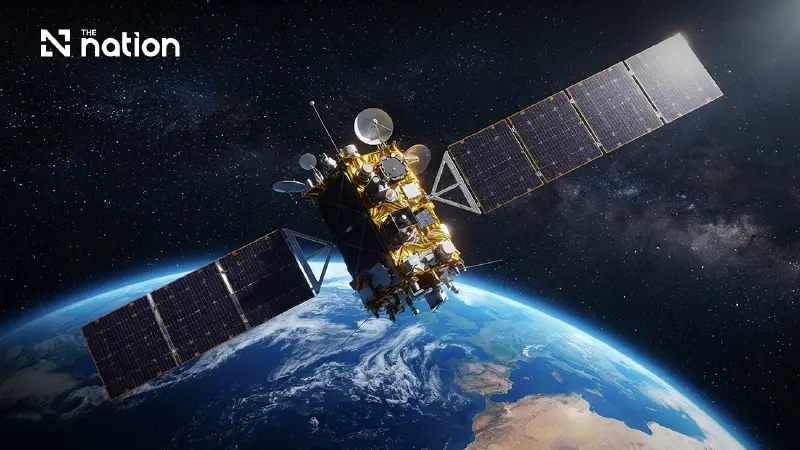


GISTDA expects NASA’s Swift observatory to re-enter Earth’s atmosphere near Niger at about 5.47pm on November 4, with very low risk to Thailand.
Thailand’s Geo-Informatics and Space Technology Development Agency (GISTDA) has forecast that NASA’s Swift satellite will re-enter Earth’s atmosphere near Niger in Africa on November 4, 2026, while assessing the risk to Thailand as extremely low.
The agency reassured the public that there was no immediate cause for concern and that people could continue their daily activities as normal.
According to GISTDA’s latest calculations, the Neil Gehrels Swift Observatory is expected to re-enter the atmosphere at approximately 5.47pm Thailand time, with a margin of uncertainty of 2.5 hours on either side.
This places the estimated re-entry window between 3.17pm and 8.17pm.
The forecast identifies an area around Niger in Africa as the possible location where surviving satellite fragments could fall, far from Thailand.

GISTDA continues monitoring satellite trajectory
GISTDA’s Space Technology Research Center (S-TREC) has been using its GARNET and ZIRCON systems to monitor Swift’s orbit and assess its projected re-entry trajectory.
The agency will continue analysing orbital data as the spacecraft approaches Earth, with the timing and potential impact area subject to change as updated information becomes available.
GISTDA pledged to inform the public promptly if its assessment changes.

Most of satellite expected to burn up
The Neil Gehrels Swift Observatory, a NASA space telescope weighing approximately 1.47 tonnes, has been steadily losing altitude because of atmospheric drag.
Most of the spacecraft’s structure is expected to disintegrate and burn up as it passes through Earth’s atmosphere.
However, some components may survive the intense heat of re-entry and reach the planet’s surface.
GISTDA maintained that the latest assessment indicated a very low likelihood of debris affecting Thailand, while emphasising that monitoring would continue until the satellite’s re-entry is complete.
