
River pollution could cost Thailand 16,000 hectares of rice land
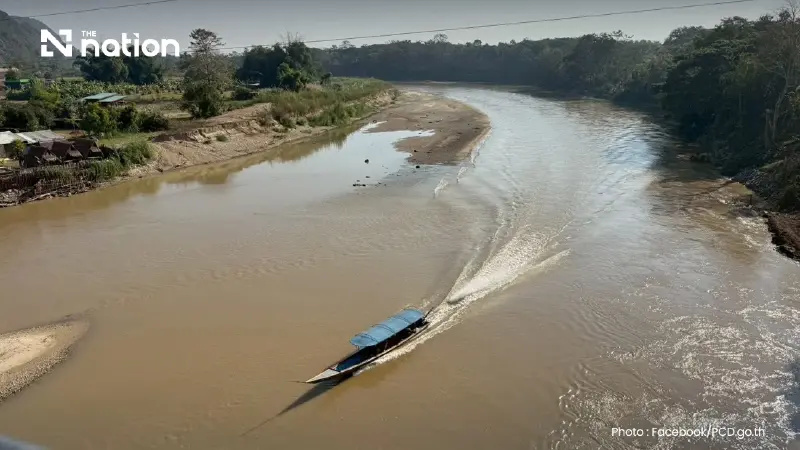


An academic urges alternative irrigation supplies, soil restoration and pre-harvest checks as heavy-metal pollution threatens northern Thailand’s rice farmland.
- Thailand is at risk of losing 16,000 hectares of rice land in the Kok, Sai, and Ruak river basins due to the use of polluted river water for irrigation.
- The continued use of this water is causing heavy metals, such as arsenic and lead, to accumulate in the soil, which could eventually make it unsuitable for agriculture.
- Tests on soil and rice samples from the affected areas have already confirmed the presence of arsenic and lead at levels exceeding safety standards.
- An academic has urged the government to provide alternative irrigation water and restore the contaminated soil to prevent the loss of this agricultural land.
Thailand could lose 16,000 hectares (100,000 rai) or more of rice-growing land unless the government provides alternative irrigation water and restores contaminated soil, a Mae Fah Luang University academic has cautioned.
Dr Suebsakul Kitnukorn, an international development lecturer at the university’s School of Social Innovation, pointed to farmland in the Kok, Sai and Ruak river basins, where continued use of polluted water could allow heavy metals to accumulate until the soil can no longer support cultivation.
Speaking to Post Today, he criticised the Ministry of Agriculture and Cooperatives for lacking coordinated policies, action plans and funding to address the agricultural consequences.

“If farmers continue using contaminated water to irrigate their fields every day, heavy metals could accumulate in the soil until, eventually, the land can no longer support agricultural production,” he cautioned.
Rice and soil samples show contamination
Wet- and dry-season rice farming depends on irrigation across approximately 9,396 hectares (58,723 rai) in the Kok basin and 9,680 hectares (60,500 rai) in the Sai and Ruak basins.
Tests of soil and rice from the 2025–26 growing season identified arsenic and lead above applicable limits at some locations.

In the Kok basin, arsenic exceeded the standard in rice-grain samples from seven of 20 locations, with excessive lead reported at one location.
In the Sai and Ruak basins, arsenic exceeded limits in soil at 11 of 20 locations and in rice grains at 16 of 20. Excessive lead was also reported at one location.
Concerns extend to fruit and vegetable production
Suebsakul cited testing between December 2025 and May 2026 that reportedly found arsenic, lead or cadmium above food-safety limits in 24 types of crops in Tha Ton and Mae Na Wang subdistricts of Mae Ai district, Chiang Mai province.
The crops named included cucumbers, Thai round aubergines, luffa gourds, mangoes, garlic, yardlong beans, Japanese sweet potatoes, passion fruit, abiu, galangal, sweetcorn, bird’s eye chillies and spring onion flowers.
Others included cauliflower, cabbage, long cucumbers, papaya, pineapples, purple aubergines, Sai Nam Phueng tangerines, long aubergines, Chinese mustard greens and cowpeas.
These riverside farms have repeatedly flooded. Sediment that once improved soil fertility now presents a potential contamination risk.
Produce from the areas is sold locally, elsewhere in Thailand and in markets including Malaysia, Singapore and Japan. Suebsakul questioned whether products could be traced after leaving farms and whether consumers could identify produce from risk areas.
Pre-harvest testing and compensation proposed
Collecting samples, obtaining laboratory analysis and receiving results can take one to two months, by which time farmers may already have harvested and sold their crops, Suebsakul explained.
“By the time the test results arrive, the produce has already been sold. What is the point of testing if the information cannot be used to prevent contaminated products from reaching the market?” he questioned.
He proposed testing produce seven days or more before harvesting and notifying farmers promptly. Crops within safety limits could be sold normally; harvesting should be suspended where limits are exceeded, alongside compensation for lost income.
“If the government can test produce seven days before harvesting and inform farmers of the results, it can protect consumers and farmers at the same time,” he explained.
“Testing must not simply involve collecting samples and reporting laboratory findings. It must provide information that leads to real decisions and effective solutions.”
He also proposed risk maps covering irrigated farms using Kok, Sai and Ruak water, non-irrigated riverside land with a history of flooding and dry-season cultivation, and farms relying on Mekong sediment and resources.
Laboratory data and geographic information systems would classify land into safe, monitoring and high-risk zones, with information accessible to farmers and consumers.
Testing should follow crop calendars: soil and water before planting; soil, water and plants during cultivation; and soil, water and produce before harvesting.
Five-year plan and provincial laboratories
Suebsakul called for a national committee involving government agencies, academics, civil society, farmers and consumer organisations.

A five-year plan should cover contamination monitoring in soil, water, produce and aquatic animals; pre-harvest checks; farmer compensation; soil restoration; alternative water supplies; and coordinated budgets and agency operations.
Testing centres in Chiang Rai and Chiang Mai would reduce reliance on central laboratories. Public disclosure of results was also essential to restoring confidence, he argued.
Pollution concerns followed severe flooding
The crisis attracted attention after floods brought huge quantities of mud to Mae Sai and Chiang Rai in September–October 2024. The Kok and Sai remained unusually muddy through the cooler and hotter months, prompting suspicion about upstream mines in Myanmar’s Shan State.

In mid-March 2025, residents of Tha Ton, where the Kok enters Thailand, demanded an investigation. The Pollution Control Department, under the Ministry of Natural Resources and Environment, subsequently found some contaminants above standards, and Chiang Rai prohibited swimming and recreational activities in the river.
Riverside food stalls and floating raft businesses from Tha Ton to the Kok–Mekong confluence were affected, with some unable to resume normal operations.
“Songkran is an important income-generating season for local people,” Suebsakul recalled.
“But when people lost confidence in the water quality, they were afraid to swim or use the floating rafts, and those businesses were immediately affected.”
Monitoring later expanded to the Sai, Ruak and Mekong. Water is tested monthly and sediment every two months, allowing time for collection, drying and analysis.
Persistent sediment can cover aquatic habitats, spawning grounds and shelter, while reduced sunlight affects aquatic plants.
“We are no longer talking only about heavy metals in the water or whether people should avoid eating fish organs. The river ecosystem is on the verge of dying,” he cautioned.
Declining aquatic populations threaten fishing incomes and food supplies, while restrictions on river activities undermine tourism.
The Department of Health, under the Ministry of Public Health, advises avoiding fish organs and bottom-dwelling prawns and shellfish, which can accumulate heavy metals from sediment. It also recommends avoiding repeated consumption of the same fish species over prolonged periods.
Alternative tap-water source planned
The Provincial Waterworks Authority’s Chiang Rai branch draws raw water from the Kok to serve approximately 40,000 households, or 120,000 people based on three people per household.
Tests of samples collected from consumers’ homes detected arsenic and barium below applicable limits.
Nevertheless, concerns about persistent turbidity and long-term contamination prompted plans to change the raw-water source. A THB2 billion fiscal 2027 budget has been approved for a move to the Mae Lao River and a new water-treatment plant.
Suebsakul argued that inaction could further damage ecosystems and tourism, undermine confidence in northern produce and intensify pressure on farmers’ prices and market access.
“If we do not act now, the consequence may not simply be having no fish left to eat. We could lose at least 16,000 hectares of the country’s rice-producing land,” he concluded.
Source: Post Today
