
Arsenic exceeds limit in nine northern Thai groundwater samples
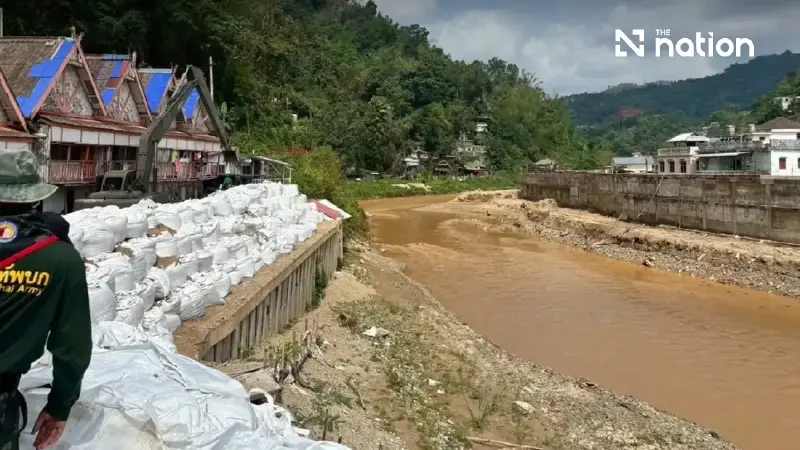


Community filtration systems are planned at 11 sites in Chiang Mai and Chiang Rai provinces, alongside observation wells and local water quality monitoring.
- Nine of 133 groundwater samples from Chiang Mai and Chiang Rai provinces were found to have arsenic levels exceeding the safety standard of 0.01 milligrams per litre.
- The testing is part of an ongoing monitoring program in the Kok, Sai, and Ruak river basins, where arsenic contamination risks were previously identified.
- The source of the arsenic is believed to be naturally occurring minerals in soil and rock that dissolve into the groundwater.
- In response, authorities are installing community reverse osmosis (RO) filtration systems at 11 sites and drilling new observation wells to track the contamination.
Nine of 133 groundwater samples collected in Chiang Mai and Chiang Rai provinces in 2026 contained arsenic above the standard of 0.01 milligrams per litre, according to results released by the Department of Groundwater Resources.
The remaining 124 samples did not exceed the limit.
The testing forms part of continuing inspections, monitoring and restoration following the identification of arsenic contamination risks in the Kok, Sai and Ruak river basins and their tributaries in northern Thailand.
The Bureau of Groundwater Conservation and Restoration, under the Department of Groundwater Resources and the Ministry of Natural Resources and Environment, is coordinating the proactive response with the Groundwater Analysis Division and the Bureau of Groundwater Resources Region 1 (Lampang).
Inspections in 2025 covered groundwater quality and village water supply systems at 18 sites.
Wells at four locations where arsenic exceeded the standard were cleaned by air flushing and rehabilitated.
For 2026–2027, the department is preparing to install community reverse osmosis (RO) filtration systems at 11 sites and a water supply system for large agricultural plots at one site.
The work forms part of a long-term groundwater development programme to strengthen water security for communities and agriculture.
Arsenic is an element found naturally in minerals and sediments within soil and rock layers.
Changes in underground geochemical conditions can cause these minerals to dissolve, releasing arsenic into groundwater.
Contaminated surface water can also seep through soil into shallow aquifers, which require particular monitoring because communities commonly use wells drilled to these depths.
Researchers need to study the relationship between surface water and groundwater to identify the actual source of contamination and assess risks accurately.
The department also plans to drill additional observation wells near surface water sources to monitor water quality changes in real time and track arsenic movement.
The aim is to help prevent contamination from spreading more widely into shallow aquifers.
The long-term monitoring plan includes cooperation with local administrative organisations, provincial public health offices and village health volunteers to give communities basic knowledge of water quality monitoring and help them issue timely warnings.
Residents of Chiang Mai and Chiang Rai provinces can follow water quality alerts from local government agencies.
To reduce long-term health risks, they should choose water for drinking and household use that has passed through filtration systems meeting standards or been certified safe by the Department of Groundwater Resources.
