
Thailand to establish team to address pollution from Myanmar mines
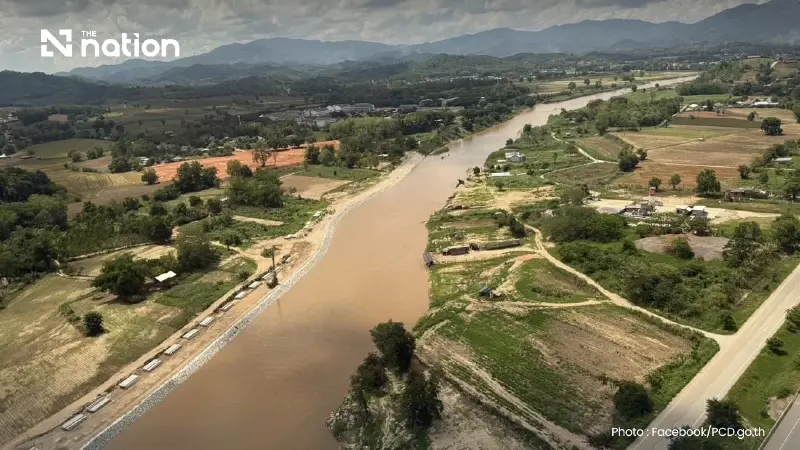


Thailand awaits clarity from China and Myanmar on access to pollution sources, with cooperation also needed from those controlling the area.
Thailand plans to assemble a team to examine contamination from mining in neighbouring countries and identify the quickest way to address the problem, National Security Council (NSC) secretary-general Gen Chaipruak Doungprapat said. Speaking at Government House at 9.45am on November 17 before a Cabinet meeting, he outlined discussions involving Thailand, China and Myanmar. Chaipruak had raised the issue with Chinese authorities during an earlier visit to China, while the prime minister had spoken to his Chinese counterpart and the deputy prime minister and foreign minister had held talks with Myanmar. The team would visit the area to examine the sources of contamination, including industrial plants. Action at policy level was being accelerated to resolve the problem urgently.
Local-level talks with Shan State about the sources of mining pollution were possible, Chaipruak said, although it remained uncertain whether those involved would act on Thailand’s requests. The discussions would also need to cover possible measures. A proposal for companies in Thailand to stop accepting minerals from Myanmar for export was one option, but might not be sufficient. According to the information available to him, mining operations had systems to treat wastewater before discharge, but the systems were substandard. There were also many plants in the minerals industry, meaning that action at large facilities would still leave smaller plants to be addressed. Tackling the problems at large mines would therefore require a sizeable mobilisation of the relevant organisations.
Chaipruak had no information about reports of another large mine and stressed that the immediate priority was to address the problems already causing harm. Prime Minister Anutin Charnvirakul had also requested cooperation during the Chinese premier’s visit to Thailand. The issue involved national interests, and China needed to consider the details, but would cooperate in resolving the problem, according to the NSC chief. What Thailand could do was urgently identify measures to address the problem, because people were suffering and might be unable to wait, and the government could not wait either. He would try to do as much as possible.
“Our side is ready to go in, examine the situation and coordinate if the other side is ready, because we understand the hardship people are facing. Families of military personnel also live along the border in that area. Everyone is facing hardship.”
Cooperation was essential to the government’s efforts to address the problem amid public concerns over food security and toxic contamination of food and drinking water, the security chief said. Thailand was continually following up on when the other side would be ready to allow Thai participation on the ground, with clarity still needed from Myanmar and China. Resolving the problem would be difficult without all three sides working together. Those controlling the area also needed to cooperate.
Thailand would have to turn to other measures if China and Myanmar did not cooperate. Access to the source was needed first to establish what was causing the problem and identify a targeted solution. Speaking before that would provide only a broad picture and would not reassure the public. Reporters also raised the issue of factories having to pay ethnic minority groups and the Myanmar government as a possible obstacle to gaining access for inspections. Chaipruak maintained that, although the task was difficult, it still had to be carried out.
