
Thailand takes ‘Made with Thailand’ pitch to Japanese investors
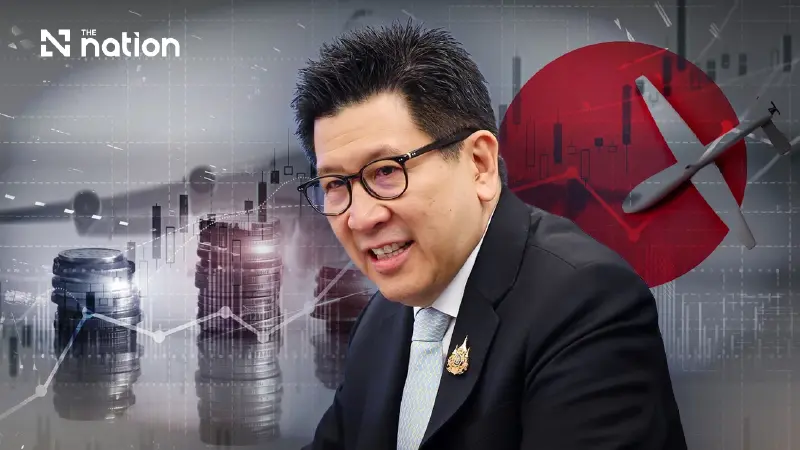


Ekniti Nitithanprapas leads a Thai mission to Japan to attract investment in future vehicles, advanced electronics and digital infrastructure under ‘Made with Thailand’.
- A Thai government and business delegation is visiting Japan to promote a new investment strategy called 'Made with Thailand'.
- This new approach shifts the focus from traditional manufacturing to joint industrial development and collaboration with Japanese businesses.
- The pitch is targeting investment in priority sectors, including next-generation automotive manufacturing, advanced electronics, and digital infrastructure.
- Tax reforms are being used to incentivise Japanese companies to expand production in Thailand and increase their use of locally-sourced components.
Deputy Prime Minister and Finance Minister Ekniti Nitithanprapas is leading a Thai government and business delegation to Japan from November 16–20 to strengthen industrial partnerships and attract investment in sectors considered vital to Thailand's future economic growth.
The visit forms part of the government's investment-led growth strategy, with a particular focus on developing new industries through closer cooperation with Japanese businesses.
Organised by the Finance Ministry, the delegation includes representatives of the Thailand Board of Investment (BOI), business leaders from the Federation of Thai Industries, the Thai Bankers' Association and the Thai Chamber of Commerce, alongside representatives from seven priority industries.

Ekniti regards the mission as an important step towards what he describes as Thailand's "second take-off", a new phase of economic development driven by investment and industrial transformation.
Central to this approach is a shift from the traditional "Made in Thailand" manufacturing model associated with economic cooperation in 1985 towards "Made with Thailand", which places greater emphasis on developing industries jointly with Japan.
The initiative aims to establish a stronger, more sustainable economic partnership by encouraging both countries to collaborate on new technologies and industrial capabilities.
Of the seven target sectors, three have been identified as priorities for the visit: next-generation automotive manufacturing, advanced electronics and digital infrastructure.
Ekniti also plans to meet Japanese investors personally to express appreciation for their continued investment in Thailand following changes to the country's automotive excise tax structure.
The revised tax arrangements are intended to encourage Japanese manufacturers to expand production in Thailand and increase their use of locally manufactured components.
High-level discussions on industrial cooperation
The delegation is scheduled to meet senior Japanese government officials and business representatives, including Japan's economy, trade and industry minister and finance minister.
Discussions with the Japan Business Federation (Keidanren), a leading business organisation comparable to Thailand's Joint Standing Committee on Commerce, Industry and Banking, will focus on strengthening economic and industrial cooperation.
The programme also includes meetings with a semiconductor industry association to advance digital and artificial intelligence (AI) supply chains, as well as discussions with a working group involved in the space economy.
Separate meetings are planned with major Japanese automotive manufacturers and electronics companies that have expressed an interest in discussions with the Thai delegation.
Bringing Thai businesses into Japanese supply chains
Beyond attracting foreign investment, Ekniti wants the economic benefits of the mission to extend to Thailand's small and medium-sized enterprises (SMEs) and grassroots economy.
An important objective is to help Thai businesses become part of Japanese supply chains across Tier 1, Tier 2 and Tier 3 supplier networks.
The government also intends to encourage technology transfers that would strengthen domestic industrial capabilities and improve the skills of Thai workers.
As part of these efforts, the delegation will meet executives from LINE to explore how digital platforms and technology could improve connections between smaller Thai businesses and potential commercial partners.
The discussions will examine ways to help SMEs and grassroots enterprises gain better access to markets and procurement opportunities.

Tax reforms designed to encourage domestic investment
Santitarn Sathirathai, an assistant minister attached to the Finance Ministry, outlined the government's broader approach to economic development, which combines investment-led growth with measures to help businesses and smaller operators adapt to changing economic conditions.
He identified two major policies being advanced by the ministry to address current challenges.
The first involves taxing goods sold through e-commerce channels, a measure intended to provide some breathing space for Thai SMEs facing competition from low-priced imported products.
The second centres on restructuring excise taxes to support the transition towards modern industries while encouraging businesses to invest more in Thailand.
Santitarn emphasised that the excise tax reforms were designed to serve a broader economic purpose than simply increasing government revenue.
The revised structure is intended to create stronger investment incentives, particularly as the automotive industry moves towards next-generation technologies, including electric vehicles.
Under the approach, companies that establish factories in Thailand, manufacture products domestically and use locally sourced components and raw materials will be eligible for greater tax benefits.
Businesses that expand their existing investments will also receive additional incentives.
By linking tax advantages to manufacturing and investment decisions, the ministry aims to encourage companies to increase domestic production, strengthen local supply chains and support Thailand's transition towards higher-value industries.
