
Thai Navy weighs fresh tender for 17bn-baht frigate project
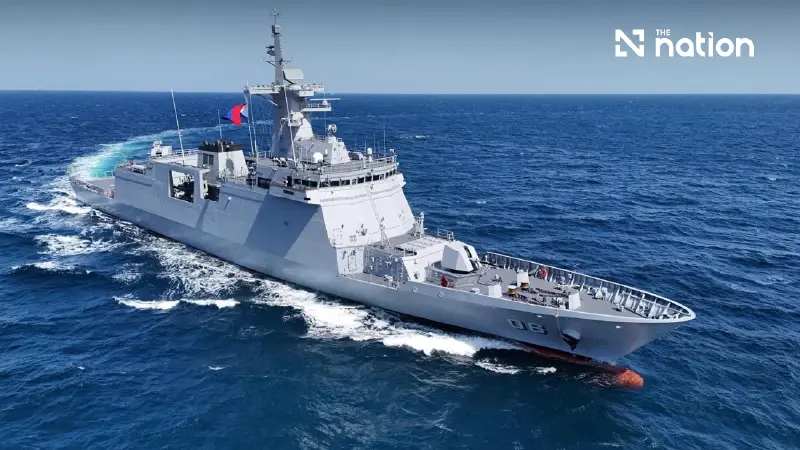


A Thai navy source expects a fresh frigate tender to take about six months as officials examine a reported order to restart procurement.
- The Royal Thai Navy is considering restarting its 17-billion-baht frigate procurement process following a reported order from an appeals committee.
- The order to cancel the current round came after the committee found merit in a complaint filed by the unsuccessful Thai Frigate Building Consortium.
- This decision puts the initial selection of South Korea’s Hanwha Ocean, which had offered to build the frigate for 16.73 billion baht, back under review.
- A new procurement process, which would include revising the terms of reference, is estimated to take about six months to complete.
The Royal Thai Navy is reviewing a reported order to restart its 17-billion-baht frigate procurement, with a navy source estimating that a fresh process could take about six months.
Bangkok Biznews reported that the Appeals and Complaints Committee had ordered the current procurement round cancelled after finding merit in a material point raised by the Thai Frigate Building Consortium. South Korea’s Hanwha Ocean had been selected with a 16.73-billion-baht offer.
Navy commander-in-chief ADM Nares Wongtrakul said on November 16, 2026, that he had asked officials to gather information, but had not personally seen the formal letter.
His preliminary understanding was that the navy had been instructed to review the procurement. He had yet to examine the full recommendations or issues raised, and would proceed under the prescribed rules and procedures.
Consortium appeal prompts reported restart order
The appeals committee reportedly upheld a material point raised by the Thai Frigate Building Consortium after examining five unsuccessful bidders’ appeals and the work of the navy’s procurement committee, which had used the selection method.
According to the report, it found insufficient grounds to uphold the appeals of Singapore Technologies Engineering Ltd.; TAIS Gemi İnşa ve Teknoloji A.Ş.; Askeri Fabrika ve Tersane İşletme A.Ş. (ASFAT); and Hyundai Heavy Industries Co., Ltd.
The consortium’s appeal raised an issue that significantly affected the procurement, according to the report.
The committee therefore ordered the navy to cancel the current round and conduct a new process in accordance with the relevant procedures, citing Section 119, paragraph two, of the Public Procurement and Supplies Administration Act of 2017.
The reported ruling would require the selection process to begin again, bringing Hanwha Ocean’s selection back under review.
New procurement could take about six months
A navy source told Bangkok Biznews that ADM Nares had anticipated possible problems before becoming commander-in-chief, but had needed to await the appeals committee’s ruling before commenting publicly.
The source described preparations already made for the next stage, including assembling a team, revising the terms of reference (TOR) and planning a fresh procurement round expected to take about six months.
Navy chief of staff Vice Admiral Tepparit Laplua had been assigned to chair the project management committee, according to the source.
The report identifies a review of the earlier procurement as a key step in establishing whether there was misconduct, a possible offence under Section 157 of the Criminal Code, corruption or bid-rigging.
It notes that officials could proceed through normal procedures if no such wrongdoing were found. Cancellation following an appeal would not, by itself, establish that the original committee had committed an offence.
The report also distinguishes Prime Minister and Interior Minister Anutin Charnvirakul’s signature acknowledging the procurement outcome from the signing of a purchase contract. His acknowledgement therefore needed to be considered separately from the contractual process and the responsibilities of the committees involved.
Former navy chief defended bidding rules
Then navy commander-in-chief Admiral Pairote Fuangchan defended the procurement process at a September 18 briefing, when he announced Hanwha Ocean’s selection. The 16.73-billion-baht selection value was within the project’s 17-billion-baht budget.
Hanwha Ocean was the only bidder to pass the qualification requirements, prompting questions over transparency and allegations that the specifications had been tailored to favour a particular company.
ADM Pairote rejected those allegations, maintaining that the process was transparent and complied with public procurement legislation.
He described the project as important to national security and acknowledged the need to explain how substantial public funds were being spent. Questions raised by the public had to be answered with facts to prevent confusion about the procurement process, he argued.
The navy had deliberately imposed demanding specifications above general standards to secure strong combat capability and protect the personnel who would operate the vessel, ADM Pairote explained.
He set out five principles for those overseeing the procurement:
1. Compliance with legislation and government regulations.
2. Transparency and scrutiny at every stage.
3. Fair and equal treatment of all bidders.
4. Value for money throughout the vessel’s service life.
5. Maximum benefit for Thailand, including technology transfer and support for domestic industry.
Observers from an anti-corruption organisation were involved under an integrity pact to monitor the process from start to finish.
ADM Pairote maintained that every bidder had received the same conditions and opportunities to seek clarification. Companies that failed essential requirements could not submit additional documents or amend their proposals after bids were opened, because doing so would prejudice bidders that had complied fully.
He also insisted that the committee’s decisions rested on facts, information and verifiable evidence, without interference, and that its members had acted honourably and remained accountable to the law and the country.
Unsigned contract leaves questions over handover
ADM Pairote did not sign the frigate purchase contract before retiring on September 30.
Bangkok Biznews suggested that he might have been leaving the decision to his successor or awaiting the outcome of unsuccessful bidders’ appeals. Neither explanation was established as the reason for the unsigned contract.
The report also cited discussions between ADM Pairote and ADM Nares before the handover. ADM Pairote reportedly urged his successor to follow the law and relevant regulations, reassuring him that there was no matter concerning ADM Pairote himself beyond the normal process.
The preparations attributed to ADM Nares prompted the newspaper to question whether both commanders had anticipated problems with Hanwha Ocean’s selection before the September briefing, and why the matter had been left for the incoming commander to resolve.
The article also raised the possibility of internal navy politics and pressure on groups behind the selection. Those suggestions, including suspicions of undisclosed interests, were presented as speculation, with Pairote’s denial of interference remaining part of the account.
The report also cited speculation that a revised procurement could cover two frigates together, instead of the single vessel originally planned. No confirmed decision to expand the purchase was identified in the report.
Source: Bangkokbiznews
