
Nvidia board not considering Huang return as petition tops 180,200, sources say
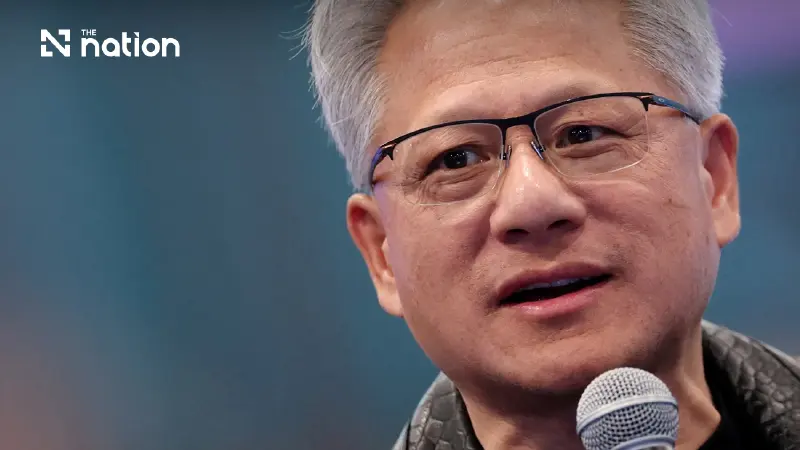


Elon Musk backs Jensen Huang’s return to Nvidia, while investors are divided over the risks of reinstating him before investigations conclude.
- According to sources, Nvidia's board is not considering reinstating former CEO Jensen Huang.
- The board's decision comes despite a petition for his return surpassing 180,200 signatures, with support from prominent tech executives like Elon Musk.
- Huang resigned following reports of alleged affairs, including one with a businesswoman whose potential connections to Chinese intelligence are under investigation.
- Some investors and governance specialists oppose his return, citing potential legal and reputational risks for the company while investigations are ongoing.
Nvidia’s board is not considering reinstating Jensen Huang as chief executive, three people told Reuters on November 16, 2026, despite a campaign for his return attracting more than 180,200 signatures and support from prominent technology executives.
“The Nvidia board is not considering bringing Jensen back,” one person familiar with the matter told Reuters.
Huang resigned from the artificial intelligence (AI) chipmaker on November 12 following reports of alleged affairs with employees, including one who reported directly to him. He also acknowledged an affair with Chinese businesswoman Alice Huang, whose possible intelligence connections remain under investigation.
Two sources familiar with the matter told Reuters that US intelligence agencies were examining the extent of Alice Huang’s relationship with China’s Ministry of State Security and what information she might have passed to Beijing.
Evidence gathered so far suggested she was likely an intelligence asset who shared information, rather than a fully trained spy, the sources said.
Campaign attracts Musk and other technology leaders
The Stand With Jensen campaign lists SpaceX and Tesla chief executive Elon Musk, Replit chief executive Amjad Masad and Epic Games chief executive Tim Sweeney among its signatories.
More than 8,800 signatories identified themselves as current Nvidia employees and more than 94,000 as shareholders. The website cautioned that professional affiliations were self-reported and had not been independently verified.
The campaign describes its supporters as current and former employees, business partners, shareholders and others backing the company. Its open letter calls for Huang’s reinstatement while an independent investigation continues.
“We write with gratitude for Jensen Huang and with a clear demand to the Board: bring Jensen back while an independent investigation establishes the facts,” the letter reads.
US President Donald Trump also indicated that he would not object to Huang returning.
“I think he learned a big lesson,” Trump said on November 16.
The Washington Post reported that Trump’s disclosed trades suggested he held between US$13 million and US$62 million in Nvidia shares at the end of August, based on its review of his financial disclosures.
The Trump administration also announced on November 16 that it would further restrict China’s access to advanced AI chips as Trump headed to China for talks with President Xi Jinping.
Investors disagree over the risks of reinstatement
Some prominent Nvidia shareholders, including Atreides Management’s Gavin Baker and Altimeter Capital Management chief executive Brad Gerstner, have urged the company to avoid rushing into a replacement before the facts are established.
Other investors and governance specialists are concerned that reinstating Huang while investigations remain unresolved could create further legal and reputational risks.
An institutional investor who holds Nvidia shares told Reuters anonymously that they would be cautious about his return, pointing to Apple and Microsoft as companies that had prospered after the departure of influential chief executives.
Independent technology researcher Richard Windsor expected large institutional investors to resist reinstatement because of the potential legal exposure and uncertainty.
“They’re very risk-averse,” Windsor said.
His own assessment was more favourable to a comeback: he believed Nvidia shareholders would ultimately benefit from Huang’s return because of the relationships the former chief executive had built with customers and suppliers.
US Treasury Secretary Scott Bessent has called for Nvidia to recruit its next chief executive from outside the company, arguing that it needs a substantial overhaul following Huang’s departure.
Analysts at T. Rowe Price similarly suggested that the leadership transition could require changes to Nvidia’s organisational structure, beyond appointing a new executive.
Shares fall ahead of quarterly results
Nvidia’s shares closed more than 4% lower on November 16, ahead of its third-quarter results scheduled for November 17, as uncertainty over Huang’s future complicated the search for a successor.

The company had lost US$800 billion in market value since news of Huang’s intimate relationship emerged.
Nvidia shares were valued at 11.54 times earnings, down from 15.59 times and below the Nasdaq Composite average of 20.8 times, according to Reuters.
Huang’s departure has also unsettled an AI industry he helped finance. The campaign has underscored the challenge of managing a leadership transition at a company whose founder retains strong loyalties among employees and shareholders, alongside extensive relationships across Silicon Valley, Taiwan’s supply chain and Washington.
Taiwan supporters highlight Huang’s wider influence
Taipei 101, Taiwan’s tallest skyscraper, displayed messages including “Taiwan Loves Jensen” on November 16 as support for Huang spread beyond Nvidia’s workforce and investors.

Born in Tainan before moving to the United States as a child, Huang has acquired celebrity status in Taiwan, where enthusiasm for him has become known as “Jensanity”.
Nvidia depends on Taiwan Semiconductor Manufacturing Company (TSMC) to produce its most advanced chips, alongside a wider supplier network manufacturing the chips and systems supporting the AI industry.
For many Taiwanese, Huang’s departure represents the loss of a prominent advocate whose influence helped place the island at the centre of the global AI expansion and reached beyond technology.
Jimmy Yang, a 42-year-old marketing worker, described the departure as a loss for Taiwan’s local businesses and tourism as well as its technology sector. He hoped Huang would eventually return to Nvidia.
“His private life is his own choice,” Yang said.
“But whether it’s the night market economy he’s driven or his help for the tech industry, it has been massive.”
