
ASEAN leaders must turn the Manila and APEC summits into action on transboundary pollution


Back-to-back summits this week offer middle powers a golden opportunity to act collectively in defence of their citizens and the environment.
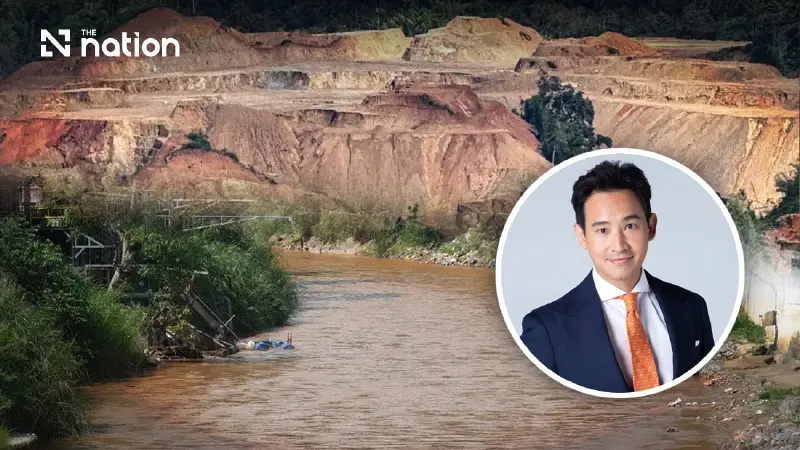
Along the Kok River in northern Thailand, families are confronting a disturbing question: Is the water that has sustained their communities for generations still safe?
Tests have detected arsenic contamination in rivers flowing from Myanmar into Thailand, where unregulated mining has expanded rapidly. Thailand's 2026 national health report documented arsenic in urine samples from two young children living along the river. Elsewhere in Southeast Asia, smoke from forest fires continues to cross national borders, endangering communities far from where the burning began.
These crises expose a fundamental failure of regional governance: pollution crosses borders, while accountability too often stops at them.
This week presents a rare opportunity to change that.
Southeast Asian leaders are gathering in Manila for the ASEAN Summit from November 15 to 17, followed by the Asia-Pacific Economic Cooperation (APEC) leaders' meeting in Shenzhen on November 18 and 19.
It could be a golden week for regional cooperation, with ASEAN strengthening accountability among neighbouring countries and APEC addressing the global economic forces driving environmental degradation. The convergence of these summits offers political momentum that neither forum could generate alone.
The stakes extend well beyond environmental protection.
Research by the Stimson Center has identified more than 2,800 locations of unregulated rare-earth and other mining activities across mainland Southeast Asia. Many are situated along rivers that sustain agriculture, fisheries and entire communities.
In Thailand, contamination of the Kok, Sai and Ruak rivers has raised serious concerns about drinking water, food safety and livelihoods. Much of the suspected upstream pollution originates in conflict-affected areas of Myanmar, where environmental oversight is weak and enforcement difficult.
These local crises are unfolding against a much larger geoeconomic transformation.
Critical minerals have become strategic assets in the contest for technological supremacy. The United States, China and other major economies are racing to secure supplies essential to electric vehicles, renewable energy, advanced manufacturing and artificial intelligence.
Rare-earth magnets are vital to wind turbines, electric vehicles and robotics. Other strategic minerals, including gallium and germanium, are important to semiconductors and advanced electronics. As the International Energy Agency has warned, concentrated mineral supply chains have become a growing source of economic and national security vulnerability.
The competition for these resources creates powerful incentives for extraction, including in regions where environmental safeguards are inadequate.
Here lies an uncomfortable contradiction. The world is pursuing cleaner energy and more advanced technologies, yet poorly regulated extraction can leave behind poisoned rivers, degraded ecosystems and lasting health risks.
What good is a clean-energy transition if the pursuit of its raw materials leaves communities with contaminated water?
The economic benefits travel through international supply chains. The environmental costs remain with communities that often have little influence over those chains.
This is why transboundary pollution must become a matter of economic governance, rather than remain confined to environmental diplomacy.
ASEAN has already confronted a similar challenge through recurring transboundary haze.
At the Manila summit on November 15, Singapore Prime Minister Lawrence Wong proposed expanding an existing Singapore-Indonesia task force into an ASEAN-wide platform for sharing information and coordinating action against companies responsible for haze-causing fires.
It is a practical proposal whose underlying principle should extend beyond forest fires.
If ASEAN governments can cooperate to identify companies responsible for transboundary haze, why should they not investigate mining operations suspected of contaminating rivers across national borders?
The region already has an ASEAN Agreement on Transboundary Haze Pollution. Indonesia has established the secretariat of a regional coordinating centre, although the institution has yet to become fully operational.
ASEAN should build on this experience by establishing common water-testing standards, sharing environmental monitoring data, coordinating investigations and publicly disclosing contamination findings. Governments should also develop mechanisms for tracing responsibility across borders and ensuring affected communities receive timely health information.
Such cooperation need not compromise sovereignty. Better evidence and coordinated enforcement would strengthen each government's ability to protect its own citizens.
Yet regional monitoring cannot resolve a problem whose economic drivers are global.
That is where APEC has a crucial role.
China, this year's host, occupies a central position in critical-mineral processing and manufacturing. Japan, South Korea, Canada and the United States also have substantial interests in securing reliable supplies for their industries.
Despite their geopolitical differences, these economies share an interest in stable, transparent and responsible supply chains.
APEC cannot impose binding environmental regulations on its members. It can, however, advance common standards for responsible mineral sourcing, encourage traceability and strengthen corporate due diligence.
Importers, manufacturers and investors should be expected to establish where minerals originate, under what conditions they are extracted and whether suppliers meet credible environmental standards. Procurement policies and financing requirements could help turn those expectations into commercial practice.
Responsible sourcing should be understood as an investment in economic security. Supply chains exposed to environmental disputes, regulatory uncertainty and community opposition are neither resilient nor sustainable.
There is also an opportunity to sustain this agenda beyond the immediate summits.
The Philippines chairs ASEAN in 2026, followed by Singapore in 2027 and Thailand in 2028. These successive chairmanships could provide the continuity so often missing from regional environmental diplomacy.
The Philippines can initiate stronger cooperation on monitoring and accountability. Singapore can build on its experience with transboundary haze legislation and Wong's proposal for corporate accountability. Thailand, directly affected by toxic river pollution, can carry the agenda forward through implementation and measurable commitments.
The obstacles are considerable. Mining in conflict-affected Myanmar is particularly difficult to regulate. Governments differ in enforcement capacity, while commercial interests may resist scrutiny.
These difficulties make collective action more urgent. No country can adequately protect its citizens when extraction, investment, trade and environmental damage span multiple jurisdictions.
The Manila and Shenzhen summits should therefore produce complementary commitments: an ASEAN-led framework for transboundary environmental accountability and an APEC-backed initiative for responsible mineral supply chains. Both need clear responsibilities, measurable targets and implementation timelines.
The larger question concerns the balance of power in the global economy.
The United States and China together account for more than 42% of global economic output. Their competition for dominance in artificial intelligence, clean energy and advanced technologies will continue to shape markets and supply chains far beyond their borders. The environmental consequences will also extend well beyond them.
For middle powers, the challenge is how to exercise collective influence in an economic order increasingly shaped by great-power rivalry. Individually, their leverage may be limited. Together, they can insist that economic competition does not come at the expense of their citizens, natural resources and future generations.
The objective is not to obstruct technological progress, but to ensure that those who benefit from it bear responsibility for its costs.
This golden week in Manila and Shenzhen will test whether middle powers can turn their shared vulnerabilities into collective strength. The decisions taken now could shape their economic sovereignty, environmental security and public health for years to come.
