
Thai Light Technology is Unlocking the Over 16,000-Year-Old Malaysian Artifacts
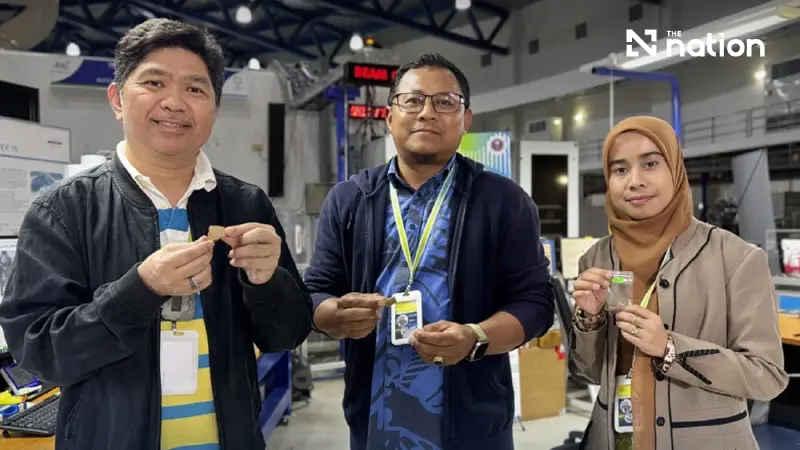


Thailand cooperates with a Malaysian research team to analyse over 16,000 years of artefacts, marking a significant milestone in the use of advanced light technology for archaeological research.
Aiming to discover molecular insights that conventional laboratories cannot analyse, a Malaysian research team analysed samples recovered from limestone caves in the Nenggiri Valley, located over 200 kilometres from Kuala Lumpur.
Researchers from the University of Putra Malaysia (UPM) brought the artefact samples to the Synchrotron Light Research Institute (SLRI) in Thailand, sourced from a major excavation site where 16 human skeletons were discovered in a fetal position, a characteristic burial form of the pre-Neolithic period.


"Our research team is focusing on identifying the components and functional groups from the infrared spectrum data, including mapping the spatial distribution of molecules.”
“This will allow us to reconstruct the dietary patterns and lifestyles of humans in the past, particularly during this pre-Neolithic site, which is estimated to be around 160 years old," Professor Mohd Busyaruddin Bin Abdul Rahman, a chemistry expert leading the analysis, explained.

The SLRI was utilised to analyse the samples at a chemical and molecular level, enabling the detection of phosphates and other embedded minerals.
Initial findings showed that the pottery clay mainly consists of silica, kaolinite, and quartz, which changed chemically due to heat during firing or prolonged burial.
“With over 30 years of research experience, I use synchrotron techniques to analyse, and I want to inspire the next generation of scientists in the region and beyond to utilise advanced light sources for significant groundbreaking discoveries and for elevating international research collaboration between Malaysia and Thailand,” Prof. Rahman said.

The research team plans to verify these findings using complementary analytical methods in future studies, believing that the arrival of these primary samples marks the beginning of further investigations into ancient pottery using synchrotron techniques.
