
Suriya warns farm burners of legal action, aid ban
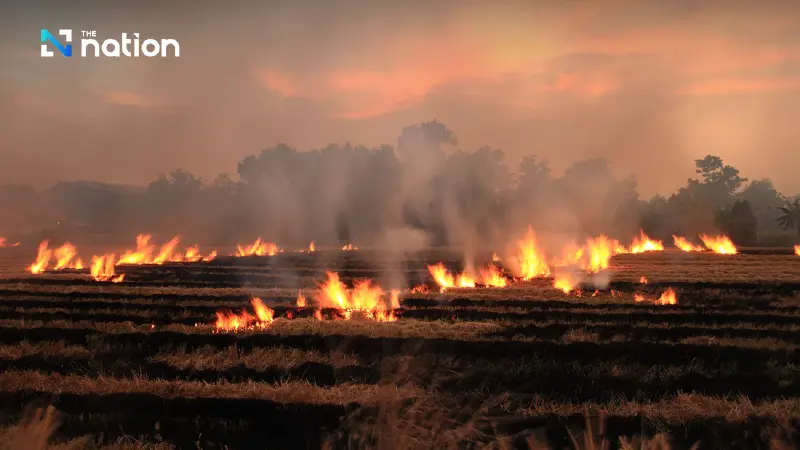


Agriculture Minister Suriya says illegal burning in farm areas will face strict legal action as Thailand steps up efforts to curb PM2.5 and hotspot-linked haze.
Suriya Jungrungreangkit, Minister of Agriculture and Cooperatives, has warned that anyone caught illegally burning agricultural land will face legal action, with offenders also at risk of losing access to government farmer-support schemes for two years as authorities intensify efforts to curb PM2.5 pollution and hotspot-linked haze.
Suriya orders tougher enforcement
Suriya said farm burning had become an urgent issue under government policy because smoke pollution directly harms public health and the environment. He said authorities would strictly enforce existing laws and regulations, with no exceptions for offenders, and had ordered closer coordination with local administrative bodies and other agencies so inspections could be stepped up on the ground.

He also said officials would be sent into affected areas for close and continuous monitoring in a bid to ease hardship for local communities and strengthen enforcement at area level.
Two-year exclusion from support schemes
The warning builds on existing anti-burning measures already in force for the 2026 haze season. Under Agriculture Ministry rules, burning in agricultural areas during the February 1-March 31 control period can leave farmers disqualified from support and capacity-building programmes from April 1, 2026 to March 31, 2028, except for agricultural disaster assistance.

Official policy defines agricultural burning as burning carried out by farmers, or by others acting on their behalf, on farmland they own, occupy or use.
Why PM2.5 and hotspots matter
PM2.5 refers to fine particulate matter small enough to penetrate deep into the lungs and bloodstream. The World Health Organization says outdoor air pollution caused an estimated 4.2 million premature deaths worldwide in 2019 and is linked to cardiovascular disease, respiratory illness and cancers.
Hotspots, meanwhile, are satellite-detected thermal anomalies used as near-real-time signs of active fires or other heat sources. NASA says each hotspot represents the centre of a pixel flagged as containing one or more fires or thermal anomalies, meaning it is an indicator of possible burning rather than an exact measurement of a fire on the ground.
In that context, Suriya’s warning signals a harder line from the government as it tries to cut smoke from farm burning and contain one of the major contributors to seasonal haze.
