
ETIX Expands Bangkok Campus to 25 MW to Support Cloud and AI Surge


ETIX is accelerating the expansion of its BKK#2 facility to 25 MW, combining high-density AI infrastructure with water-free cooling and green energy.
- ETIX is expanding its Bangkok data center campus from 6 MW to a total capacity of 25 MW to meet growing regional demand.
- The expansion is driven by a surge in the cloud computing and AI sectors, with the campus already securing deployments from major cloud service providers.
- The new facility emphasizes sustainability, operating on 100% renewable energy and utilizing advanced zero-water cooling technology.
European edge data center operator ETIX has announced a major expansion of its Bangkok Campus, accelerating the development of its BKK#2 facility.
The strategic project boosts the site’s total data center capacity from 6 megawatts (MW) to 25 MW more than quadrupling its presence in Thailand to capture surging regional demand across the cloud computing, enterprise, and artificial intelligence (AI) sectors.

The expanded campus has already secured deployments from three major cloud service providers and online platform operators, while serving a diverse client portfolio that includes government agencies, financial institutions, and hospitality brands.
Functioning as a central network hub, the campus hosts major internet exchanges BKNIX and THNIX and features direct connectivity from all telecommunications operators in Thailand.
"What we are most proud of is the diversity of customers who place their trust in ETIX," said Pierre Patris, CEO of ETIX Asia. "Our role is to develop infrastructure that meets those needs with required certifications and on-time delivery, ensuring infrastructure does not become a constraint on our customers’ growth."
Central to the project is an adherence to Environmental, Social, and Governance (ESG) standards, aligned with Thailand’s evolving regulatory framework on resource efficiency.
Partnering with Schneider Electric, ETIX has designed BKK#2 with advanced, zero-water cooling technology, achieving a Water Usage Effectiveness (WUE) below 0.01 liters per kilowatt-hour and maintaining a Power Usage Effectiveness (PUE) below 1.4.

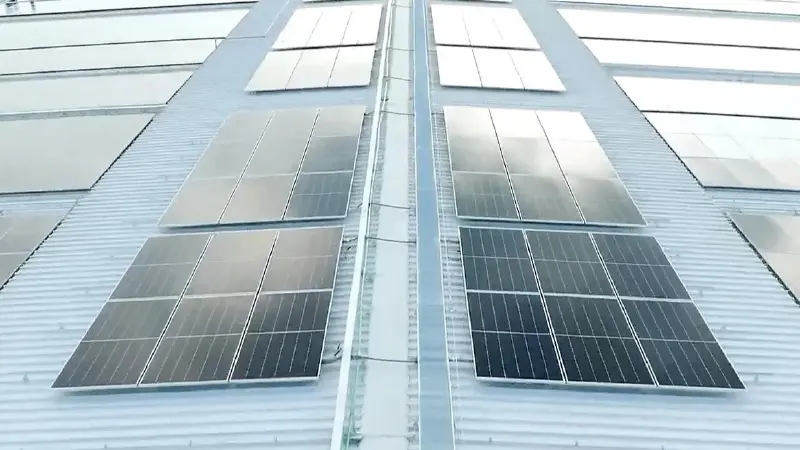
Additionally, the campus operates on 100% renewable energy, powered by certified green energy procurement and on-site solar generation including a 6,000-square-meter rooftop solar array at BKK#1 that cuts carbon dioxide emissions by roughly 480 tonnes annually.

"‘Ethical’ describes our approach to developing data centers, from cooling systems that do not consume water to green energy utilization," noted Louis Blanchot, CEO of the ETIX group.
"'Internet Exchange' refers to creating a place where networks, cloud services, and content converge. This expands access to digital infrastructure while upholding sustainability standards."
