
DBD targets Huai Khwang firms over nominee and payment risks
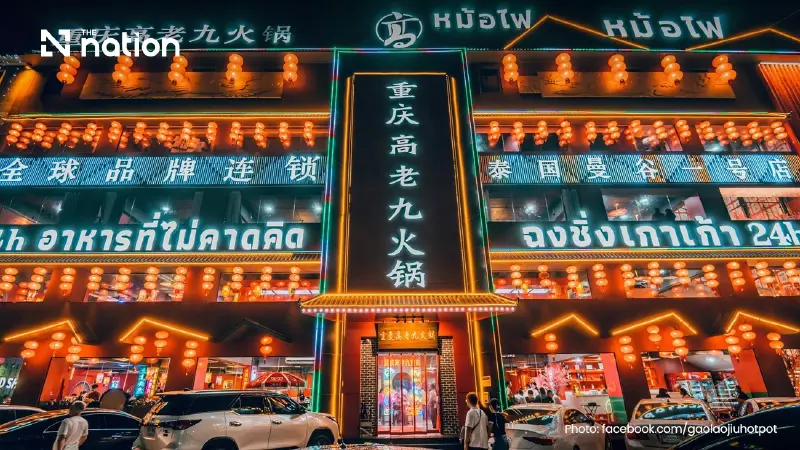


Authorities inspected five Huai Khwang businesses after information linked them to Thai nominee shareholding and financial transactions.
- The Department of Business Development (DBD), along with other security agencies, is inspecting businesses in Bangkok's Huai Khwang district suspected of using Thai nationals as nominee shareholders for foreign owners.
- The crackdown targets firms with suspicious payment practices and financial transactions that may be linked to money laundering, such as customer payments being transferred into a director's personal account.
- Initial inspections of five businesses, primarily restaurants, uncovered several red flags, including links to the promotion of online gambling websites and irregular payment systems.
- Authorities warn that both Thai nationals acting as nominees and the foreigners using them face severe penalties under the Foreign Business Act, including up to 3 years in prison and fines of up to THB1 million.

The Department of Business Development (DBD) is intensifying its crackdown on nominee businesses, most recently sending a special task force to work with various security agencies in high-risk areas of Huai Khwang after finding information linked to the use of Thai nationals to hold shares on behalf of foreigners, as well as payment practices and financial transactions that may fall within the scope of money laundering.
Poonpong Naiyanapakorn, director-general of the DBD under the Ministry of Commerce, said he had assigned the director of the Protection and Suppression of Illegal Business Division, together with the DBD’s anti-nominee team, to inspect high-risk businesses in Huai Khwang district, Bangkok, on Tuesday (June 23, 2026).
The operation was joined by the chair of the House Committee on the Prevention and Suppression of Money Laundering and Drugs, Thailand’s Food and Drug Administration (FDA), and the Economic Crime Suppression Division (ECD) to monitor and examine the use of Thai nationals as concealed nominees holding shares for foreigners, as well as financial flows and payment systems that could fall within the scope of money laundering.
The joint inspection targeted five juristic persons described as operating restaurant businesses on Pracha Uthit Road and Ratchadaphisek Road.
They were considered a risk group for nominee business and had used financial transactions or payment systems that could facilitate money laundering.

The inspection findings were as follows:
- Heng Heng Charoen Kha Limited Partnership operates a prawn-fishing pond and has two Thai partners. Officials found concerns involving the promotion of online gambling websites, leading police to seize accounting documents and gambling-related equipment as evidence for further legal action.
- The mala restaurant “Chuiyan Shidai” was linked to two juristic persons: Tan Food and Beverage Co Ltd, which was registered on Friday (February 27, 2026), with registered capital of THB4 million and shareholders comprising 75% Thai nationals and 25% foreigners.
Chuiyan Shidai Co Ltd was registered on Monday (July 1, 2024), with registered capital of THB4 million and shareholders comprising 51% Thai nationals and 49% foreigners.
The inspection found that the foreign director and shareholder were the same person in both companies.
It also found that food payments were accepted through transfers into the foreign director’s personal account, along with conduct involving the promotion of online gambling websites in the same manner as the first case.
Two other juristic persons were also found to be listed as using the same premises.
- Sky Water Spa Co Ltd operates a spa and health-care business, with all directors and shareholders being Thai nationals. Its director led officials through the premises. However, Donglu Himalaya Co Ltd was found on the third floor of the same building. The company sells sacred objects and amulets and has Thai and Chinese shareholders. On the inspection day, the establishment was closed, and the relevant people could not be contacted to provide information.
- Gao Lao Jiu Group Co Ltd operates the “Mala Chongqing Gao Kao” restaurant. It was registered on Friday (September 30, 2022), with registered capital of THB18 million and shareholders comprising 51% Thai nationals and 49% Chinese shareholders. An inspection of its QR code payment system found that service payments were transferred directly into the company’s account. No preliminary indicators of wrongdoing were found.
- Bokung Ratchada 18 Co Ltd operates a prawn-fishing pond, with all directors and shareholders being Thai nationals. A preliminary inspection found no points of concern or unusual conduct.
The information and evidence obtained from the field inspection will be analysed in depth and examined with related agencies.
If personal accounts or financial transactions are found to have been used to conceal, disguise or hide the source of assets linked to offences, this may also fall under the law on the prevention and suppression of money laundering.
The department therefore warned Thai nationals that cooperating with foreigners by allowing their names to be used as representative shareholders constitutes nominee conduct and is an offence under the Foreign Business Act 1999.
Foreigners who operate businesses through nominees, or those who assist, support or consent to the use of their names to hold shares on behalf of others, face imprisonment of up to 3 years, a fine of THB100,000 to THB1 million, or both.
If they continue to violate the law and fail to cease the offence, they face a daily fine of THB10,000 to THB50,000.

