
Anutin warns Australia-bound drug smugglers will not escape as Thailand tightens airport rules
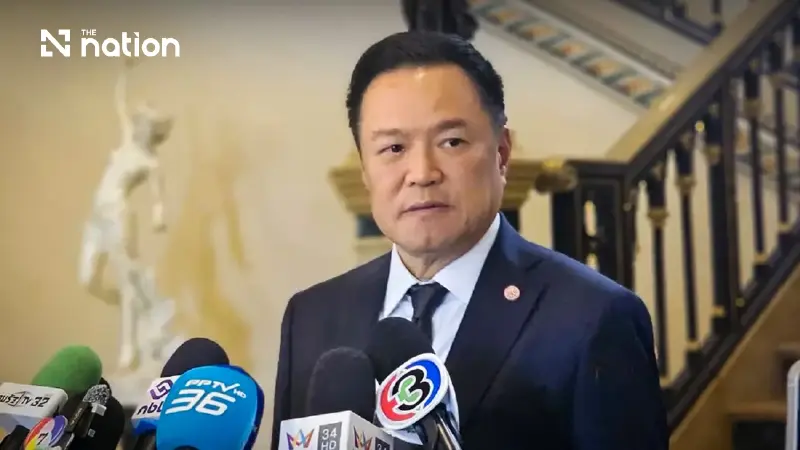


Prime Minister Anutin Charnvirakul says any attempt to smuggle drugs to Australia is unlikely to get through, vowing tougher airport and airline-crew screening after a Thai Airways flight attendant was arrested in Melbourne.
Prime Minister Anutin Charnvirakul warned that anyone trying to smuggle drugs into Australia would be intercepted, as he vowed to tighten airport and airline-security rules following the arrest of a Thai Airways flight attendant on heroin-smuggling charges in Melbourne.
Anutin said Australia had strict border checks and that attempts to carry narcotics into the country by air were unlikely to succeed. He described such attempts as “short-sighted” and said the government would move quickly to “seal” loopholes in Thailand’s airport procedures.
Anutin added that Thailand was not a transit point for narcotics because the country maintained strict suppression measures.
The prime minister said he had summoned the secretary-general of the Office of the Narcotics Control Board, or ONCB, for an immediate briefing and would chair an urgent meeting on July 3 with relevant agencies, including Airports of Thailand and aviation authorities, to tighten airport rules.
Anutin says Thailand is not a drug transit hub
Anutin rejected suggestions that Thailand was being used as a drug transit hub, saying the government had continued to pursue drug suppression, seizures and prosecutions.
He said the authorities could not stop every individual from attempting to break the law, but insisted that Thailand’s enforcement standards remained strong.
He also warned that drug offences in Thailand carry heavy penalties, saying even small quantities could lead to life imprisonment and that offenders should not expect amnesty if convicted.
“If they think they can escape our severe legal action, they are free to try,” Anutin said.
Urgent meeting to tighten airport and crew checks
The July 3 meeting will focus on tightening airport procedures and closing gaps that may be exploited by drug-smuggling networks.
Anutin said he had invited the president of Airports of Thailand Plc, or AOT, and the director-general of the Civil Aviation Training Centre to join discussions on new operational rules for airlines and crew screening.
He said the case involved a crew member, meaning additional rules and inspection procedures may be needed for aviation personnel. The government’s priority, he said, was to improve domestic systems, and there was no need at this stage to invite the Australian Federal Police to take part in the meeting.
Airport screening rules under review
Anutin said existing airport baggage-screening systems had generally focused on detecting metal objects and aviation-security threats. Carrying out detailed searches of all luggage in every case could affect passenger convenience, he said, but the latest case showed that screening rules for crew members needed to be reviewed.
The prime minister said the government would support the use of technology and equipment to improve narcotics detection, but added that offenders who chose to take such risks would have to face the consequences.
The review comes amid wider scrutiny of Thailand’s outbound airport controls after Suvarnabhumi Airport earlier said the arrested crew member’s luggage had passed standard security screening before departure.
Thai Airways employee arrested in Melbourne
Australian police said a 26-year-old Thai airline employee was arrested and charged after allegedly importing more than 1kg of heroin into Melbourne. The woman was on duty aboard an international flight when she arrived at Melbourne Airport on June 25 and was detained after baggage screening raised suspicions.
Anutin said the case should not be allowed to damage confidence in Thailand’s enforcement system, arguing that the government would continue to pursue drug cases and tighten procedures wherever weaknesses were found.
