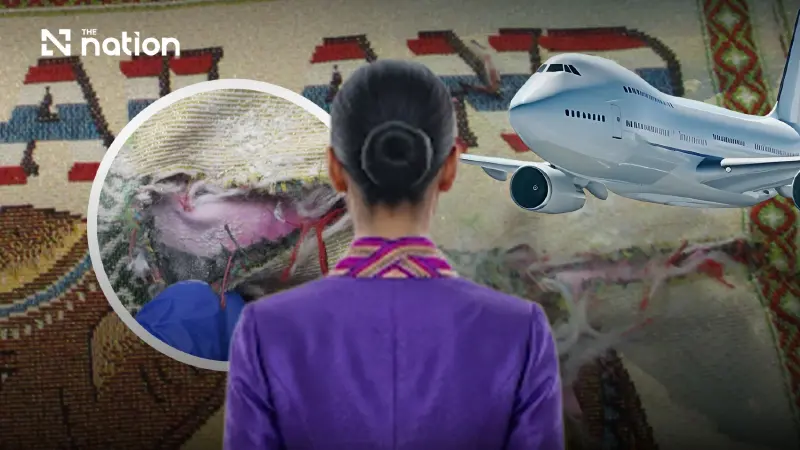
Thai police are probing whether a cabin crew member arrested in Melbourne was deceived by a layered cross-border drug network using online scam tactics
The arrest of a Thai cabin crew member in Melbourne with heroin allegedly hidden inside fabric bags has opened a wider investigation into what Thai police believe may be a cross-border drug trafficking network using scam-style methods to disguise its operators.
The woman, identified by the assumed name “Meena”, was detained by Australian authorities after allegedly carrying the bags into the country. The case has raised questions not only over who transported the narcotics, but also over whether ordinary people may have been drawn into a wider criminal operation as unwitting couriers.
Investigators are focusing on a Facebook account named “Rose”, which has since been closed. The account allegedly contacted the cabin crew member and offered payment for her to carry several fabric bags to Australia.
The online contact, the concealment of the sender’s real identity and the use of several intermediaries have led Thai authorities to believe the case may not fit the pattern of conventional drug smuggling. Instead, they are examining whether the operation was deliberately structured to distance the masterminds from those carrying or delivering the goods.
Thai officials are coordinating with Meta and United States police to trace the person behind the “Rose” account. Investigators believe identifying the account operator could be crucial to determining whether Meena was deceived into carrying the bags or knowingly became involved in a transnational drug trafficking network.
The parcel trail has revealed a layered delivery chain that investigators believe may have links to the Golden Triangle.
According to the investigation, the suspected route involved:
An upstream link to the Golden Triangle area.
Two alleged major Lao figures believed to be higher in the network.
A parcel sent from Wang Saphung district in Loei to Bangkok.
A Lao couple, identified as Arthit and Tassaporn, who allegedly delivered the package.
A black car driven by a man named Wut.
A mysterious hooded man known as “Lotus”, who allegedly handed the items to the cabin crew member at a condominium.
Arthit and Tassaporn reportedly claimed they had been hired to deliver items six or seven times, but did not know the packages contained drugs.
Investigators say the parcel was later transferred through a black sedan driven by Wut, who has a previous drug conviction and had once been sentenced to life imprisonment. Wut allegedly drove the hooded man, known as “Lotus”, to deliver the items to Meena at her condominium.
Police believe the hooded man may have links to a Hmong ethnic group. The delivery was allegedly paid for in cash, with a fee of 1,600 baht, in an apparent attempt to avoid leaving digital traces through payment applications.
The pattern, investigators say, resembles the way online scam networks operate. People accepting delivery jobs may not know the real sender, couriers may not know the final destination, and intermediaries are separated into layers. Each person is given only limited information, making it harder for authorities to trace the operation back to its organisers.
Pol Maj Gen Theeradej Thamsuthee, deputy commissioner of the Metropolitan Police Bureau, said the network appeared to be large, experienced and carefully structured. He said its methods resembled scam syndicates, including concealment of identity, compartmentalisation of participants and persuasion techniques designed to create trust.
He said such tactics could mislead even educated people.
That has made Meena’s legal status more complicated. She may have been deceived into carrying the items, but she remains a suspect arrested overseas with the alleged contraband.
Investigators say the key evidence will not rest on her claims alone. The case will depend on:
Contact records.
Chat messages.
Her conduct before travelling.
How the bags were handed over.
Any links between her and members of the network.
Evidence considered by Australian authorities.
Thai investigators are giving weight to the possibility that Meena was a victim, based on chat evidence that appeared to show deception and concealment of the parcel’s true contents. Her boyfriend also reportedly told investigators that he had checked the items at a basic level but found nothing suspicious, as the drugs were allegedly hidden carefully.
However, the Australian justice system will still have to determine whether she knew she was carrying illegal substances across borders. The term “victim” is therefore not a legal conclusion, but a line of inquiry that must be tested against evidence.
The case has also uncovered another important lead. Before the parcel reached Meena, another person had nearly been drawn into a similar situation after a package was delivered to Soi Suea Yai. That person decided to return the parcel, avoiding what could have become an arrest overseas.
This has strengthened investigators’ belief that Meena’s case may not have been an isolated incident. Instead, it may reflect a wider pattern of selecting potential couriers or victims.
Police believe the network may have targeted people who:
Could travel abroad easily.
Had occupations seen as credible.
Were more likely to pass through screening than ordinary travellers.
Could be persuaded to accept items from people whose real identities were unclear.
The aviation sector could therefore become a risk target if workers are not careful about accepting items or carrying goods for people they do not personally know.
Thai authorities are now coordinating with the Office of the Narcotics Control Board and the Central Investigation Bureau to expand the probe towards the masterminds behind the operation. Investigators are particularly focused on links between transnational drug trafficking and online deception.
If that theory proves correct, the arrest of the Thai cabin crew member in Melbourne may represent only the visible tip of a much larger criminal structure blending narcotics trafficking with scam-style manipulation.
For now, the question of whether Meena was a victim or a willing participant remains unanswered. That will depend on evidence and the Australian legal process.
But one lesson is already clear. In an age when criminals use not only money, but also psychology, trust and fake online identities as tools, accepting a single bag from someone else can become far more than a small favour. It can become the first step into a cross-border criminal case with consequences that may change a life permanently.
Police arrest hooded parcel suspect in Thai crew drug case
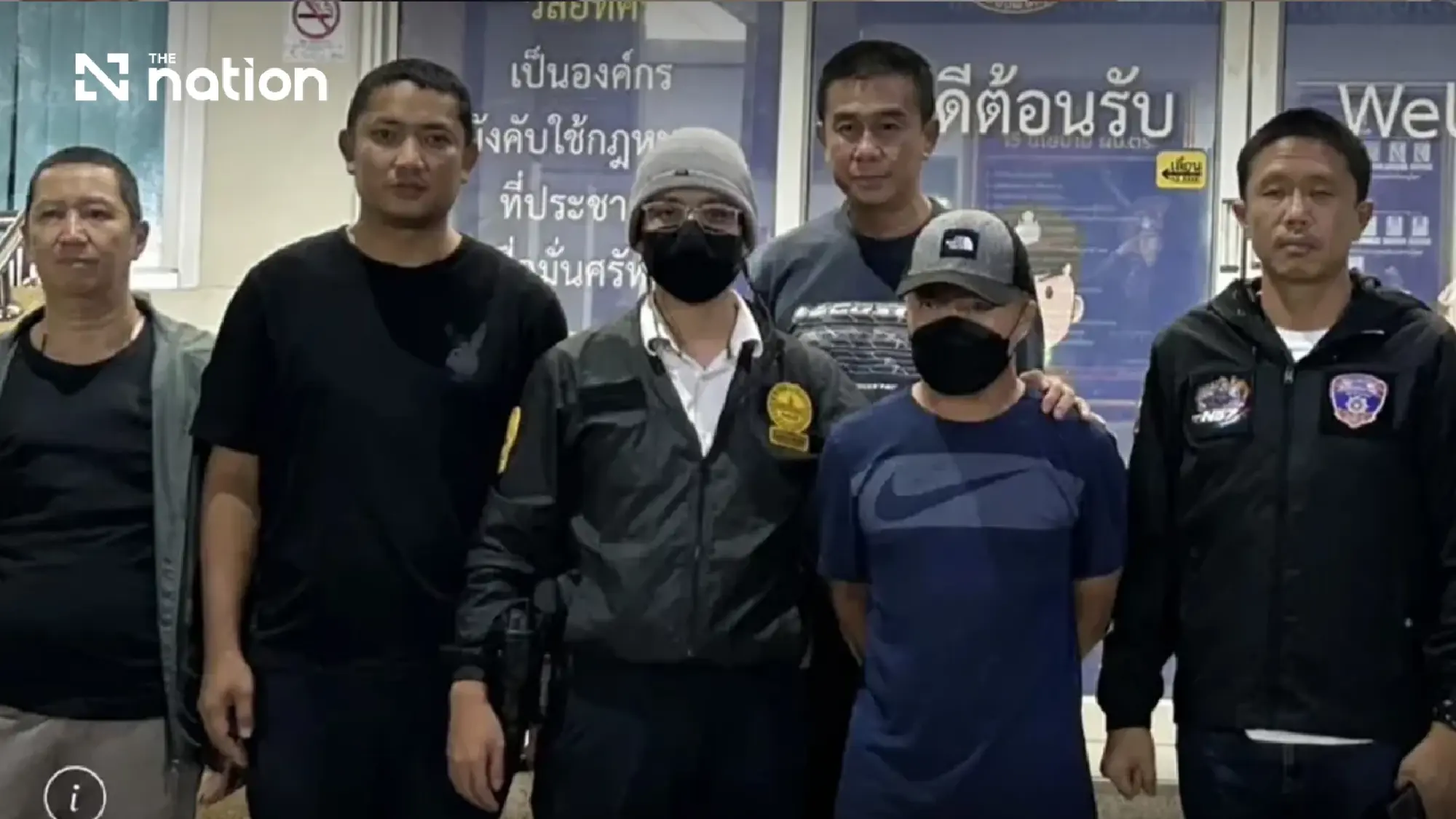
Police have arrested a key suspect known as the “blue-hooded man” in the investigation into a drug case involving Thai cabin crew member “Meena”, after he was tracked down in Phitsanulok while allegedly preparing to flee the country.
The suspect, identified as Uthai, is accused of delivering a parcel containing heroin concealed in fabric bags to Meena at a condominium in Bangkok’s Bang Na area. His arrest marks another major development in the wider investigation into the parcel route and the people behind the alleged cross-border drug operation.
Pol Maj Gen Theeradej confirmed that investigators from the Metropolitan Police Investigation Division arrested Uthai in Phitsanulok at about 11pm on July 3. Police said he was believed to be trying to escape towards the Mae Sot border in Tak province before leaving the country.
According to police, Uthai is a Hmong man and is considered an important suspect in the case. Investigators said he was the person who carried the parcel to Meena’s condominium on June 22.
Police said Uthai had confessed to delivering the parcel to Meena, but had not yet implicated other people in the network. Investigators said he had admitted only his own role and had also acknowledged making similar deliveries several times before.
The amount he was allegedly paid for the delivery remains under questioning.
Police are now preparing to take Uthai to Phra Nakhon Si Ayutthaya province to search locations believed to have been used as hideouts before he fled. Investigators expect the searches to produce more evidence linking him to others involved in the network.
The inquiry is also focused on whether Uthai was connected to the driver of a black car previously linked to the delivery route. Police have not yet confirmed whether he was working under that person or another handler.
The arrest follows earlier developments in which investigators traced the parcel route through several intermediaries before it reached Meena. Authorities are now trying to establish how the delivery chain was organised, who ordered the shipment, and whether other people played roles in transferring or concealing the parcel.
Theeradej said the investigation would continue, with officers aiming to identify and arrest other members of the network involved in the alleged trafficking operation.
The case has drawn national attention after Meena was arrested in Melbourne, Australia, in connection with heroin allegedly hidden inside fabric bags. Thai authorities have since widened their investigation into the Thai side of the delivery route, including those who handled the parcel before it was passed to her.
Police are treating Uthai’s arrest as a significant step in the case, but the investigation remains ongoing as officers work to trace the higher-level figures behind the operation.