
Park Department says fatal Huai Kha Khaeng tiger attack accidental
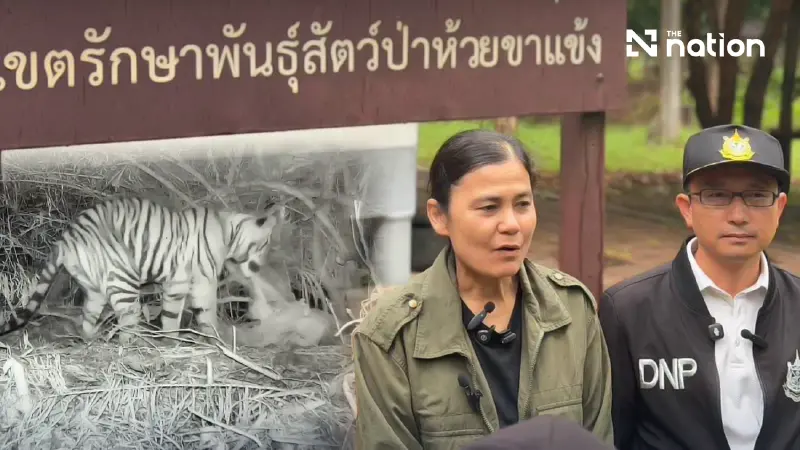


Thai wildlife officials say a young tiger that killed a Huai Kha Khaeng ranger mistook him for prey, with no evidence it has developed man-eating behaviour
- The Department of National Parks (DNP) concluded the attack was an accidental encounter, believing the young, 18-month-old tiger mistook the sleeping ranger for natural prey while learning to hunt.
- The specific tiger was identified through camera-trap records as one of three male offspring of a known female, and officials say it has shown no pattern of treating humans as prey.
- Supporting the "accidental" theory, the DNP noted there have been no repeated attacks and the tiger's family has remained within its established 40-square-kilometre territory.
- The tiger will be monitored and left in the wild if it continues to behave normally, while the sanctuary has tightened safety protocols for staff and temporarily suspended tourism.
Thailand’s Department of National Parks, Wildlife and Plant Conservation (DNP) has described the fatal tiger attack on a ranger at Huai Kha Khaeng Wildlife Sanctuary as an accidental encounter, saying the animal has shown no pattern of treating humans as prey.
The ranger was killed on August 5. Officials investigating the incident have since identified the tiger through camera-trap records as one of three 18-month-old male offspring of a female known as Apinya.
The tiger family already lives and hunts naturally across an area of about 40 square kilometres around the site, according to the DNP.
Director-General Attapol Charoenchansa instructed Protected Areas Regional Office 12 (Nakhon Sawan) and wildlife officials to present the findings and measures being taken following the death.

Chayaporn Amradit, director of Protected Areas Regional Office 12, joined Sukhee Boonsang, director of the Wildlife Conservation Office, and Permsak Kanitchart, chief of Huai Kha Khaeng Wildlife Sanctuary, at a briefing at the Thung Faek forest protection unit in Uthai Thani on Thursday (August 6).
Camera traps identify young male tiger
Chayaporn said officials were able to establish the animal’s identity from the sanctuary’s camera-trap database.
Tiger stripe patterns are unique to individual animals, allowing researchers to compare photographs and track particular tigers. The database has been developed continuously for more than 30 years.

The records showed that the tiger involved was one of three young males born to Apinya.
Officials believe its age was central to the incident. At about one year and six months old, the tiger is at a stage when it is learning to hunt, exploring its surroundings and beginning to move independently in search of food.
The DNP’s behavioural assessment concluded that the encounter was accidental. The ranger was lying flat and asleep at the time, and officials believe the young tiger may have mistaken his position for that of natural prey.
Officials said wild tigers would normally retreat when they recognised a standing or moving person or heard human noise.
The DNP said the incident did not meet the characteristics of a tiger that habitually preys on people because there had been no repeated attacks and no indication that the animal had begun selecting humans as its principal prey.
The tiger family has also remained within its established range. Officials have not detected signs that the animals have scattered from the area or moved into surrounding communities.
Tiger to remain in wild if behaviour stays normal
Automatic camera traps have been installed to monitor the young tiger closely.
If monitoring shows that it continues to hunt natural prey and behaves normally, officials will leave it in its existing habitat. The DNP is also preparing to fit the animal with tracking equipment for longer-term study.
That approach would change if the tiger showed signs of attacking staff again.
In that case, officials would capture the animal and begin a scientifically based behavioural management process.

The department has also tightened safety measures for rangers and other staff working inside the sanctuary.
Personnel have been told to avoid travelling or working alone and to move with a partner. Sleeping and accommodation areas must be made secure against wildlife, while lighting is to be increased in dark areas.
Staff have also been instructed to sleep inside secure buildings rather than in places where wild animals could reach them.

Huai Kha Khaeng Wildlife Sanctuary has temporarily suspended tourism and nature-study visits while officials monitor the tiger and assess safety conditions. The closure will remain in place until those assessments are completed.
Huai Kha Khaeng supports about 100 adult tigers
The DNP’s population database estimates that Huai Kha Khaeng currently supports about 100 adult tigers.
Another roughly 30 growing young tigers remain at a stage where their survival is less certain, while about 40 tigers have spread into the neighbouring Thung Yai Naresuan Wildlife Sanctuary.
Officials said the habitat and availability of natural prey within the Huai Kha Khaeng forest remain sufficient to support the tiger population.
