
DDPM upgrades 18 regional war rooms for monsoon and ‘rain bomb’ threats
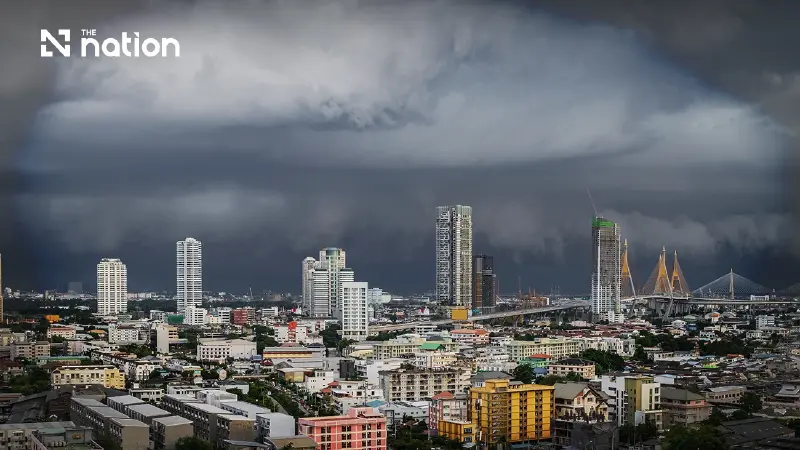


The DDPM has upgraded 18 regional centres to coordinate flood responses, introduced new rainfall warning thresholds and ordered machinery into high-risk areas.
The Department of Disaster Prevention and Mitigation (DDPM) has upgraded war-room operations across its 18 regional centres nationwide to respond to monsoon conditions and so-called “rain bombs”, while introducing new flood-warning thresholds and accelerating the deployment of disaster-response machinery to high-risk areas.
The DDPM outlined its approach to managing emergency flood situations, with an emphasis on accurate warnings and the efficient deployment of disaster-response equipment after several parts of Thailand were hit by monsoon rain and intense downpours.
Teerapat Kachamat, director-general of the DDPM, chaired a meeting of the Situation Awareness Team (SAT) with senior executives and directors of all 18 regional Disaster Prevention and Mitigation Centres.
He instructed the regional centres to serve as local command centres and war rooms for managing flood emergencies.
Machinery management and command system
1. Science-based planning
The deployment of water pumps and disaster-response machinery must be planned according to the level of risk, water volume and expected duration of the situation.
2. Cost-effectiveness and transparency
Operations must be accurate, transparent and open to scrutiny, while delivering the greatest possible benefit to the public.
3. Integration under the Incident Command System
When assistance is requested by a province, regional personnel must report to the provincial governor, acting as the provincial disaster-response director, to receive assignments under the Incident Command System (ICS).
New flood monitoring and warning thresholds
The National Disaster Warning Centre also outlined rainfall and river-level criteria used to assess when warnings should be issued.
For high-risk areas and vulnerable communities in Bangkok and surrounding provinces, Pattaya, Si Racha, Rayong and Phuket, an alert may be considered when hourly rainfall reaches 40 millimetres or more.
In other areas, the hourly rainfall threshold is 75 millimetres or more.
During the rainy season, warnings may be considered when accumulated rainfall over 24 hours reaches 100 millimetres or more.
Outside the rainy season, the 24-hour threshold is 150 millimetres or more.
For river monitoring, a watch level applies when the water is less than one metre below the riverbank.
A critical warning level applies when the water reaches or overflows the riverbank.
Once conditions meet these thresholds, the National Disaster Warning Centre will immediately distribute alerts by SMS and Line groups to directors of the regional DDPM centres and provincial governors.
The information can then be passed quickly and comprehensively to people in areas at risk.
