
Army says Ban Nong Chan return plan remains unverified


Thailand is seeking renewed bilateral border talks with Cambodia while protesting alleged drone activity and monitoring military exercises.
- Thailand's Defence Ministry has not confirmed reports of a plan to return Cambodian nationals to the Ban Nong Chan border area, stating it must first be verified.
- The Thai government maintains that any resolution to border tensions must be handled through established bilateral channels, not unilateral actions.
- Verification of the plan is complicated by stalled high-level talks, which Thailand attributes to Cambodian provocations, such as drone use, that have undermined the atmosphere for negotiations.
Thailand has not confirmed reports that Cambodian nationals could be moved back to Ban Nong Chan in Sa Kaeo province, while maintaining that border tensions with Cambodia must be resolved through bilateral talks.
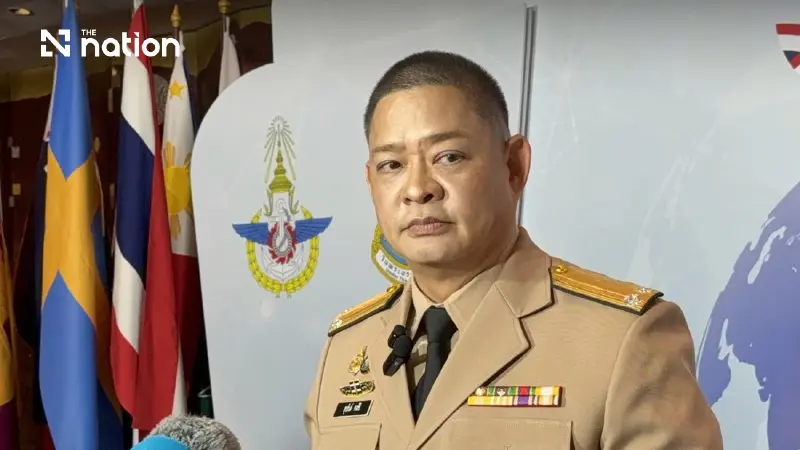
Defence Ministry spokesman Rear Admiral Surasant Kongsiri told a briefing in Bangkok on Monday (August 17) that officials would first have to verify the reported plan and examine its details.
He declined to speculate on whether promises concerning the return were intended to serve Cambodia’s domestic political interests, saying Thailand could not comment on the Cambodian government’s motives.
The reported plan concerns Ban Nong Chan, a sensitive border area in Sa Kaeo province that has featured in previous disputes between the two countries.
Surasant said a return to peaceful relations would depend on sincere dialogue and compliance with agreements reached by both sides.
Thailand favours bilateral border mechanisms
The spokesman maintained that the dispute was a matter between Thailand and Cambodia and should be addressed through established bilateral channels.
He cited the Joint Boundary Commission (JBC) and General Border Committee (GBC) as important mechanisms for border negotiations.
Other countries consulted by Thai government representatives had also supported bilateral discussions without outside intervention, he added.
Although formal JBC talks remain stalled, officials serving as secretaries to the two sides have continued to communicate.
Any resumption would depend on their readiness and compliance with the joint statement signed on December 27, 2025.
Surasant referred to Deputy Prime Minister and Foreign Minister Sihasak Phuangketkeow’s assessment that Cambodia had yet to demonstrate its readiness for negotiations.
Sihasak had cited what Thailand regarded as continued provocations and Cambodian criticism of Thailand in international forums.
Thailand maintains that its own actions have complied with international law, international standards and the joint statement.
Surasant argued that alleged Cambodian use of drones and counter-drone equipment constituted a breach of the statement and had undermined the atmosphere for negotiations.
He warned that talks could face further delays while such activity continued.
Border units maintain local contact
Despite the difficulties at the national level, military units stationed along the border continue to communicate with their Cambodian counterparts.
Surasant said relations between local units remained workable and had recovered to some extent in several areas.
The Burapha and Suranaree task forces had held discussions through Regional Border Committee channels, which he described as a positive sign.
He maintained that dialogue remained the only way to resolve the dispute.
Thailand protests alleged drone activity
Thai border forces have submitted protest letters over alleged Cambodian drone operations, according to Surasant.
Thailand also has systems capable of countering the anti-drone technology reportedly used by Cambodia, with private companies ready to provide operational support. The spokesman declined to disclose technical details.
He assured the public that Thai forces were continuously monitoring Cambodia’s deployment of such systems and were prepared to respond.
US-Cambodia exercise seen as sovereign decision
Surasant also played down concerns over Cambodia’s planned revival of the Angkor Sentinel joint military exercise with the United States.
He described the exercise as primarily focused on disaster relief and said it was not expected to include weapons training.
Even if weapons were used, he added, military training remained a sovereign right of the participating countries.
Thai forces remain on alert along the border and have measures in place to address cross-border threats. Surasant added that discussions between senior Thai officials and representatives of the United States and China had reinforced support for Thailand and Cambodia resolving their differences through bilateral mechanisms.
