
Clean-up begins in Pua after floods leave 3,800 tonnes of waste
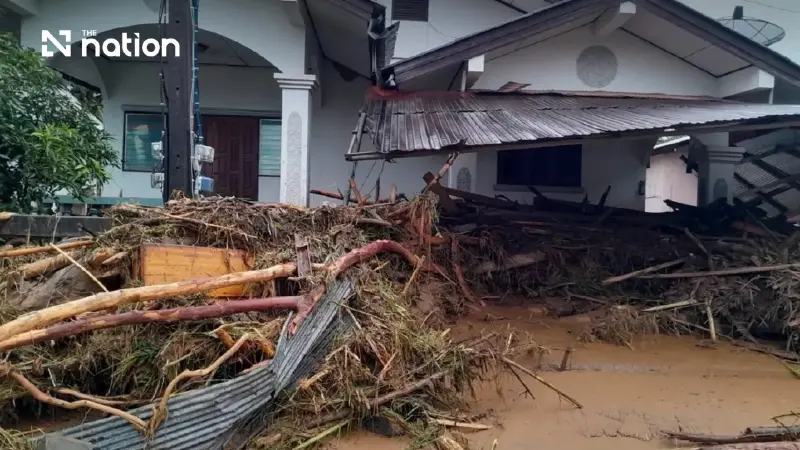


Flooding in Pua district, Nan, has subsided, leaving an estimated 3,800 tonnes of waste as the PCD targets a 10-day clean-up and monitors pollution risks.
- Flooding in the Pua district has left an estimated 3,800 tonnes of waste, prompting a large-scale clean-up effort.
- A 4-hectare site is being prepared by the province specifically to accommodate the massive amount of flood debris.
- The Pollution Control Department (PCD) has established a special operations center to manage the clean-up, monitor pollution, and implement a post-flood waste management plan.
- Authorities aim to clear all remaining flood waste within 10 days of the waters receding, with "Big Cleaning Day" activities planned to help restore the area.
Flood conditions in Pua district have now returned to normal, but authorities estimate that the flooding will leave about 3,800 tonnes of waste. The province is preparing a 4-hectare (25-rai) site to accommodate the debris.
Nan Municipality, meanwhile, expects about 600 tonnes of flood waste because residents prepared in advance and moved belongings to higher ground. Its existing 3.2-hectare (20-rai) waste disposal site can accommodate the debris, while the municipality’s wastewater treatment system was not affected.
Natural Resources and Environment Minister Suchart Chomklin on Friday (August 21) ordered the Pollution Control Department (PCD) to establish the “Nan River Basin Flood Pollution Response and Mitigation Operations Centre” to monitor, prevent and reduce pollution and environmental impacts from flooding in Nan province and downstream areas.
The centre will also prepare systematic post-flood rehabilitation measures aimed at protecting public health and minimising the impact on residents once floodwaters recede.

PCD monitors chemicals and pollution risks
Dr Surin Worakijthamrong, director-general of the PCD, explained that the department had stepped up surveys and monitoring of high-risk locations, particularly waste disposal sites, wastewater treatment systems, pollution sources and businesses in flooded areas.
In Nan, inspections identified eight petrol stations, 11 hotels and two department stores in flood-hit areas. The PCD has coordinated with relevant agencies to inspect fuel storage systems and measures to prevent leaks.
Residents and farmers have also been advised to move agricultural chemicals, hazardous substances and chemical containers to higher ground to reduce the risk of contamination in communities and waterways.
Meanwhile, the PCD has prepared a post-flood waste management plan with the provincial Natural Resources and Environment Office and local administrative organisations.
Preparations include identifying temporary waste storage areas, assessing the volume of waste and arranging the collection and transport of household waste, furniture, electrical appliances and other damaged materials.
The department aims to clear remaining flood waste within 10 days of floodwaters receding. Big Cleaning Day activities will also be coordinated to help restore affected areas and allow residents to return to normal life as quickly as possible.

PCD assesses downstream risks from Sirikit Dam
The PCD is also coordinating with relevant agencies to obtain information on Sirikit Dam’s capacity to accommodate incoming floodwater, including whether water may need to be released and whether any discharge could affect downstream provinces.
The department is preparing to assess areas that have previously experienced flooding so preventive measures can be taken to protect wastewater treatment and solid-waste systems, along with machinery and other equipment.
Beyond the Nan River, the Yom River has overflowed its banks in Si Satchanalai district of Sukhothai province. Water levels, however, have continued to fall and residents have begun returning to their homes.
The Pa Sak River in Lom Kao district of Phetchabun province remains at a high level but has not overflowed its banks. Waste disposal facilities and wastewater treatment systems in both areas have not been affected, while the PCD continues to monitor water quality and environmental conditions in locations considered at risk.

“Monitoring is needed not only during flooding, but also after waters recede, when wastewater, accumulated waste, chemicals, oil and other contaminants can pose problems. The PCD has therefore prepared recovery measures and guidelines in advance so it can act quickly, reduce environmental impacts and protect public health,” Surin said.
