
Army denies intelligence failure after 51 southern attacks
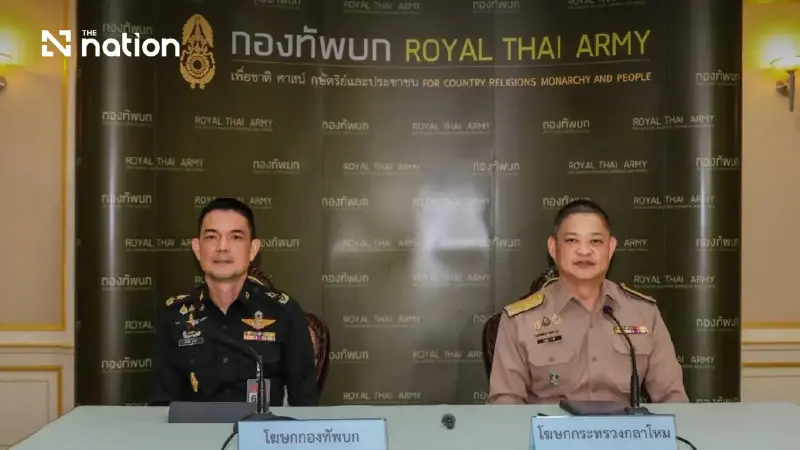


The army says intelligence did not fail before 51 deep South attacks, despite admitting night-time manpower shortages and gaps in coverage.
The Royal Thai Army denied on Monday that intelligence had failed before 51 coordinated incidents across Thailand’s southern border provinces, while admitting that security personnel were insufficient to cover the extensive area at night and that intelligence on smaller, lower-profile targets needed to improve.
Maj Gen Winthai Suvaree, spokesman for the Royal Thai Army, said the intelligence system remained operational but required greater effectiveness. Many of the incidents occurred outside communities or at locations that had not been classified as priority targets, he added.
Winthai spoke at Army headquarters alongside RAdm Surasant Kongsiri, spokesman for the Ministry of Defence, following a visit by Defence Minister Lt Gen Adul Boonthamcharoen on Monday (August 24, 2026). The official tally recorded 51 incidents across Pattani, Yala and Narathiwat, with Narathiwat accounting for the largest number.
Army commander-in-chief Gen Pana Klaewplodtook has been monitoring the situation and ordered intelligence capabilities and public-protection measures to be strengthened, Winthai said.
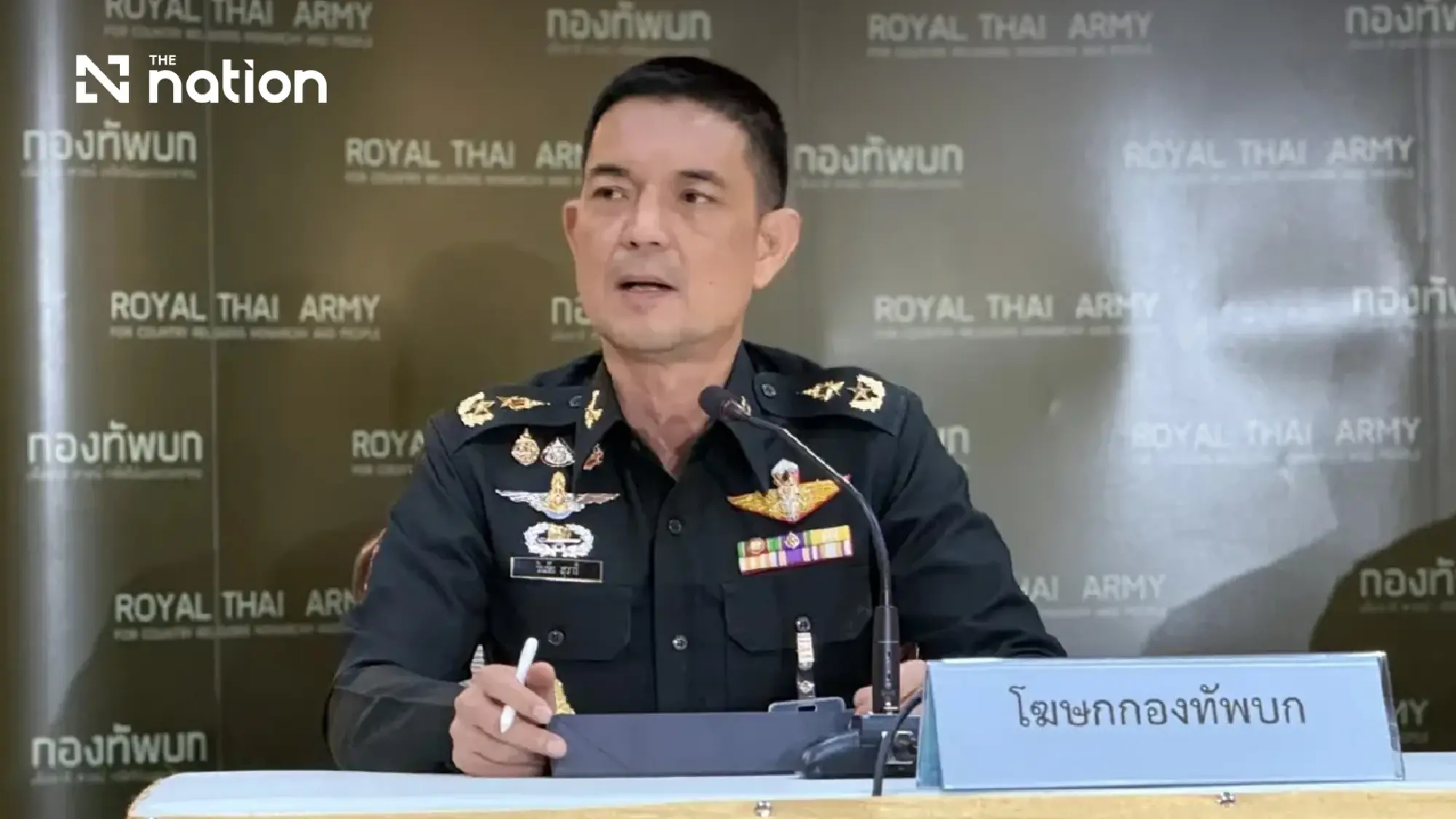

Army acknowledges night-time manpower shortfall
Asked why officers had been unable to prevent incidents at 51 locations in one night, Winthai said the number of personnel was insufficient when measured against the size of the area requiring protection.
Security agencies could not deploy officers evenly across every location and therefore had to combine personnel with intelligence-led operations, he said.
Military, police and civilian administrative authorities classified locations according to risk, with different levels of security assigned to each area. Many of the latest incidents took place away from communities and at sites that were not under heightened surveillance.
Winthai acknowledged that personnel numbers were particularly limited at night.
He said it was impractical to guard every possible target across the three provinces, citing electricity pylons as an example because hundreds of thousands were spread throughout the area.
The army nevertheless rejected the conclusion that its intelligence operation had failed.
Winthai said intelligence continued to provide useful information but needed to become more effective, particularly in identifying plans for smaller incidents at locations that might otherwise receive little attention.
Attacks described as disruptive and psychological
Winthai characterised the incidents as primarily disruptive operations intended to produce psychological and information effects.
More than 50 incidents occurred at around the same time in several areas, but the pattern did not appear to focus on taking civilian lives, he said. Many involved arson or damage to property intended to create visible signs of widespread unrest.
The high number of incidents could also be used to raise morale among young supporters of the perpetrators, according to Winthai.
He said such acts were relatively easy to carry out across a broad area, particularly at locations without a regular security presence or which had not been identified as likely targets.
The assessment that the operation was designed primarily for psychological effect was the army’s position. Investigators have not announced a final finding on the motive behind the latest wave of incidents.
Winthai said the southern border conflict involved a parallel contest over law enforcement and information.
He accused unidentified parties of repeatedly circulating distorted accounts intended to damage the image of officials. Internal Security Operations Command Region 4 Forward Command had adjusted its communication methods in response, he added.
The situation became chaotic while the incidents were unfolding, with many people moving through the affected areas. Some officers remained at established positions while others were deployed to respond to individual incidents.
Winthai said conflicting accounts could emerge under such conditions and criticised information circulated without verification, including some comments made at the political level.

Military rejects helicopter allegation
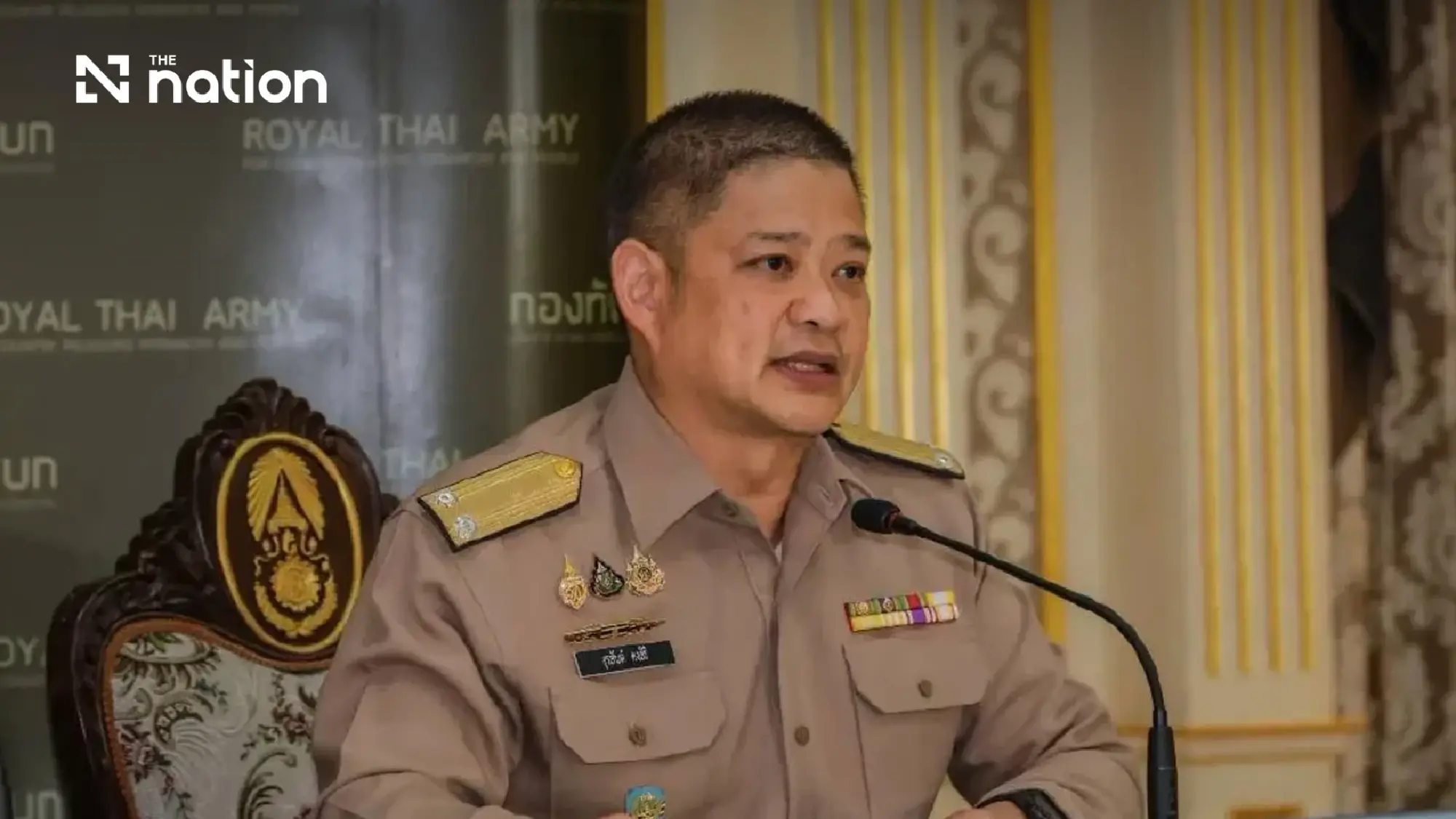
Defence Ministry spokesman Surasant said the defence minister had instructed agencies to investigate what the ministry described as distorted information and correct inaccurate claims quickly.
He cited an allegation that the military had used weapons aboard a helicopter to fire at civilians. Fourth Army Region had already issued a clarification rejecting the allegation, he said.
Winthai also denied that a helicopter had been used in that manner.
He said helicopters were not designed to engage the type of target described in the allegation, particularly while moving at speed at night, when visibility would be severely restricted.
Scenes in films showing helicopters engaging groups of targets did not reflect the tactical circumstances of the incident, he added.
Winthai said army personnel supporting Internal Security Operations Command operated within established rules and internationally recognised standards. The use of weapons was tightly restricted and generally would occur only when officials faced an armed attack, he said.
Authorities were continuing to track those responsible for the unrest and had made a reasonable degree of progress, according to Winthai.
Intelligence on smaller incidents to be strengthened
Winthai said intelligence operations worked at several levels, from information gathered within individual areas to analysis through the broader intelligence system.
The latest incidents suggested that agencies might need to improve intelligence focused on smaller-scale acts, he said.
Intelligence bodies already coordinated through what he described as an “intelligence community”, with individual agencies gathering information separately before integrating and jointly assessing it.
He rejected suggestions that the overall intelligence system had been destabilised.
Groups responsible for unrest might look for opportunities to act every day but be capable of carrying out an operation only when preparations and circumstances allowed, he said.
That made it difficult to determine the precise day on which an incident would occur, even when intelligence indicated a general intention to act.
Winthai said no intelligence operation could identify every planned incident across provinces containing numerous districts and widely dispersed potential targets.
Narathiwat recorded the largest number of incidents in the latest wave, he added. Official figures listed 22 incidents in Narathiwat, 18 in Yala and 11 in Pattani.
Army says pressure on authorities may serve attackers’ aims
Winthai rejected suggestions that the incidents had damaged confidence in state officials.
He said those responsible had made a considerable effort to generate public questions about the performance of security agencies, placing the authorities under pressure.
Allowing that pressure to determine the response could serve the perpetrators’ objectives, he argued.
Winthai said the overall situation remained better than in the past when measured by statistics on loss of life and property, although he did not provide comparative figures during the briefing.
He also said most incidents in the southern border provinces were connected to the Barisan Revolusi Nasional, or BRN.
That was the army’s broader assessment of unrest in the region and did not amount to a final investigative finding that the BRN was responsible for every one of the latest 51 incidents.
Organised operation but motive remains unclear
Surasant said the near-simultaneous incidents indicated coordination among those involved.
The operation appeared to have been organised so that incidents in separate locations occurred in a corresponding pattern, he said.
Although the attacks did not appear primarily intended to kill members of the public, the authorities could not yet determine their underlying objective.
Investigators would need to examine the network behind the operation more deeply and establish the principal reason for the coordinated incidents, Surasant said.
The Defence Ministry will continue supporting the regional army commands while the investigation and security response proceed.
