
JIC chief says Francophonie cannot decide Thai-Cambodian border
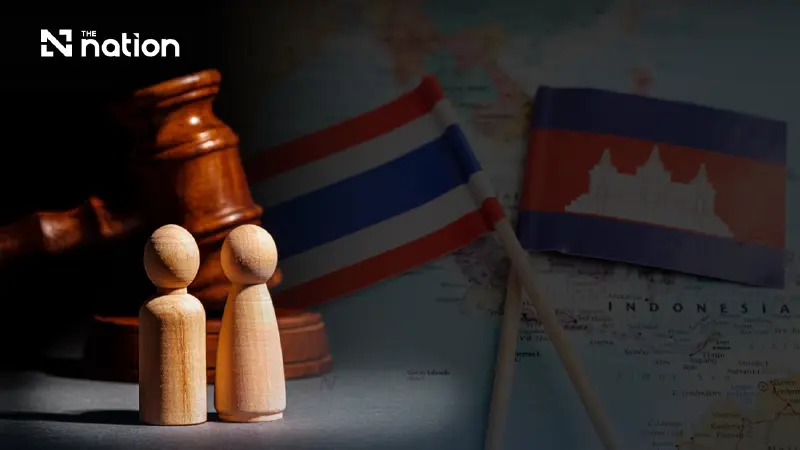


Thailand says Cambodia may raise the border dispute at the Francophonie, but boundaries must be settled through law, evidence and agreed mechanisms.
Air Chief Marshal Prapas Sornchaidee, director of the Joint Information Centre on the Thailand-Cambodia Situation (JIC), said Thailand was not concerned about Cambodia’s plan to raise the bilateral border dispute at the Francophonie.
Speaking on Wednesday (September 2), Prapas was responding to reports that Cambodia intended to discuss the dispute through the Organisation internationale de la Francophonie, the international organisation of French-speaking countries, while accusing Thailand of lobbying against the move.
“The important issue is not who speaks at which forum, but what is said and whether it can be verified,” he said.
Thailand had never been afraid to present facts to the international community, Prapas said. However, it maintained that boundary disputes should be resolved through mechanisms accepted by both countries, rather than allowing an international political forum to act as a substitute for established processes.

Right to speak does not confer authority to decide
Asked whether Thailand opposed Cambodia discussing the issue internationally, Prapas said Cambodia had the right to present its position and Thailand had an equal right to explain the facts.
However, the right to speak at an international forum must be distinguished from the legal authority to determine a boundary, he said.
“No matter how many times one side declares at an international forum that an area belongs to it, or describes the other side as an aggressor, a unilateral claim does not become a legal settlement,” Prapas said.
He also responded to Cambodian diplomatic statements describing Thailand as the “aggressor” and Cambodia as the “victim”.
Those terms carried considerable weight in international relations and should be based on the complete facts, rather than selected parts of the sequence of events, he said.
“If the international community is to understand the real situation, Thailand is ready to present the full chronology, verifiable evidence and the agreements reached by both sides,” Prapas said.
“The story should not begin on the day Thailand responded while everything that happened beforehand is erased from history.”
‘Fait accompli’ allegation requires evidence
Responding to Cambodia’s accusation that Thailand was seeking to create a “fait accompli” by changing conditions on the ground to gain an advantage in the boundary dispute, Prapas said the expression could not be used as a substitute for evidence.
The legal status of a boundary did not change because one side installed shipping containers, barbed wire, roads or bunkers, or issued a press statement, he said.
Where the two countries disagreed over an area, relevant information should be submitted through mechanisms accepted by both sides and examined jointly.
Neither party should attempt to announce a verdict through the media before the agreed process had been allowed to operate, he added.
International support distinct from political contest
Asked why Thailand did not want the dispute to be internationalised, Prapas said the country was not rejecting the international community.
However, transparency and international support for peace should be distinguished from turning a bilateral dispute into a political contest between the two countries.
The international community could support peace, de-escalation and fact-finding, he said. Boundary determination, however, must be based on applicable law, bilateral agreements and relevant mechanisms.
It should not be decided by the number of international forums at which one side could repeat its accusations.
Prapas said Thailand would not be concerned should Cambodia formally raise the issue at the Francophonie, provided the discussion was based on facts.
Thailand was prepared to explain to every country that it sought peace backed by firm guarantees, reduced tensions, respect for existing agreements and resolution through mechanisms recognised by both governments.
“What Thailand does not want is for an international cooperation forum to be turned into a venue that decides who is right or wrong using information presented by only one side,” he said.
JIC chief calls for peace instead of ‘war of words’
Prapas said Thailand and Cambodia did not need to compete over which country could present its case at the greatest number of international forums.
Instead, they should compete in demonstrating which side could make peace a reality.
Cambodia had the right to speak and Thailand had the right to respond, he said. Ultimately, people in both countries did not want a “war of words”.
They wanted a peaceful and secure border, as well as governments capable of sitting down together and resolving their differences through facts and mutually agreed mechanisms.
“Cambodia has the right to speak at every forum, and Thailand is ready to provide clarification at every forum,” Prapas said.
“But no forum can turn a unilateral claim into an international boundary. Boundaries must be determined through law, facts and mechanisms accepted by both countries, not by the number of times a claim is repeated in the media.”
