
Thai police arrest Chinese fugitive at tyre firm worth over 600m baht on Sept 16
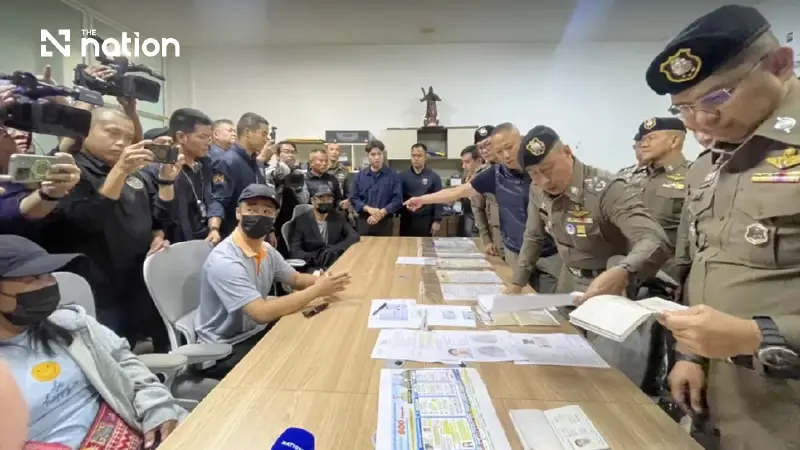


Police in Samut Sakhon allege a Chinese suspect used Thai nominee shareholders and obtained a false Thai identity for his 19-year-old son.
- Police arrested four people in Samut Sakhon on September 16, including a Chinese businessman wanted in a corruption case in China.
- The raid targeted a tyre business valued at more than 600 million baht that police suspect was operated through Thai nominee shareholders.
- Police allege the businessman’s son obtained a Thai identity using a deceased child’s birth certificate. The 19-year-old denied knowing about the alleged misuse.
Police led by deputy national police chief Pol Gen Samran Nuanma arrested four people in Samut Sakhon on Wednesday morning (September 16, 2026), including a Chinese businessman wanted by Chinese authorities in a corruption case. The raid targeted a tyre business valued at more than 600 million baht that investigators suspect was operated through Thai nominee shareholders.
Police identified the businessman as Myo, 37, also known as Li, and alleged that he had brought funds into Thailand for laundering over a period of more than a decade.
Myo’s 19-year-old Chinese son, Thanadon, was also arrested, along with Napha Jachi, the woman listed as his Thai mother, and a Thai company driver accused of acting as a nominee shareholder, according to police.

Pol Lt Gen Nopasil Poolsawat, commissioner attached to the Office of the National Police Chief, joined the operation as a member of the Department of Provincial Administration’s National Identity Crime Enforcement task force (DOPA N.I.C.E.). Officials from the Anti-Money Laundering Office (AMLO) and the Samut Sakhon governor also took part.
Police allege nominee control of three companies
Samran said Myo admitted using Thai employees to hold shares on his behalf through nominee shareholding arrangements, allowing him to retain full control of three companies and circumvent Thai law. Investigators identified the businesses as Ketongly, AEC and KTL, with their headquarters at the premises searched in Om Noi, Samut Sakhon.
Myo held a recorded 39% stake in Ketongly and 40% in KTL, but investigators concluded that cross-shareholdings amounted to effective 100% foreign ownership of both companies, Samran said.
At AEC, Myo’s recorded shareholding was 41%, while three Thai employees allegedly held shares on his behalf. Samran said investigators had found clear evidence of nominee arrangements at all three businesses.
Officers also found several important documents during the search, including a title deed for land valued at 9 million baht, police said.
Samran inspected the factory and questioned its head worker, who denied knowing about any nominee shareholding arrangement, before joining representatives of the participating agencies at a press briefing.
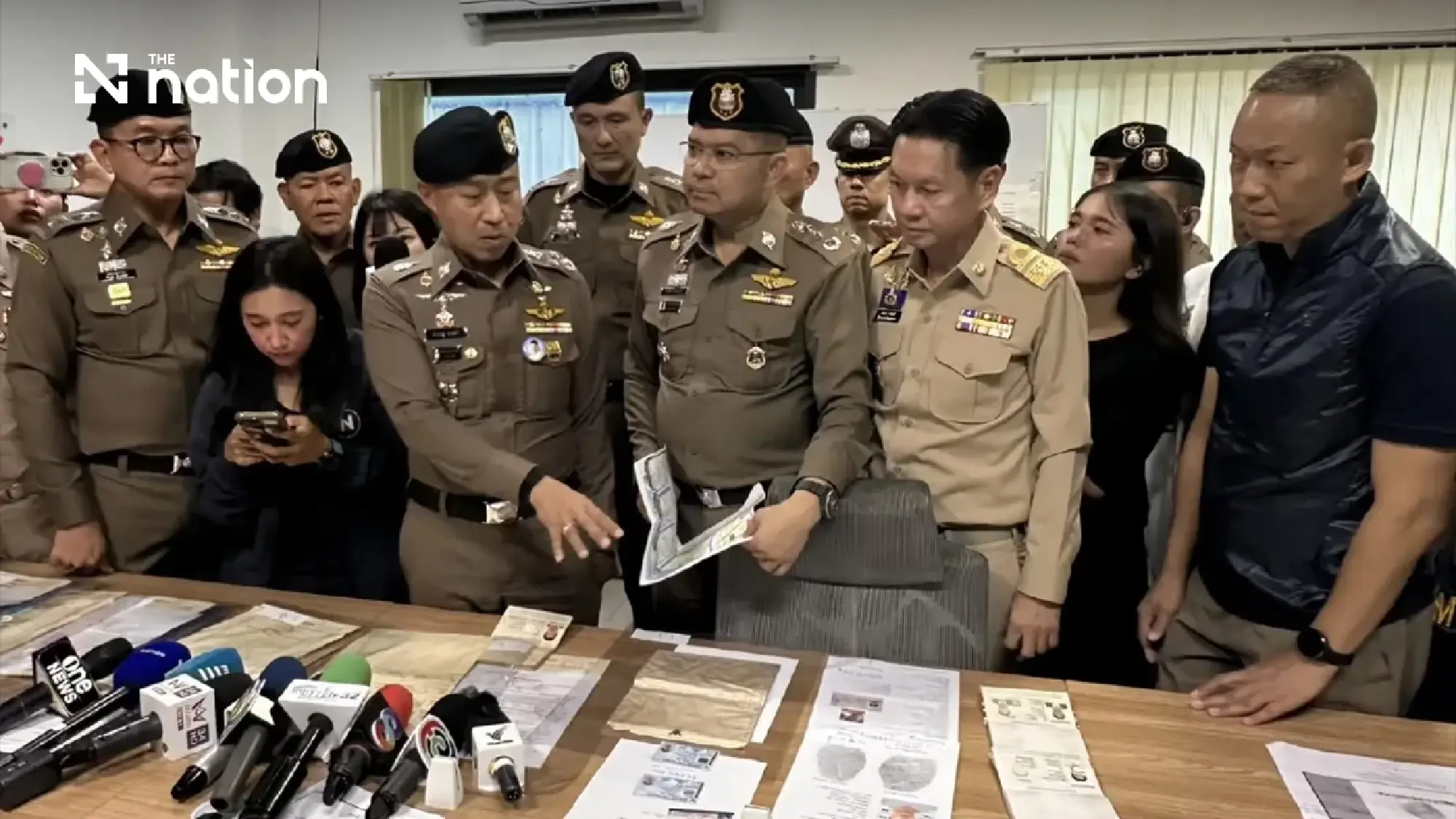

Chinese son denies knowing about false Thai identity
Police allege Myo arranged for Thanadon to assume a Thai civil-registration identity and obtain a national identity card before transferring all his assets to his son.
Thanadon presented officers with a Thai identity card listing an address in Mae Ai district, Chiang Mai, and a birth certificate recording his birthplace in the same district, according to police. The certificate named two Thai nationals, Jatu and Napha, as his parents.
Police said DNA testing showed that neither person named on the birth certificate was Thanadon’s biological parent. Investigators traced the document’s issuance to a Chiang Dao district chief who had previously been arrested in a case involving the improper issuance of Thai identity cards to foreigners.
Thanadon told reporters that he did not believe he had done anything wrong because he had not been involved, but apologised if he had broken the law. Thanadon raised his hands in a wai gesture of apology.
“At first, I did not want to live in Thailand, but I was forced to come. One of my father’s employees arranged it. I was in Grade 6 at the time, so I had no choice but to stay. I have been here for five years,” Thanadon said.
“I want to go home to China because my mother and grandmother are there, but I cannot return,” Thanadon said. “Personally, I knew nothing about using a dead person’s birth certificate to get an identity card or claiming benefits as a Thai citizen.”

Samran challenged Thanadon’s denial, questioning how he could claim not to know when investigators had evidence involving identity cards for two people.
Napha, whose registered home is in Chiang Dao district, Chiang Mai, said her own son had died at the age of five but that his death had not been registered. Napha alleged that a Chiang Dao district official contacted her to ask whether the child’s name could be used for a Chinese boy.
Napha admitted providing her deceased son’s name and said she received 500 baht for travel expenses. Napha maintained that she had not known the arrangement was illegal because she was unable to read.
Police trace businessman’s entry and Chinese arrest warrant
Samran’s account places Myo’s first entry into Thailand using a Myanmar passport in 2013. The police timeline also records use of a Myanmar passport on February 10, 2013.
According to Samran, Myo established Ketongly in April 2016, a month before Chinese authorities issued an arrest warrant in May 2016. AEC followed in February 2017, with KTL established as the third company.
Samran said Myo brought Thanadon to Thailand on September 17, 2021, and investigators alleged that the son subsequently assumed a Thai identity and became involved in cross-shareholding arrangements.
An Immigration Bureau facial-recognition check linked Myo to Li, a suspect wanted in China for allegedly supporting corruption in a government project, according to Samran.
Police said Myo admitted being Chinese and entering Thailand on a Myanmar passport, and that he possessed passports from both countries.
Myo also faces a separate assault case involving a Chinese company employee in 2021. Samran said the case involved forcing the employee to sign an acknowledgement of debt and physically assaulting the employee.
The Court of Appeal sentenced Myo to two years and 10 months in prison in the assault case, which is now before the Supreme Court, according to Samran.
Anti-money laundering office outlines asset seizure conditions
Peerathorn Vimollohakarn, a legal adviser and deputy spokesman for the Anti-Money Laundering Office, said assets linked to the alleged corruption could be seized or frozen because corruption is a predicate offence under Thailand’s anti-money-laundering law.
Peerathorn explained that a further request from Chinese authorities specifying the financial damage could allow Thailand to seize relevant assets and return them to China. AMLO could also act against other assets and investment returns if investigators proved that they originated from corruption proceeds.
Police accused Myo of allowing Thai nationals to hold shares on his behalf and operating businesses in breach of the Foreign Business Act. The Chinese corruption warrant and the assault case remain separate legal matters.
Thanadon is accused of using or presenting a Thai identity card obtained through false evidence despite not holding Thai nationality, according to police.
Napha faces allegations of giving false information to officials and using false evidence to secure an improper entry for herself or another person in the civil-registration system.
Police also accused the Thai company driver of nominee-related offences under the Foreign Business Act. Investigators said they were expanding the inquiry and pursuing two further suspects alleged to have acted as nominee shareholders.
