
Venus to reach peak brightness in Thailand’s western sky on Sept 22
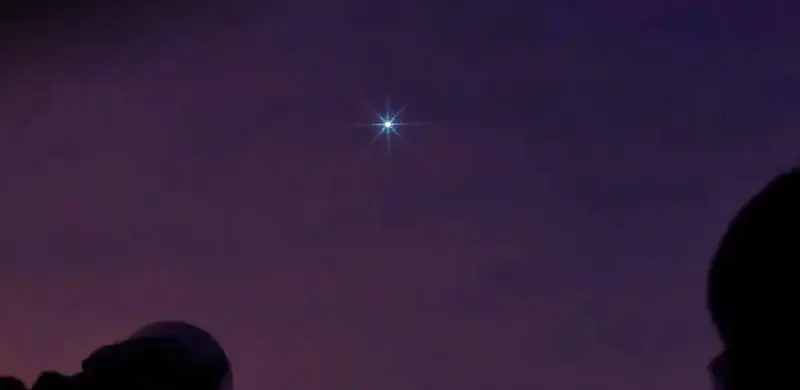


If skies are clear and there is no rain, Venus will shine in the western sky across Thailand after sunset on Tuesday (September 22, 2026) until about 7.40pm.
- On the evening of September 22, 2026, Venus will reach its peak brightness, an event known as "The Greatest Brilliancy," in the western sky over Thailand.
- The planet will be visible to the naked eye across the country from sunset until approximately 7:40 p.m., weather permitting.
- When observed through a telescope, Venus will appear in a crescent shape, resembling the Moon.
- Its apparent magnitude is expected to reach -4.6, with Spica and Mercury also visible nearby, closer to the horizon.
The National Astronomical Research Institute of Thailand (NARIT) is inviting the public to observe Venus at its brightest, a phenomenon known as “The Greatest Brilliancy”, in the early evening on Tuesday (September 22, 2026).
The planet will stand out in the western sky after sunset and remain visible until about 7.40pm.
If the sky is clear and there is no rain, it will be visible to the naked eye across Thailand.
Viewed through a telescope, Venus will resemble a crescent Moon.
In the early evening on Tuesday, Venus will move into the position at which it appears brightest, standing out clearly in the western sky from sunset until about 7.40pm.
Its apparent magnitude is expected to reach -4.6, with more negative values indicating greater brightness.
Through a telescope, the planet will appear as a crescent resembling the Moon.
Spica and Mercury will also appear below Venus, closer to the horizon, at around the same time.
If visibility is good, observers will be able to enjoy the view of Venus and the other celestial objects with the naked eye.
Venus reaches its greatest brilliancy when its crescent appears relatively large, and the planet is at a suitable distance from Earth, making it especially bright in the sky.
At other points in its orbit, Venus may have a thicker crescent, but its greater distance from Earth reduces its apparent brightness.
Viewed through a telescope, Venus always appears as a crescent because it is an inferior planet orbiting the Sun closer than Earth does.
It cannot be seen as a fully illuminated disc from Earth because it reaches that phase when positioned behind the Sun.
The thickness of its crescent changes with its position in orbit, while its maximum angular separation from the Sun is 47.8 degrees.
Venus can therefore be observed only briefly before sunrise or after sunset and never appears in the middle of the sky or late at night.
In Thailand, Venus is commonly called the “evening star” when seen in the western sky in the early evening and the “morning star” when seen in the eastern sky before dawn.
Venus will next return to greatest brilliancy for the second time this year before dawn on Friday (November 27, 2026), when it will stand out in the eastern sky and be visible to the naked eye from about 3.40am until sunrise.
