
Rama III oil pipeline damage prompts a full intelligent pigging test
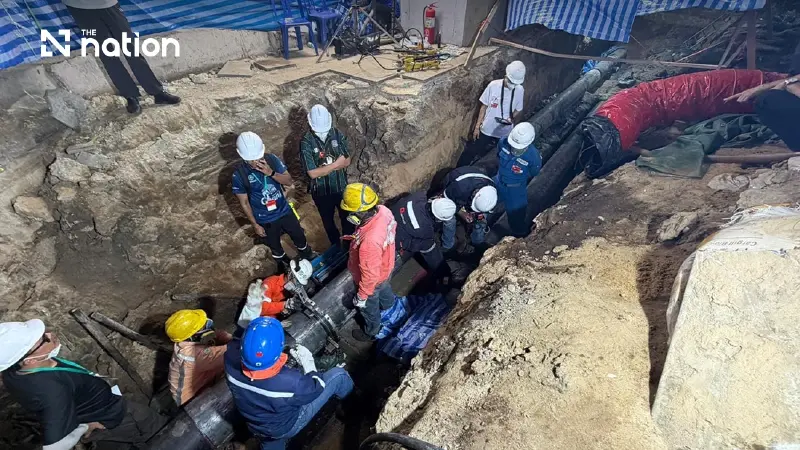


Engineers will repair a 6.6-centimetre damaged area before another ultrasonic testing scan, further inspections, pressure testing and a full pipeline check.
- A 6.6 cm long leak was discovered on the Rama III oil pipeline using an ultrasonic (UT) scan after a pipe sleeve was removed for inspection.
- Following immediate repairs to the specific leak, a comprehensive "intelligent pigging test" will be conducted along the entire 32-kilometer pipeline.
- The purpose of the full pipeline test is to assess the pipe's thickness and proactively identify any other sections at risk of future leakage.
- The Department of Energy Business is overseeing the process and has ordered the company to prepare a replacement plan for the damaged section and any other weak points discovered.
Thitipas Chotedechachainan, secretary to the energy minister, said after visiting the site to monitor progress in the investigation into the oil leak on Chuea Phloeng Road in the Rama III area that the leaking point had been located beneath a pipe sleeve about 1.8 metres long.
The sleeve was tightly attached to the fuel pipeline and could not be slid off for inspection.
The company therefore changed its approach, removing the sleeve one section at a time to allow a detailed examination of the pipe.
“The Department of Energy Business has told Bangchak Group to bring in a qualified third party with ultrasonic testing (UT) scanning equipment to assist with the inspection, as the equipment can examine materials and detect internal cracks without damaging the item being tested.”

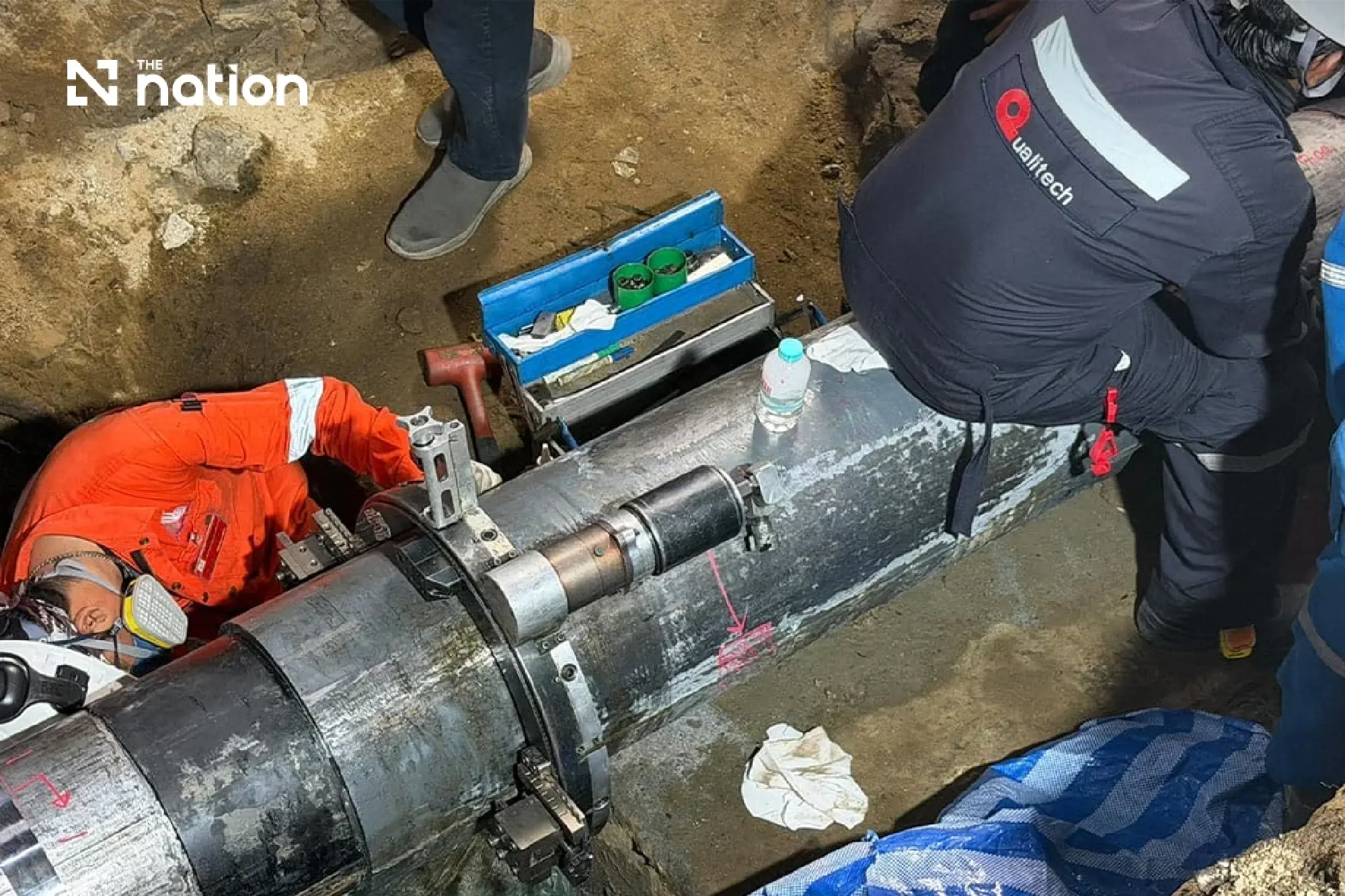

Damaged area measuring 6.6 centimetres found
A UT scan conducted the previous evening identified the leaking point about 1.2 metres in from the end of the sleeve.
The damaged area of the pipe was about 6.6 centimetres long and 7 millimetres deep.
Engineering and technical teams will expedite repairs using a wrapping method.
Once the repair material has dried, the area will undergo another UT scan, along with at least two further checks using other equipment, to confirm that the repaired point is not leaking before a pressure test is conducted.
“We will not stop after repairing the point found today. We must ensure that the entire pipeline system is safe. Once the pipeline has passed the testing stage, an intelligent pigging test will be conducted, using an intelligent pig to inspect the inside of the pipe along the entire pipeline, covering about 32 kilometres, to assess its thickness and identify any additional points at risk of leakage. If any risk points are found, the company must prepare a pipe replacement plan. It must also submit a plan to replace the pipe at the currently damaged point in line with engineering principles, with Department of Energy Business officials closely supervising the work and testing.”

Pipeline maintenance records ordered
The Department of Energy Business has ordered the company to submit the pipeline’s maintenance records, including information on every area where pipe sleeves have been installed.
The department will examine whether any other locations have a previous record of leakage or face a further leakage risk.
Pipeline sections around all piers, in particular, must be surveyed and a new pipeline alignment planned to match current site conditions and prevent future leaks.
The incident requires a system-wide examination, rather than repairs only at the affected point.
The Ministry of Energy and the Department of Energy Business will oversee the company’s work in accordance with engineering principles, covering repairs, pressure testing and inspection of the entire pipeline, to provide assurance that the oil transport system is safe and reduce the risk of a recurrence.
