
Three in four Thais feel underprepared for disasters, LINE survey finds
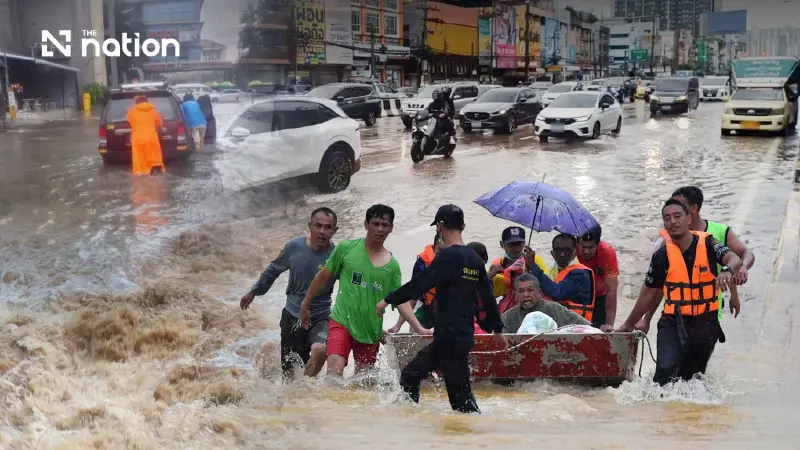


A LINE Thailand survey finds 75% of Thais feel unprepared or insufficiently prepared for natural disasters, with flooding their biggest concern.
Three in four Thais believe they are not yet adequately prepared for natural disasters, despite recognising the need to be ready, according to a regional survey released by LINE Thailand.
The survey, conducted by LY Corporation in Japan, Taiwan and Thailand, examined public concerns about natural disasters, everyday preparedness and how people obtain information before and during emergencies.
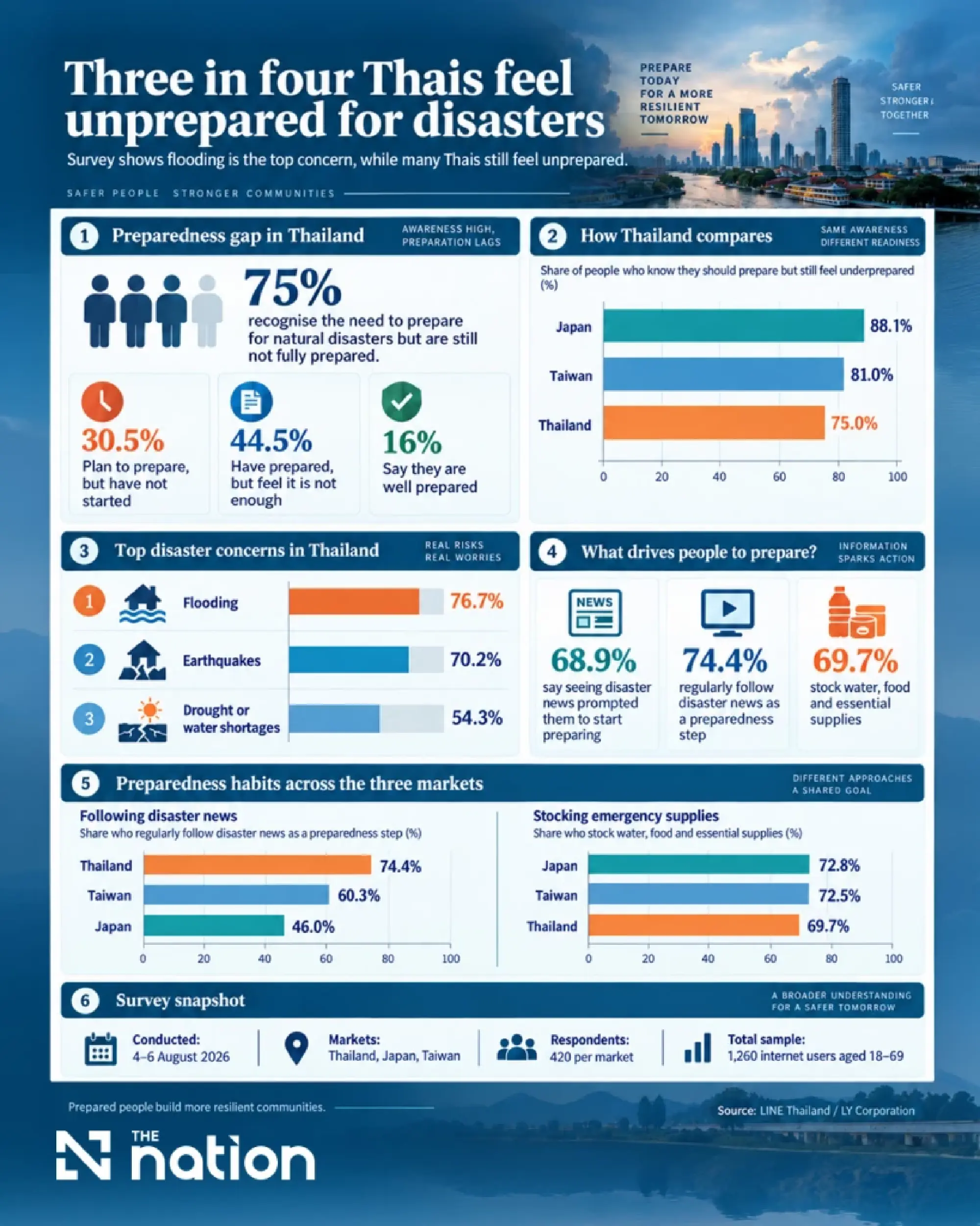
In Thailand, 75% of respondents said they recognised the importance of disaster preparedness but had either not yet taken action or felt their preparations were insufficient.
Of these, 30.5% said they intended to prepare but had not yet started, while 44.5% had already taken some steps but still felt they were not adequately prepared.
Only 16% of Thai respondents considered themselves well prepared.
The gap between awareness and action was also evident in the other two markets surveyed. The proportion of respondents who recognised the need to prepare but felt inadequately prepared stood at 88.1% in Japan, 81% in Taiwan and 75% in Thailand.

Flooding ranks as Thailand’s biggest concern
When respondents were asked which natural disasters worried them most, with multiple answers allowed, flooding ranked first among Thais at 76.7%.
This was followed by earthquakes at 70.2% and drought or water shortages at 54.3%.
Concerns differed by location. Earthquakes ranked as the greatest natural-disaster worry in both Japan and Taiwan, cited by 88.8% of Japanese respondents and 85.2% of Taiwanese respondents.
The findings suggest that perceptions of disaster risk differ according to local environmental conditions and exposure.
Disaster news prompts Thais to prepare
Among Thai respondents who had already made some preparations, 68.9% said seeing news about natural disasters was one factor that prompted them to take action.
Following disaster-related information was also the most common regular preparedness measure in Thailand, cited by 74.4% of those who had already taken preparatory steps.
This was followed by stocking water, food and essential supplies for emergencies at 69.7%.
The percentages were calculated from respondents who said they had already prepared, including both those who considered their preparations sufficient and those who did not.
Thais rely more heavily on disaster information
Preparedness patterns differed across the three markets.
Stocking emergency water, food and essential supplies was the most common measure in Japan at 72.8% and Taiwan at 72.5%.
By contrast, following disaster-related news was cited by 46% in Japan and 60.3% in Taiwan, compared with 74.4% in Thailand, the highest proportion among the three locations surveyed.
LY Corporation said the findings highlighted a common challenge: turning awareness of disaster risks into concrete action before emergencies occur.
The survey was conducted from August 4-6, 2026, among internet users aged 18-69 in Japan, Taiwan and Thailand.
There were 420 respondents in each market, giving a total sample of 1,260 people.
