
Bangkok floods spark 40m engagements as Thais turn to social media
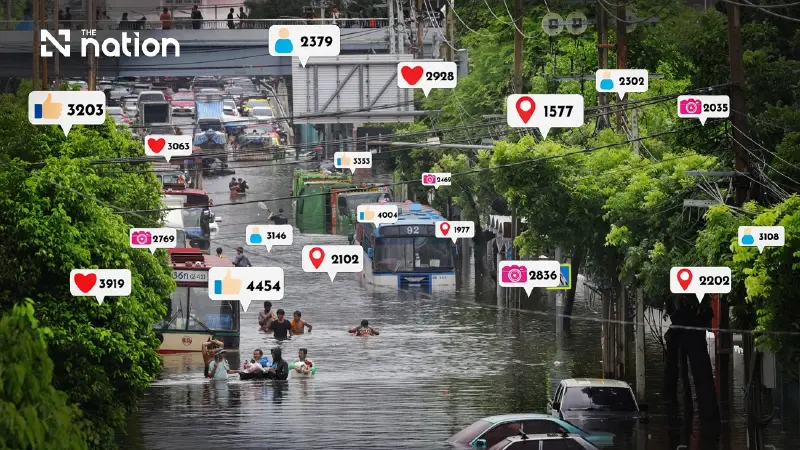


Bangkok’s 2026 floods generated more than 40 million social media engagements, as Thais tracked warnings, sought help and shared criticism and humour online.
Bangkok’s latest flooding has generated more than 40 million social media engagements, turning online platforms into a major source of real-time information, emergency assistance and public reaction during the capital’s late-September deluge.
Data from Zocial Eye showed 40 million engagements across 167,607 online messages and posts. Facebook generated about 20 million engagements, reflecting the prominent role of news organisations and public pages in providing minute-by-minute updates.
TikTok accounted for only 4.5% of the messages monitored, but generated more than 14 million engagements, driven largely by short-form videos and humorous content that spread rapidly.
The data highlight five major themes dominating online discussion during the flooding.

24-hour monitoring as public attention surges
Online discussion intensified sharply as heavy rain continued across Bangkok, with the volume of messages rising from 117 to 6,400 an hour.
The surge reflected strong public demand for immediate updates on rainfall, water levels, flooded roads and conditions in individual neighbourhoods.

Race to issue flood warnings
The timing of warnings became another major talking point.
Independent weather page Tee Lom Fa Akat attracted viral attention after issuing advance warnings before an urgent alert from the Thai Meteorological Department.
Online discussion highlighted the growing role of independent pages and members of the public in circulating weather information and prompting others to prepare.

Searches shift from forecasts to emergency help
As flooding began directly affecting residents, online conversations shifted from questions about whether rain would fall to more practical concerns, including where to move vehicles to escape flooding and how to obtain emergency assistance.
Mentions of emergency telephone numbers and Bangkok’s Traffy Fondue reporting platform increased 18-fold, according to the social data.

Public criticism focuses on disaster response
The floods also triggered criticism of the authorities’ response, with videos questioning the speed and effectiveness of flood management attracting widespread attention.
A recurring theme in online conversations was the perception among some users that residents, volunteers and private organisations often had to begin helping affected communities before official assistance arrived.
These comments represent public sentiment expressed online rather than an independent assessment of the government’s response.

Humour helps people cope and spreads information
Humour remained a prominent feature of online discussion despite the disruption caused by flooding.
The familiar phrase “water waiting to be drained”, often used sarcastically when describing persistent flooding, resurfaced alongside memes including “Sat Pai Samachik”.
Such content helped ease tension while also allowing flood-related information to reach audiences beyond conventional news reporting.
Online conversation turns towards mutual support
As conditions began to improve, the tone of social media posts increasingly shifted towards messages of support, thanks for rescuers and volunteers, and efforts to help affected people and rescue stranded pets.
The social data illustrate how digital platforms function during disasters not only as news and warning channels, but also as spaces for requesting assistance, scrutinising authorities, sharing humour and organising mutual support.
They also underline the importance of speed, reliable information and community cooperation during fast-moving emergencies.
For those who wish to help our fellow citizens suffering and affected by the floods, you can make a donation through the following accounts:
Nation Foundation
Bank of Ayudhya (Krungsri): Account No. 333-0-01399-6
Kasikorn Bank: Account No. 192-3-59782-0
"We will get through this crisis together."
