
Pasak River expected to rise by up to 4m as dam plans to increase releases
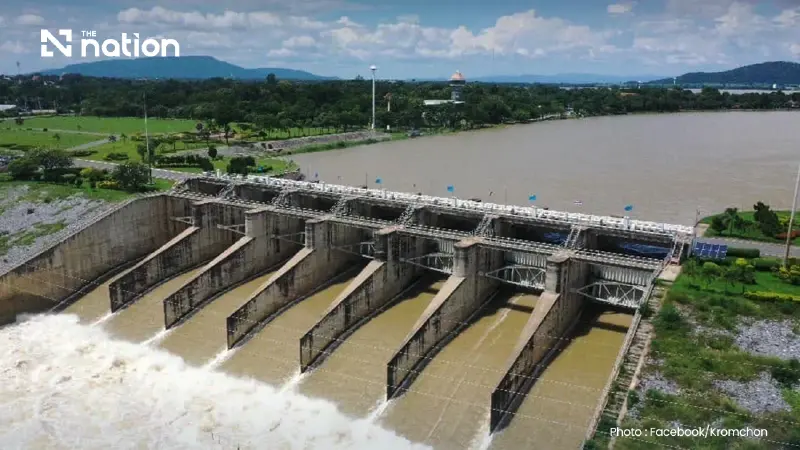


The Pasak River is expected to rise by about 3.50–4.00 metres but remain within its banks as authorities step up drainage operations across flood-hit areas.
- The Pasak Jolasid Dam is increasing its water release because its reservoir is at 96.49% capacity and significant inflows are expected to continue.
- The dam will increase its discharge in stages, starting on September 30 and reaching a maximum of 400 cubic metres per second by October 2.
- As a direct result of the increased release, the Pasak River is forecast to rise by 3.5 to 4 metres from its current level.
- Despite the significant rise, authorities state the water is expected to remain within the river channel and not overflow its banks.
Pasak Jolasid Dam issued a notice on Monday (September 28, 2026), urging residents to remain vigilant and monitor water conditions.
The notice reported storage of 840.94 million cubic metres (96.49%), with inflows of 737.78 cubic metres per second, or 63.74 million cubic metres per day.
Water was being released at 25.07 cubic metres per second, or 2.17 million cubic metres per day.
Based on its monitoring and forecast, the Royal Irrigation Department expects inflows to continue over the next seven days, totalling approximately 373.22 million cubic metres.
To keep water levels and storage within appropriate limits, the Pasak Jolasid Dam Operation and Maintenance Project will increase releases in stages from September 30.
The notice sets out an increase from 25 cubic metres per second, or 2.17 million cubic metres per day, to 400 cubic metres per second, or 34.56 million cubic metres per day.
The planned increases are as follows:
- September 30: 115 cubic metres per second, or 9.97 million cubic metres per day.
- October 1: 230 cubic metres per second, or 19.87 million cubic metres per day.
- October 2: 400 cubic metres per second, or 34.56 million cubic metres per day.
The notice called for residents in the area to be alerted and to monitor conditions closely to help prevent property damage, as the Pasak River is expected to rise by about 3.50–4.00 metres from its current level.
It stated that the water would remain within the river channel and would not overflow its banks.

Department updates dam conditions and steps up water retention, distribution and drainage to ease impacts on residents
Chao Phraya basin
Water continues to flow into the basin from upstream areas.
At 6am on Monday, the C.2 gauging station in Mueang district, Nakhon Sawan, recorded a flow of approximately 1,904 cubic metres per second, with an upward trend.
The Royal Irrigation Department is managing water upstream of Chao Phraya Dam by retaining it in upper areas and diverting a combined total of about 558 cubic metres per second into irrigation networks on the eastern and western sides, as capacity allows.
These measures aim to distribute water upstream and reduce the volume passing through the dam, where releases have been increased to approximately 2,000 cubic metres per second.
Releases will be regulated in line with rainfall, runoff and inflows from upstream areas.
Water management will be co-ordinated across the upper, middle and lower basin, with irrigation networks receiving and distributing water to reduce the volume flowing through the main rivers towards Bangkok and downstream areas.
Meanwhile, water levels upstream of Chao Phraya Dam remain under close watch, as rising levels have caused overflows at some locations in Uthai Thani, Chai Nat and Nakhon Sawan.
Relevant agencies have been alerted.
If further increases in releases are necessary, they will be introduced in stages, with agencies and downstream residents notified again in advance.

Pasak Jolasid Dam
The department is regulating releases to suit conditions and reduce the volume reaching Rama VI Dam and joining the Chao Phraya River.
It is also reducing releases through Phra Narai Watergate into Raphiphat Canal to give the canal network more capacity to receive rainwater and drain affected areas.
Meanwhile, the department continues to accelerate drainage from the lower Chao Phraya River through the royally initiated Khlong Lat Pho floodgate into the Gulf of Thailand.
Drainage plan to ease impacts on Bangkok and surrounding areas
In Bangkok and surrounding areas affected by accumulated heavy rainfall, the department is accelerating drainage through the irrigation network on the eastern side of the Chao Phraya basin.
It is using transverse canals connected to Bangkok, including Rangsit Prayunsak, Hok Wa Sai Lang, Bang Khanak, Nakhon Nueang Khet, Prawet Burirom and Samrong, with pumping stations speeding up discharge into the Nakhon Nayok and Bang Pakong rivers.
Alongside these, longitudinal canals, including the southern branch of Raphiphat Canal, Khlong 13 and Phra Ong Chaiyanuchit Canal, are receiving and distributing water from the upper areas of Bangkok.
Pumping stations along coastal canals are also working continuously to discharge water into the Gulf of Thailand, in co-ordination with the Department of Drainage and Sewerage.
Eastern region
Over the past four days, approximately 300–500 millimetres of rain has fallen across eight provinces, causing flooding and overflowing waterways in several areas.
The department is using major reservoirs, including Khun Dan Prakan Chon and Naruebodindrachinta dams, Khlong Phra Sathueng, Khlong Si Yat and Khlong Luang Ratchalothon reservoirs, and reservoirs in Rayong and Chanthaburi, to receive and retain water from upstream areas.
Irrigation structures, pumping stations, pumps and water propulsion machines are also being used to accelerate drainage and ease the impact on residents.
Water situation in the western region
In the Mae Klong basin in Kanchanaburi, accumulated heavy rainfall has led to continuing inflows into Mae Klong Dam.
The department needs to increase downstream releases to keep water levels within storage limits and protect the dam.
This could raise the Mae Klong River downstream by approximately 2.50 metres from its current level.
Written warnings have been sent to five provinces with areas downstream of Mae Klong Dam: Ratchaburi, Kanchanaburi, Nakhon Pathom, Samut Songkhram and Samut Sakhon.
The department has also asked the Electricity Generating Authority of Thailand to consider reducing releases from Vajiralongkorn and Srinagarind dams to limit additional inflows.
