
BDMS expands Thai CAR-T partnerships to widen cancer care access
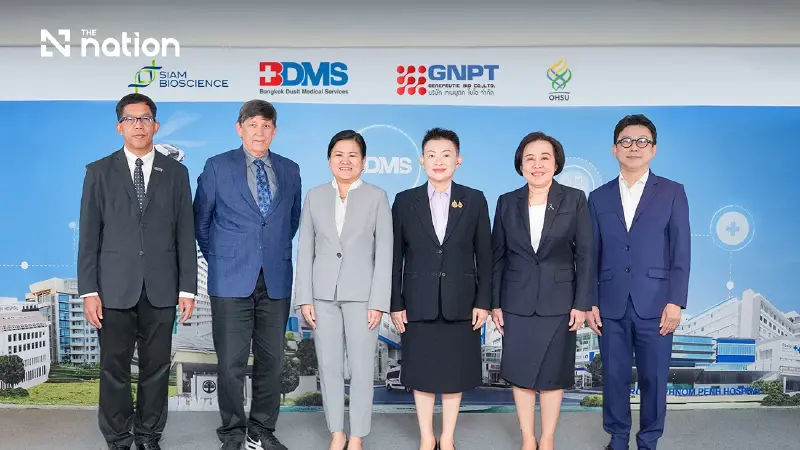


Bangkok Dusit Medical Services links Thai research, manufacturing and hospital care to advance CAR-T cancer therapy and widen access in Thailand.
- Bangkok Dusit Medical Services (BDMS) is strengthening partnerships with Genepeutic Bio and Siam Bioscience Group to advance CAR-T cell therapy in Thailand.
- The collaboration aims to widen access to advanced cancer treatment by developing a complete domestic system, from research and manufacturing to clinical application.
- A key goal is to make the therapy more affordable, targeting a price of around THB3.5 million, by establishing a local manufacturing facility capable of treating 500 patients annually.
- The initiative seeks to establish Thailand as a regional centre for cell and gene therapy, with the long-term aim of expanding access across Southeast Asia.
Bangkok Dusit Medical Services (BDMS) is strengthening research, manufacturing and clinical partnerships to advance chimeric antigen receptor T-cell (CAR-T) therapy in Thailand, aiming to improve cancer treatment and widen access to advanced therapies.
The initiative, outlined at a press conference on Friday (November 13), centres on continued investment in Genepeutic Bio (GNPT) and collaboration with Siam Bioscience Group.
Together, these partnerships are intended to move discoveries from the laboratory into patient care, strengthen Thailand’s biomedical innovation ecosystem and support access to cell and gene therapies across the Association of Southeast Asian Nations (ASEAN).
CAR-T therapy uses genetically modified T cells from the immune system to recognise and destroy targeted cancer cells. It is a treatment option for certain cancers, particularly blood cancers for which the therapy is clinically indicated.

Connecting research with patient care
Dr Kongkiat Kespechara, a BDMS executive committee member and chief executive of Group 6, described the partnerships as part of the group’s efforts to strengthen its capabilities in cell and gene therapy and precision medicine.
“Progress in medical treatment depends not only on technology but also on having a comprehensive system that supports every stage, from research and development to manufacturing and clinical application,” he said.
Kongkiat linked investment in GNPT and cooperation with Siam Bioscience to the longer-term goal of developing and manufacturing advanced medical technologies in Thailand. The group also aims to help position the country as a regional centre for cell and gene therapy.
Professor Suradej Hongeng, a paediatric haematologist and oncologist at Samitivej International Children’s Hospital, stressed the importance of cooperation in moving treatments from the laboratory into clinical use.
“Bringing CAR-T Cell Therapy from research into actual patient treatment requires close cooperation among researchers, technology developers, manufacturers, and medical teams.”
Suradej highlighted GNPT’s role in researching, developing and manufacturing cell and gene therapy products, which require complex processes and strict quality control. Building domestic expertise, training personnel and increasing manufacturing capacity would provide the foundations for wider clinical applications, he added.
Potential demand and affordability
Kongkiat estimated that around 1.5 million people in Thailand could eventually need cell or gene therapy. He described Thailand’s current CAR-T efforts as focusing on leukaemia, with a potential patient group numbering only a few thousand. He identified solid tumours, including lung and liver cancers, as possible future research targets.
He also pointed to thalassaemia as a possible target for gene therapy, estimating that Thailand has around 600,000 patients with the inherited blood disorder, including 40,000 who require lifelong blood transfusions.
On affordability, Kongkiat cited overseas CAR-T costs ranging from THB20 million to THB100 million. He compared this with a target price of around THB3.5 million for treatment in Thailand.
He estimated that imported viral vectors, which are used in CAR-T production, account for roughly half of manufacturing costs. Producing these components domestically or increasing production capacity could help reduce expenses further, he argued.

Developing manufacturing capacity in Thailand
The partnership also involves Siam Biocell & Gene Co Ltd, which was established through collaboration among Siam Bioscience Group, BDMS, Siam Cement Group (SCG), Bangkok Bank and Mahidol University.
The company is developing a facility designed to support several cell and gene therapy technologies. The facility is planned to produce CAR-T treatments for approximately 500 patients a year and operate in accordance with international good manufacturing practice (GMP) standards.
Dr Wantanee Wattana, chair of Siam Biocell & Gene, outlined plans to adopt a contract development and manufacturing organisation (CDMO) model for advanced therapy medicinal products. The partnership would draw on Siam Bioscience’s expertise in manufacturing biological medicines.
“By sharing resources, improving manufacturing efficiency, and reducing production costs, we aim to make innovative treatments more accessible to Thai patients.”
Wantanee also highlighted opportunities to help Thai-developed medical products meet international standards, expand exports of advanced medical technologies and support medical and wellness tourism.

Preparing hospitals to deliver advanced treatment
Dr Surangkana Techapaitoon, deputy chief executive of the Samitivej and BNH hospital group and director of Samitivej Sukhumvit Hospital, highlighted CAR-T’s potential to expand treatment options for some patients whose cancer has returned or has not responded to standard treatment.
“However, successful implementation requires highly trained multidisciplinary medical teams and comprehensive clinical care systems.”
She outlined the stages that hospitals must be equipped to manage:
- Selecting suitable patients and collecting cells.
- Administering the therapy.
- Providing follow-up care.
- Monitoring for possible complications.
Surangkana emphasised that linking clinical expertise with technology development and manufacturing in Thailand would be essential to improving treatment outcomes and widening access in the future.

Collaboration to expand access across the region
Dr Richard T. Maziarz, a professor of medicine at Oregon Health & Science University and president-elect of the American Society for Transplantation and Cellular Therapy, highlighted CAR-T’s impact on the treatment of certain blood cancers, particularly for patients with limited options.
Maziarz noted that researchers and clinicians are developing next-generation CAR-T technologies to improve treatment effectiveness and explore possible uses against other cancers.
“Expanding access to these therapies requires close collaboration among healthcare providers, researchers, and industry partners to strengthen manufacturing standards, clinical readiness, and patient safety.”
For BDMS and its partners, the broader objective is to strengthen Thailand’s ability to develop advanced medical technologies domestically, translate scientific discoveries into patient treatment and expand access to advanced therapies across ASEAN.
