
BDMS to take majority stake in GNPT to advance Thai cancer therapies
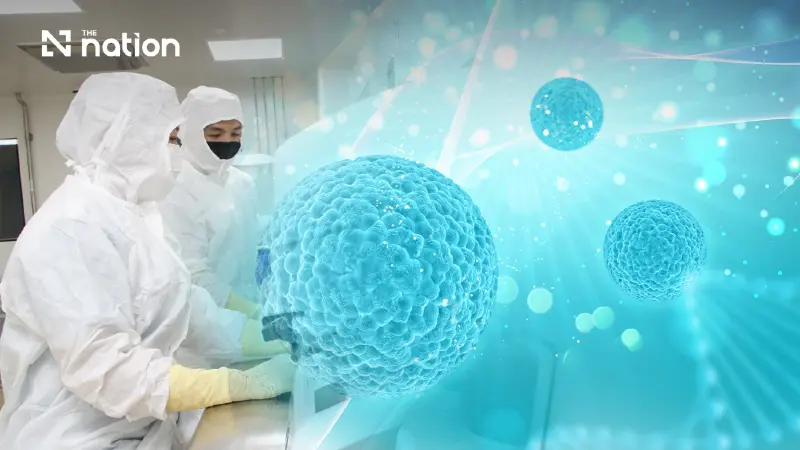


BDMS plans to increase its holding in Genepeutic Bio to 55% through a THB170 million investment, backing locally developed CAR-T cancer therapy.
- Bangkok Dusit Medical Services (BDMS) is investing THB170 million to increase its stake in biotechnology company Genepeutic Bio (GNPT) to 55%, becoming the majority shareholder.
- The investment aims to advance domestically developed cancer cell therapies, particularly a CAR-T treatment named ProtaCAR which has received conditional approval for a form of leukaemia.
- By manufacturing the treatment in Thailand, the partnership intends to reduce costs by as much as one-third compared to expensive imported alternatives.
- Funding will also be used to expand GNPT's manufacturing capacity and support research into other cell and gene therapies, such as treatments for lymphoma.
Bangkok Dusit Medical Services (BDMS) plans to invest a further THB170 million in Thai biotechnology company Genepeutic Bio (GNPT), increasing its stake from 19.9% to 55% as it expands into domestically developed cancer cell therapies.
The investment, made through Royal Bangkok Healthcare, a BDMS group company, will give the private hospital operator a majority holding in GNPT. The funding is intended to support further product development, expand manufacturing capacity and advance other treatments, rather than being devoted solely to an existing cancer medicine.
GNPT, established in 2020 to turn research from the Faculty of Medicine Ramathibodi Hospital at Mahidol University into medical products, operates a Good Manufacturing Practice (GMP)-certified facility at Thailand Science Park in Pathum Thani.
According to BDMS, it is Thailand's first GMP-certified manufacturer specialising in cell and gene therapies.

Thai-developed CAR-T treatment receives conditional approval
GNPT's ProtaCAR has received conditional marketing authorisation from the Thai Food and Drug Administration (FDA) for patients aged four to 24 with CD19-positive B-cell acute lymphoblastic leukaemia, a form of blood cancer.
The treatment uses chimeric antigen receptor T-cell (CAR-T) technology, in which immune cells are genetically modified to identify and attack certain cancer cells. ProtaCAR is an allogeneic therapy made from donor-derived cells rather than cells collected separately from each patient.
Using donor cells offers the potential to prepare treatments in advance and reduce waiting times. However, the approval covers a specific patient group and requires long-term safety monitoring. Wider use would require further research and regulatory approval.

Local manufacturing aims to cut costs
Dr Ittiporn Chuatrisorn, a director of GNPT and director of medical innovation at National Healthcare Systems (N Health), a BDMS subsidiary, described the investment as part of a shift beyond running hospitals.
"The investment in GNPT marks another important milestone for BDMS as we expand our role beyond healthcare service provision to become actively involved in the development of advanced medical technologies," she said.
Ittiporn told reporters that imported CAR-T medicines used for treatment overseas could cost THB15 million to THB20 million per case for the medicine alone, excluding travel and other hospital expenses. Producing the treatment in Thailand could reduce costs by as much as one-third compared with imported products.

Dr Surangkana Techapaitoon, deputy chief executive of the Samitivej and BNH Group of Hospitals, linked the potential savings to Thai-owned research and production.
"Previously, commercial CAR-T products cost between US
Surangkana expects the treatment to appeal beyond the domestic market. Foreign patients account for about 30% of BDMS's patient base, with many coming from countries in the Association of Southeast Asian Nations (ASEAN), the Arab world and South Asia, according to the executives.

Hospital treatment awaits a separate licence
Despite the medicine's conditional approval, BDMS still requires approval from the Department of Health Service Support before launching the treatment service at its hospitals. Ittiporn confirmed that an application had been submitted and that the group hopes to secure permission by the end of 2026.
The executives identified several obstacles to introducing this relatively new form of treatment, including lengthy registration procedures, regulatory uncertainty and the need to train clinical teams. Doctors, nurses, pharmacists and laboratory specialists must be prepared to administer the treatment and monitor patients closely.
Surangkana explained that BDMS has been working with medical institutions in the United States on specialist training, with staff sent overseas ahead of the planned service launch.
"We have to prepare the doctors, nurses, pharmacists and technical staff. Our staff are undergoing training in the United States before returning to help prepare the centre. The facilities and medicine are ready, and we are putting the procedures in place to provide the best possible care," she said.

Further therapies and production expansion planned
GNPT can currently produce treatments for about 40 patients a year, according to Ittiporn. The facility could increase that capacity to around 200 patients annually with additional equipment, while the THB170 million investment will also support research and production of other cell therapies.
The company is studying additional applications of CAR-T technology, including treatment for lymphoma. Any new indications would need to go through the appropriate research and regulatory processes before becoming available to patients.
BDMS and GNPT also intend to integrate research, manufacturing, diagnostic testing and follow-up care across the hospital network. The longer-term strategy includes tissue therapies and potential partnerships elsewhere in the region.
"Looking ahead, BDMS and GNPT see significant opportunities to expand the application of this technology and strengthen their collaboration across research and product development, manufacturing in compliance with international standards, diagnostic testing, and patient monitoring," Surangkana said.

