
Eastern Thai reservoir storage hits 100.23% on Oct 4
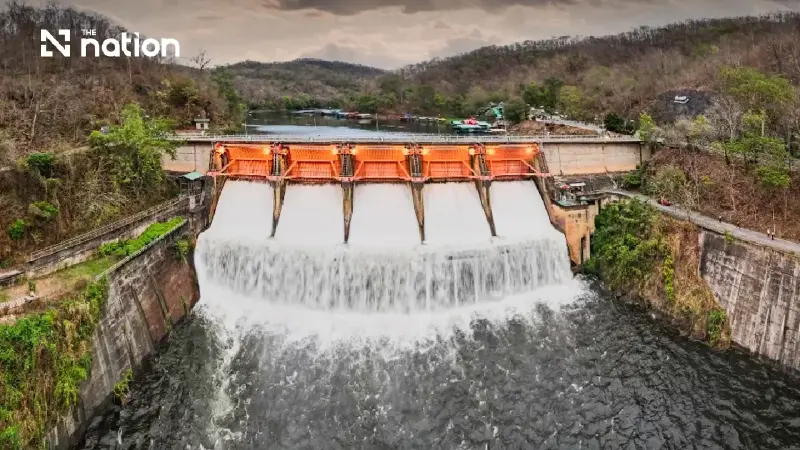


Royal Irrigation Department plans staged releases in Chonburi and warns Phan Thong and Phanat Nikhom residents of rising water
- The combined storage of 62 reservoirs in Eastern Thailand reached 100.23% of their normal capacity on October 4.
- In response, the Royal Irrigation Department has ordered accelerated drainage and 24/7 monitoring across eight provinces in the region.
- Authorities are conducting staged water releases from a Chonburi reservoir and have issued advance warnings to downstream communities.
- Dam safety is a top priority, with continuous monitoring of water levels, discharge rates, and structural integrity of irrigation facilities.
Royal Irrigation Department ordered faster drainage and round-the-clock monitoring in the eastern region on October 4, 2026, after combined reservoir storage reached 100.23% of normal capacity. Officials also agreed on staged releases from a Chonburi reservoir and coordinated warnings for downstream communities ahead of further rainfall.
The 62 large and medium-sized reservoirs under Regional Irrigation Office 9 held approximately 2,605 million cubic metres of water at the latest assessment. The 100.23% figure represents their combined storage against total normal capacity.
Royal Irrigation Department director-general Witthaya Kaewmee assigned deputy director-general Thanan Suttipisan to chair the eastern water-management and flood review. The meeting took place in the Eastern Smart Water Operation Center meeting room at Regional Irrigation Office 9 in Chonburi, with additional participation through Zoom.
Kriengsak Phumnak, deputy director of Regional Irrigation Office 9, attended alongside division directors, project directors, section heads and other relevant officials to assess water conditions.
Chonburi prepares staged releases and downstream warnings
Water releases from Khlong Luang Ratchalothorn Reservoir in Chonburi are to be managed in stages to create storage space for additional rainfall. Officials reviewed the reservoir’s high accumulated water volume and agreed on an approach to accommodate further inflows.
The Royal Irrigation Department coordinated with Chonburi provincial authorities and local administrative organisations to provide advance warnings to downstream residents. Particular attention is being given to Phan Thong and Phanat Nikhom districts, where communities have been told to watch for rising levels in natural waterways and prepare to respond promptly.
Drainage orders cover seven provinces beyond Chonburi
The eastern flood-management review also examined water conditions and inundated areas in seven other provinces:
- Chachoengsao
- Prachin Buri
- Sa Kaeo
- Nakhon Nayok
- Chanthaburi
- Rayong
- Trat
The Royal Irrigation Department instructed all irrigation projects in the affected areas to accelerate drainage wherever floodwater remained. Pumping stations, water pumps and water-flow accelerators are to operate at full capacity, with measures aimed at protecting lives and property and limiting damage to agricultural land.
Local irrigation projects were also told to adapt their water-management and drainage plans to the terrain and the condition of waterways in each river basin, so that operations respond to the circumstances of individual areas.
Dam safety takes priority in round-the-clock operations
Royal Irrigation Department teams in the eastern region have been instructed to monitor reservoir inflows, water levels and discharge rates continuously, 24 hours a day. Officials must also carry out ongoing inspections of dams, irrigation structures and water-delivery systems to check their structural integrity and operation.
The Royal Irrigation Department made dam structural safety the foremost consideration in managing the flood situation. Officials were instructed to assess and forecast peak inflows so that reservoir storage space could be prepared in advance.
The Royal Irrigation Department has allocated pumps, water-flow accelerators and heavy machinery to vulnerable locations. Preparations also include strengthening earthen flood embankments and arranging sandbag supplies at flood-risk sites, enabling emergency assistance and remedial work at any hour.
