
Thailand launches T-Xeno Hub for pig kidney transplant research
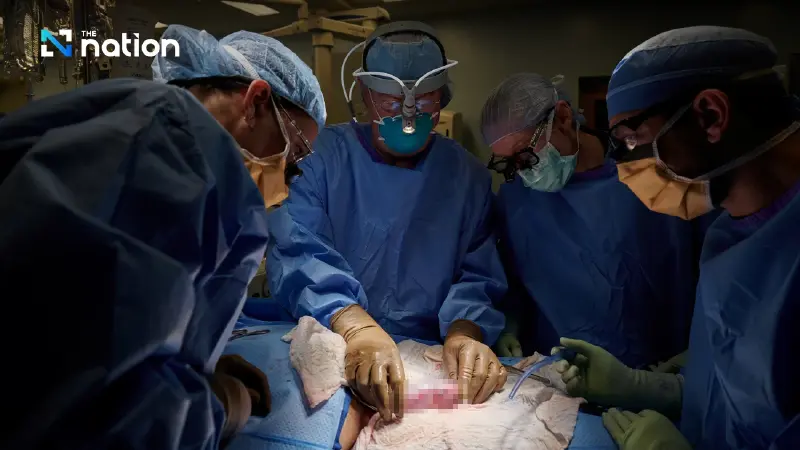


Mahidol University, Betagro and New Zealand's NZeno plan Thailand's T-Xeno Hub to study genetically modified pig kidneys, with human trials targeted within five years.
Thailand has unveiled plans for the Thailand Xenotransplantation Hub (T-Xeno Hub), a research initiative aimed at developing genetically modified pig kidneys for possible transplantation into humans and establishing what its partners intend to be the first centre of its kind in ASEAN.
The Ministry of Higher Education, Science, Research and Innovation (MHESI) and Mahidol University are collaborating with Betagro Public Company Limited and New Zealand biotechnology company NZeno Limited.
The partners have also announced the establishment of MU BioGro Co Ltd to connect laboratory research with industrial development, supporting Thailand's ambition to expand its advanced medical technology sector.
Addressing the shortage of donor kidneys
Professor Piyamitr Sritara, president of Mahidol University, highlighted the shortage of donor organs in Thailand.
According to figures he presented for 2024, approximately 23,000 people were eligible for kidney transplantation, while only 989 transplants were performed. Some patients face waits exceeding five years, and others die before receiving a donor organ.
Piyamitr put annual renal replacement treatment costs under Thailand's national healthcare system at approximately THB36.678 billion, compared with about THB1 million for an individual kidney transplant.
He argued that expanding transplant options could reduce patients' dependence on dialysis and improve their quality of life, while potentially easing long-term healthcare expenditure.
Mahidol University will draw on the Faculty of Medicine Ramathibodi Hospital and the Faculty of Medicine Siriraj Hospital, whose teams have carried out more than 5,000 kidney transplants between them.
Its Faculty of Veterinary Science, which the university describes as ranked 63rd globally, brings more than 16 years of expertise in animal cloning.
Medical-grade pig facility planned in Kanchanaburi
Vasit Taepaisitphongse, chief executive officer of Betagro, outlined plans to apply the company's 59 years of experience in agriculture and food production to the research programme.
Betagro will jointly invest in and develop a designated-pathogen-free (DPF) pig production facility at Mahidol University's Kanchanaburi Campus. Construction is expected to be completed within 18 months.
The centre will draw on specific-pathogen-free livestock management, strict biosecurity procedures, controlled environments and routine pathogen monitoring.
It is intended to breed pigs specifically for medical research, with systems designed to prevent infection without relying on antibiotics.
Peter Lai, chief executive officer of NZeno Limited, outlined the New Zealand company's role in transferring technology and supplying medical-grade genetically modified pig cell lines.
The collaboration is intended to give Thai researchers an established starting point, reducing the need to develop every component from scratch and potentially shortening the research process.
Research must address rejection and infection risks
Xenotransplantation, the transfer of organs between species, faces two major barriers: the recipient's immune system may reject the organ, and pathogens may pass between animals and humans.
The research will therefore focus on modifying pig genes associated with human immune rejection while maintaining DPF breeding and infection-control standards.
Artificial intelligence will also be used to analyse DNA sequences and international genome databases, helping researchers identify potentially more precise gene-editing targets.
During the first 18 months, the partners aim to complete the Kanchanaburi facility, receive the cell lines and advance the project from technology readiness level 4, representing laboratory validation, to level 5, involving validation in a relevant environment.
Subsequent work will include studies in non-human primates before any human trials are considered.
The project aims to reach the human clinical trial stage within five years, subject to research results, safety assessments and regulatory requirements.
Kidneys are the immediate priority, although the partners envisage future research involving other organs, including hearts and livers.
Government links research with wellness economy
Deputy Prime Minister and Minister of Higher Education, Science, Research and Innovation Yodchanan Wongsawat described health security as a foundation of Thailand's economy.
He presented the partnership as part of the ministry's SIAM MEDICA initiative, which focuses on advanced medicine, scientific wellness, medical devices and advanced therapies.
Yodchanan wants universities to become centres for developing advanced technologies, helping Thailand move from purchasing foreign innovation towards creating its own.
The project follows the Triple Helix model, bringing together government, universities and industry, with both Thai and international partners contributing research expertise, technology and production capabilities.
The initiative has also been considered with the National Wellness Committee.
Further policy work is expected to address regulations on importing research materials, clinical use and testing, alongside proposals for public-private investment and support from the Program Management Unit for Competitiveness (PMUC).
The partners see potential for the hub to strengthen Thailand's biomedical industry and eventually support its medical and wellness tourism sector.
For now, however, T-Xeno Hub remains a research initiative. Its progress towards human transplantation will depend on whether genetically modified pig organs can meet the safety and clinical requirements needed before they can be used to treat patients.
