
Thailand floods hit 1.7m rai including over 26,000 rai of orchards
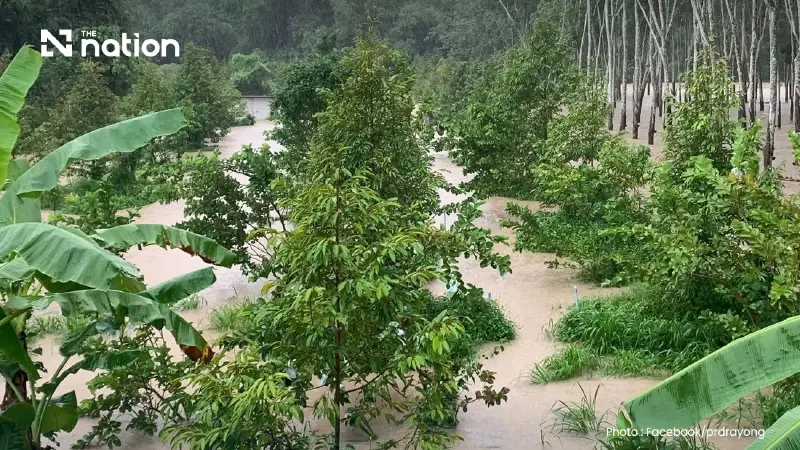


Specialists are helping eastern Thailand’s durian growers save trees, as replacements would take at least five years to bear fruit.
- Flooding across 49 provinces in Thailand has damaged over 1.7 million rai of farmland, impacting more than 150,000 farmers.
- Among the affected areas are over 26,000 rai of fruit orchards in eastern Thailand, including valuable durian orchards.
- The damaged farmland consists of approximately 1.3 million rai of rice fields, 290,000 rai of field crops, and 120,000 rai of fruit orchards.
- Authorities are deploying specialists to save recoverable durian trees to prevent a potential five-year wait for replacement trees to bear fruit.
More than 26,000 rai of fruit orchards in eastern Thailand, including durian orchards, are among over 1.7 million rai of farmland damaged by flooding across 49 provinces, according to the Department of Agricultural Extension. The department and Kasetsart University are deploying specialists to save durian trees that can still recover, aiming to prevent losses that could leave growers waiting at least five years for replacement trees to bear fruit.
Rapeetat Unchittaphan, deputy director-general of the Department of Agricultural Extension, said more than 150,000 farmers had been affected nationwide. The damaged farmland comprised approximately 1.3 million rai of rice fields, 290,000 rai of field crops and 120,000 rai of fruit orchards.
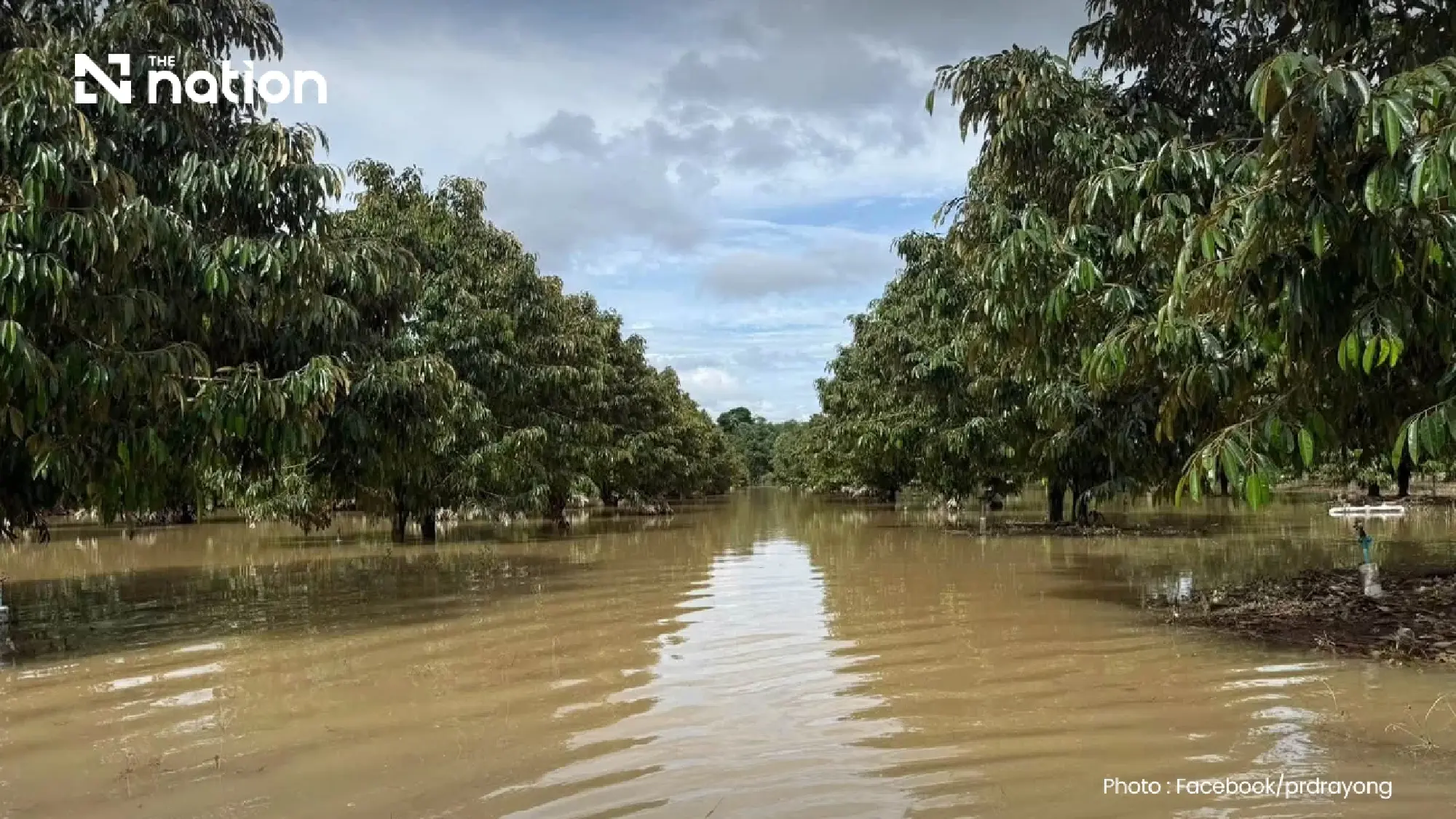

Specialists work to save durian trees in eastern Thailand
The Department of Agricultural Extension and Kasetsart University’s Department of Plant Pathology are sending technical teams to affected orchards to demonstrate recovery methods and help rehabilitate durian trees, Rapeetat said. Specialists are using biological products to help restore root systems and plant respiration in trees that can still be saved.
Rapeetat said growers forced to replace dead durian trees would have to wait at least five years before the new trees produced fruit. Saving surviving trees is therefore a priority in limiting long-term losses.
The Department of Agricultural Extension has instructed officials to accelerate surveys of damage to commercially important fruit orchards throughout the eastern region. The preliminary damage estimate exceeds 26,000 rai, while the economic impact is still being assessed.
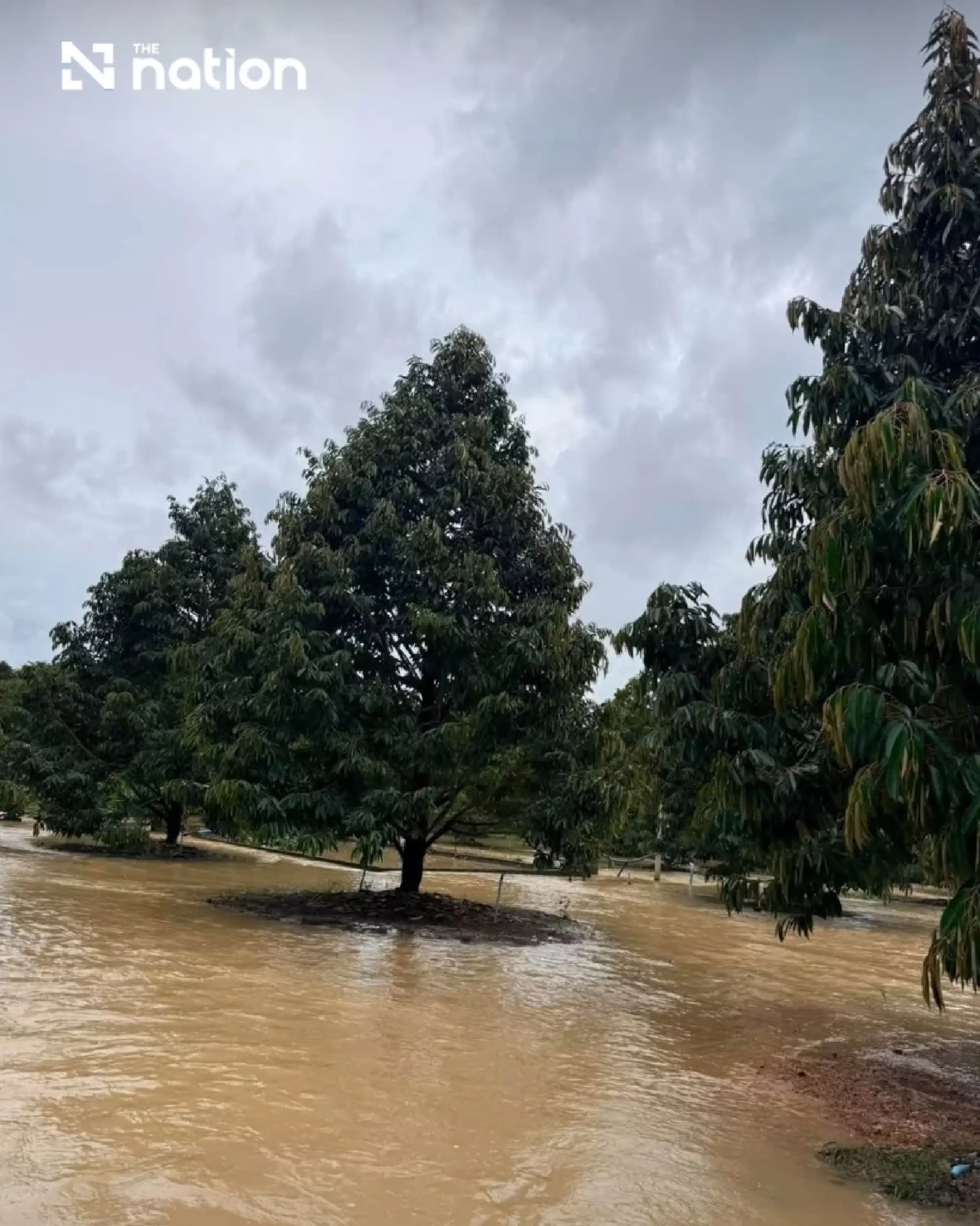

Agriculture Ministry prepares support for 49 affected provinces
The Ministry of Agriculture and Cooperatives has prepared a food-security programme to distribute vegetable seeds, planting stock and seedlings to farmers in all 49 affected provinces as soon as floodwaters recede, Rapeetat said. The programme is intended to provide immediate support for farmers’ livelihoods, alongside compensation under Ministry of Finance regulations.
Rapeetat said the Agriculture Ministry would also provide agricultural inputs and biological products to rehabilitate damaged areas. Advance preparations are under way to secure planting materials for field crops, including cassava cuttings.
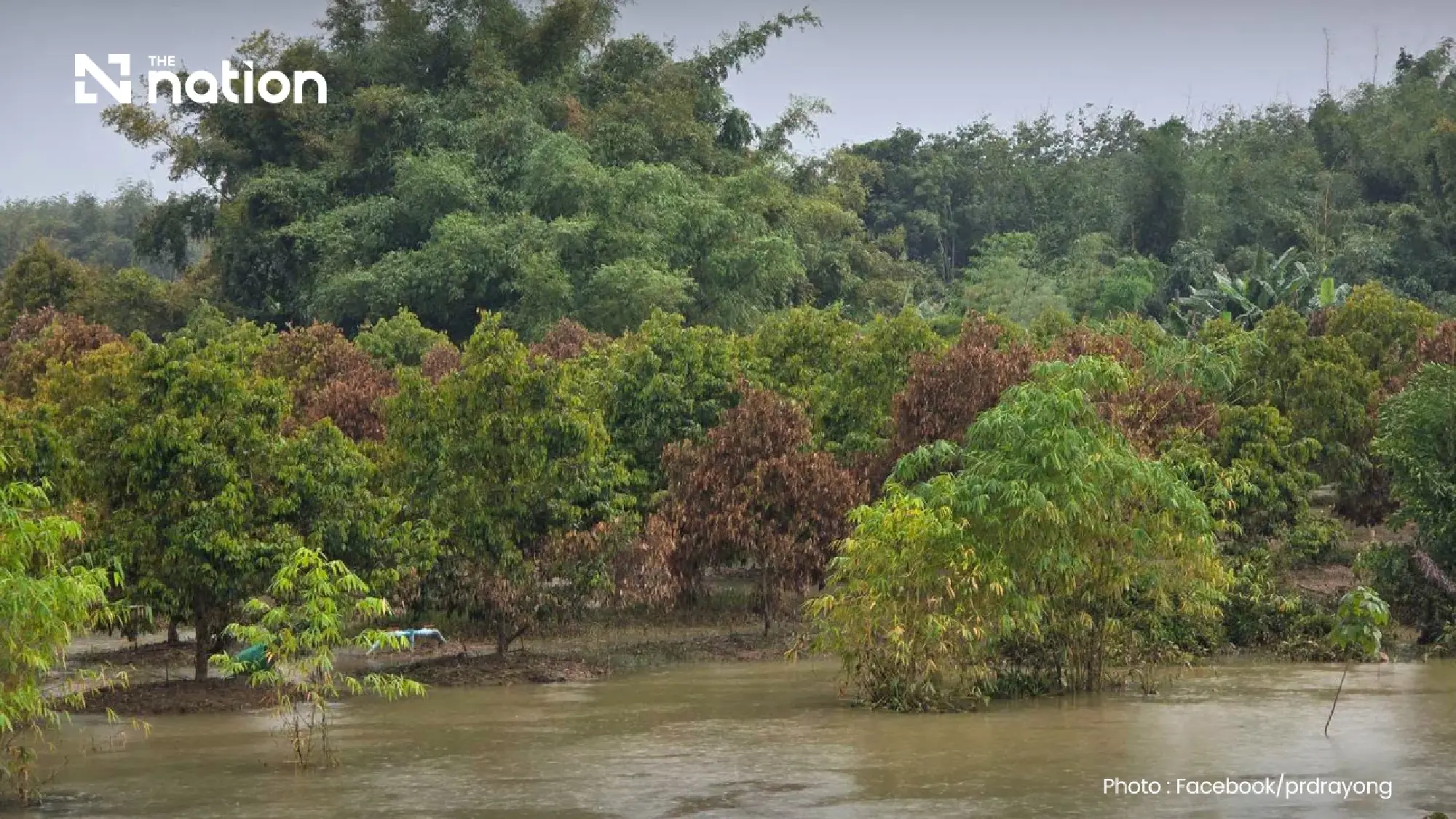

Flood conditions begin to ease in eastern and western Thailand
Kris Uttamavedin, deputy permanent secretary at the Ministry of Agriculture and Cooperatives and ministry spokesman, said water conditions in several parts of eastern and western Thailand were beginning to ease towards normal.
In Phanat Nikhom district, Chonburi, water levels were falling towards normal, Kris said. The Royal Irrigation Department, Royal Thai Navy and Ministry of Defence had installed water-pushing equipment and deployed boats to accelerate drainage from Phan Thong Canal, Amata Nakorn Industrial Estate and downstream areas. Recovery was expected to take approximately three to four weeks.
Riverbank overflow in the Bang Pakong basin and Chachoengsao was showing signs of stabilising, according to Kris.

In Prachin Buri, the Hanuman tributary had returned to normal, while water around the old market in Kabin Buri district was receding by 20–25 centimetres a day, Kris said. Conditions were expected to return to normal by mid-October, with floodwater in inundated fields expected to be fully pumped out by early November.
In western Thailand, Kris reported riverbank overflow of approximately 30–40 centimetres in Tha Maka district of Kanchanaburi, at the Hat Sai Photharam riverfront and along lower riverbank areas in Ratchaburi municipality. Residential communities were not being affected, although people living along riverbanks were still being advised to remain vigilant and move belongings to higher ground.
