
Agriculture minister confirms home growing rights for 4 basil varieties protected until 2036
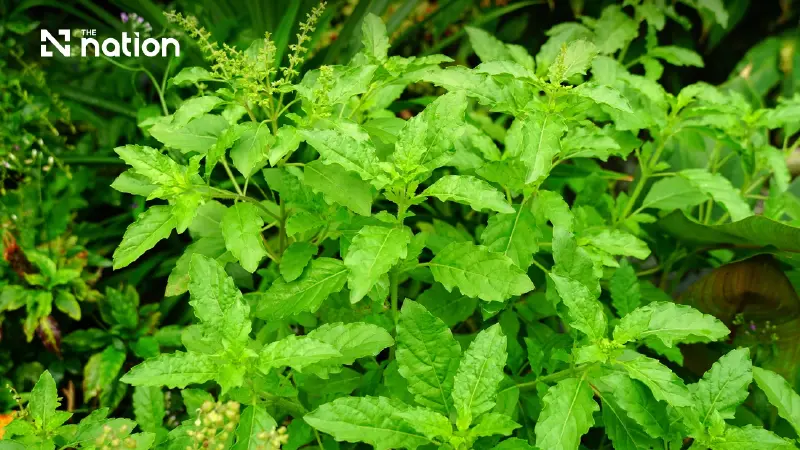


Thai households can grow CPRAM’s four protected basil varieties for food, but commercial propagation for sale requires the rights holder’s permission
- Thailand's Agriculture Minister confirmed that households are permitted to grow four specific protected holy basil varieties for personal use and cooking.
- The four varieties, Kaewjuree 01-04, are protected under the rights of CPRAM Co Ltd. from 2024 until 2036.
- The protection prohibits the propagation and commercial sale of these specific varieties without permission, but does not restrict non-commercial home cultivation.
Households in Thailand can continue growing and cooking with four protected holy basil varieties, Agriculture and Cooperatives Minister Suriya Jungrungreangkit has confirmed in comments reported on October 22, 2026. Permission is required to propagate the protected varieties for commercial sale.

Suriya said registration of the basil varieties “does not affect the everyday lives of the general public”. People could grow the protected basil at home and pick its leaves for their own meals, he said.
Concern about CPRAM Co Ltd’s registration has spread among growers and the public. Farmers in Ban Mai subdistrict in Nonthaburi feared they might lose the ability to save seeds for replanting or face higher seed costs.
Suriya explained that the Plant Varieties Protection Act of 1999 allows private businesses to register rights over varieties they have researched and developed. He compared the principle with patent protection for pharmaceutical research.

CPRAM holds protection for four varieties until 2036
The four protected holy basil varieties are Kaewjuree 01, Kaewjuree 02, Kaewjuree 03 and Kaewjuree 04. Department of Agriculture information identifies CPRAM as the rights holder, with protection lasting 12 years, from 2024 to 2036.
CPRAM developed the Kaewjuree varieties from a local basil variety coded CPR1 in collaboration with Kasetsart University’s Kamphaeng Saen campus, using plant breeding and tissue culture techniques.
Suriya identified the prohibited activity as “propagating protected plant varieties for commercial sale without permission” from the rights holder. The distinction concerns seeds and other propagating material used to reproduce CPRAM’s four basil varieties, rather than leaves used in everyday cooking.
CPRAM said the Kaewjuree varieties were developed to provide a strong aroma, an intense spicy flavour and consistent yields for its ready-to-eat food production. The company supports contract farmers growing basil specifically for its factories and does not sell seeds of the four varieties to the general public.
Ordinary basil varieties remain available to farmers
The Department of Agriculture and CPRAM said Thailand has more than 200 holy basil varieties. Farmers can continue buying seeds, growing, propagating and selling ordinary varieties, including red and white holy basil and other local varieties, without being affected by the protection granted to CPRAM’s four varieties.
Suriya said the Department of Agriculture would continue researching, developing and distributing new plant varieties to farmers to support cultivation and sustainable livelihoods.

BioThai questions research funding and future seed rules
Witoon Lianchamroon of the BioThai Foundation questioned the funding arrangements for research undertaken with a public university in connection with the protected basil varieties.
Witoon also raised concerns about the possible consequences if Thailand joins the 1991 Act of the International Convention for the Protection of New Varieties of Plants, known as UPOV 1991. He warned that farmers could face tighter restrictions on saving seeds than under existing Thai law.
Witoon called for a review of plant variety protection and the research arrangements to guard against monopolisation in the longer term.
