
PM Anutin stresses Thai food security as nations advise stockpiling
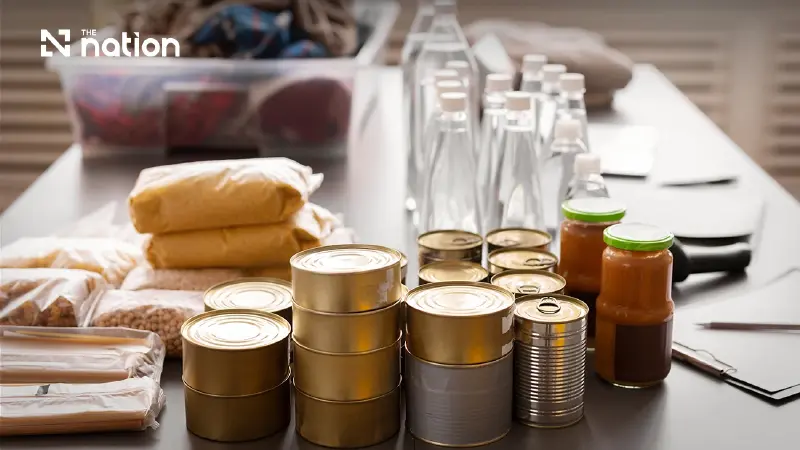


At least 20 countries have emergency preparedness guidance, while Thailand’s prime minister stresses food security and preparations for backup energy supplies.
- Prime Minister Anutin Charnvirakul affirmed that Thailand remains food-secure, citing the nation's strong agricultural output and access to raw materials.
- He urged the Thai public to remain aware but avoid panicking, even as at least 20 other countries have advised their citizens to stockpile essentials.
- The international advice for stockpiling is a precaution for various emergencies like natural disasters or infrastructure failure, with recommended supply durations ranging from three days to two weeks.
Prime Minister Anutin Charnvirakul said on Friday (October 30, 2026) that people should remain aware but avoid panic as several countries advised their citizens to stockpile food.
Reaffirming his October 29 remarks, Anutin maintained that Thailand remained food-secure, citing its agriculture, agricultural output, raw materials and access to food production sources.
His only comment on a suggestion that the public’s contrary response reflected a lack of confidence in the government was “Yes, yes.”
He said the embassy had already taken action concerning people living in areas where alerts had been issued.
Anutin avoided addressing the monitoring of cybersecurity and national infrastructure, telling reporters to narrow their questions to current developments. “For detailed issues, please ask the relevant agencies,” he said.
On energy, Anutin said the government was preparing measures in line with developments and planning for backup sources, following intelligence reports that the United States might take military action against Iran, affecting energy prices. “We prepare all the time,” he added.

National approaches to emergency supplies
Emergency preparedness advice has attracted attention as governments recommend keeping food, drinking water, medicines, cash and other essentials. The aim is to enable people to manage independently if natural disasters, cyberattacks or other emergencies disrupt electricity, water, communications, banking, payments, transport or supply chains.
At least 20 countries have preparedness measures or guides. Some launched campaigns in October, while others had guidance before 2026, and the warnings were not all issued at the same time.
The United Kingdom launched its “Be Ready” campaign on October 22, recommending at least three days’ supplies to prepare for emergencies and risks to critical infrastructure.
Japan has reiterated advice to keep supplies for at least three days, or seven if possible, including sanitation equipment, to prepare for major earthquakes and volcanic hazards from Mount Fuji. Earthquake risks include the Tokyo area and the Nankai Trough, a large undersea trough extending approximately 800–900 kilometres off the Pacific coast of southern Honshu.

Sweden’s “In case of crisis or war” guide recommends at least one week’s supplies and covers military attacks and emerging threats. Norway and Estonia also advise a week’s supplies for service disruptions, with Norway highlighting payment systems and transport, and Estonia also addressing disasters and security threats.
Belgium’s National Crisis Center released a new guide for emergencies and national crises on October 1, while Luxembourg launched guidance on October 9. Both recommend at least 72 hours of self-sufficiency, with Luxembourg focusing on the period before government assistance arrives.
The Netherlands’ “Denk vooruit” (“Think Ahead”) campaign, coordinated by the National Coordinator for Security and Counterterrorism (NCTV), promotes a 72-hour emergency kit and planning with family members and neighbours for disruptions to essential services.
Finland plans to distribute around 3.5 million preparedness guides, building on existing advice to keep at least 72 hours’ supplies and prepare for cyber threats and security situations.
Germany’s civil protection authorities recommend supplies for up to 10 days, while Austria advises two weeks to prepare for disasters, widespread power cuts and shortages of essential goods.
Poland, Latvia and Lithuania promote preparedness for 72 hours. Poland also emphasises shelters, warning systems and evacuation plans amid security concerns in Eastern Europe. Latvia and Lithuania’s guides focus on emergency bags and evacuation if safety is threatened.
Denmark and Canada advise at least 72 hours’ supplies, while France’s emergency kit covers the first three days and includes important documents. Radios and torches feature in both the French and Swedish guides.
Czechia’s “72 hodin” project focuses on self-sufficiency during the first 72 hours of an emergency and obtaining information from official agencies.
In Australia, local authorities provide emergency kit guidance for floods, bushfires, storms and other disasters, with the recommended duration of supplies varying according to local risks.
Civilian guidance and military preparedness
In the United States, the Federal Emergency Management Agency (FEMA) continues to promote civilian emergency kits through “Ready.gov”.
Separately, reports describe a “FORTRESS” plan intended to allow key military bases to operate independently for up to 90 days during war or infrastructure disruption. This is a military measure, rather than an instruction for households to stockpile supplies for that period.
The European Commission announced its “Preparedness Union Strategy” on March 26, 2025, encouraging people to prepare at least 72 hours’ essentials. Its scope also includes epidemics, geopolitical crises and risks from military conflict.
Governments want households to manage independently during the initial stages of a crisis so emergency personnel can prioritise vulnerable groups and the worst-affected areas.
Although geopolitical tensions are one factor behind stronger preparedness, there is no evidence that these recommendations signal government intelligence about an imminent world war.
