
Low yields and high prices erode Thai rice competitiveness
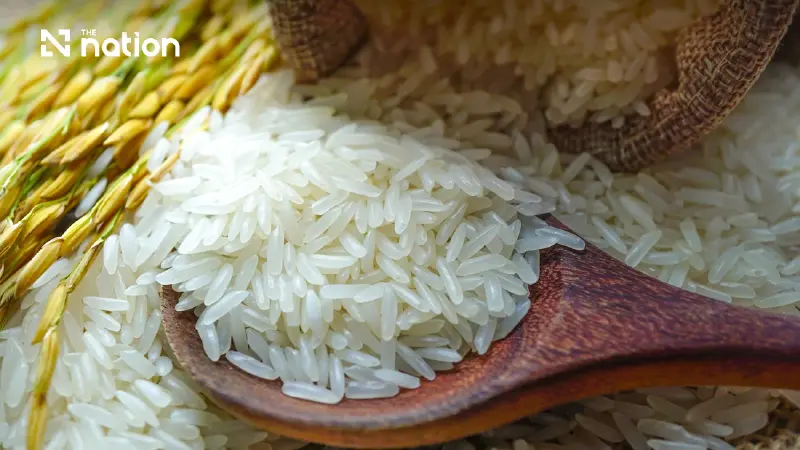


Low yields and high costs weaken Thailand’s rice competitiveness, prompting plans to reform production, processing and marketing to improve farmer incomes.
- Thailand's average rice yield of 2.85 tonnes per hectare is significantly lower than that of major competitors like Vietnam (6.12 tonnes) and India (4.40 tonnes), which increases production costs.
- Thai rice is substantially more expensive on the global market, with key varieties priced approximately 21% higher than Indian rice and 12% higher than rice from Vietnam and Pakistan.
- These factors have led to a sharp decline in exports, with volume dropping 19.26% and earnings falling 16.84% in the first nine months of 2026, as Thailand loses ground to competitors.
Thailand is preparing to restructure its rice industry as low yields, high production costs and expensive exports erode its competitiveness. Shipments are forecast to reach 6.5 million tonnes in 2026, falling 500,000 tonnes short of the Department of Foreign Trade’s 7-million-tonne target.
Poonpong Naiyanapakorn, permanent secretary for commerce, said development of the industry must extend beyond increasing export volumes. Raising production efficiency, adding value and securing fair returns and stable incomes for farmers were equally important.

Export volumes and earnings decline
Thailand exported 4.99 million tonnes of rice between January and September 2026, down 19.26% from a year earlier. Export earnings fell 16.84% to US$2.962 billion, or approximately 94.9 billion baht, showing that higher prices have not prevented declines in both volume and value.
The export outlook remains constrained by Thailand’s price disadvantage, geopolitical conflicts and weaker demand from importing countries. Expanding production among competitors, changing consumption patterns and volatile international trading costs are adding to the pressure.
Thailand led global rice exports from 1980 to 2011, with annual shipments reaching around 10–11 million tonnes. India now holds the leading position, while Vietnam remains another major competitor in a market where Thailand faces growing pressure on both prices and volumes.

Thai yields trail major competitors
Thailand’s average rice yield is equivalent to 2.85 tonnes per hectare, compared with approximately 7.16 tonnes in China, 6.12 tonnes in Vietnam and 4.40 tonnes in India, according to figures cited by the Commerce Ministry.
China’s yield is roughly 2.5 times Thailand’s, while Vietnam and India produce around 2.1 times and 1.5 times as much per hectare respectively.
Lower output from each hectare can push up average production costs, leaving Thai farmers at a disadvantage against competitors producing more rice from comparable areas. Closing the gap requires better rice varieties, improved cultivation technology and more efficient land management.
Rice remains central to Thailand’s food security and rural livelihoods, supporting more than 4.6 million farming households, or nearly 60% of all agricultural households. Approximately 3.1 million are in the Northeast, 1.04 million in the North, 410,000 in the Central region and 58,000 in the South.
The reported cultivation area totals approximately 11.81 million hectares, comprising 9.79 million hectares of main-season rice and 2.02 million hectares of off-season rice.
Higher prices and rival supplies intensify competition
Thai 5% broken white rice was priced approximately 21% above Indian rice per tonne in October 2026, and around 12% above comparable rice from Vietnam and Pakistan. The premiums make Thai supplies harder to sell to importers seeking to contain costs.
Higher prices can support export earnings, but they also weaken competitiveness in markets where buyers can readily switch suppliers. Sustaining a premium therefore requires quality and product differentiation that buyers consider worth the additional cost.
Increased export availability from India, supported by substantial rice stocks, is adding to competition. Indonesia’s efforts to expand domestic production could also reduce its future import requirements.
Exchange-rate movements, geopolitical uncertainty and logistics costs further complicate purchasing decisions and delivery costs. Thai exporters must compete on reliable deliveries, consistent supply and their ability to meet individual markets’ requirements, as well as price.
Food security plan links production, processing and markets
The Commerce Ministry has held discussions with the Bureau of the Budget, the Ministry of Agriculture and Cooperatives and the Ministry of Industry on a food security strategy, with rice selected as the pilot commodity.
Poonpong said the approach would connect production, processing and marketing across the industry, shifting the emphasis towards coordinated development throughout the supply chain.
The proposed work includes developing rice varieties suited to market demand, increasing productivity and reducing cultivation costs. It also covers processing rice into higher-value products and expanding markets and distribution channels to reach more consumers.
The reforms aim to turn Thailand’s established strengths in rice quality and reputation into lasting competitiveness. Maintaining market share requires those strengths to be supported by appropriate prices, competitive costs and dependable supplies.
The wider objective is to connect research and variety development with cultivation, processing, marketing and exports, while ensuring that farmers receive a fairer and more stable return.
Source: Bangkokbiznews
