
Thailand’s Royal Chud Thai seeks UNESCO recognition after six decades
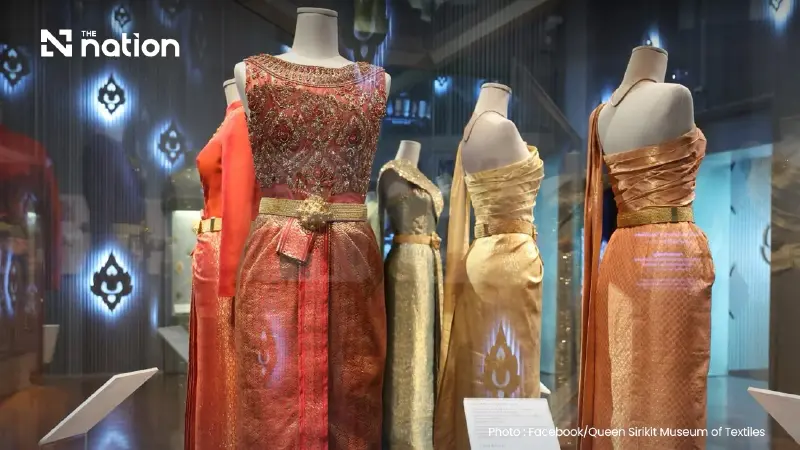


Thailand’s eight traditional dress styles are set to take the global stage as the country seeks the United Nations Educational, Scientific and Cultural Organisation (UNESCO) recognition.
Inspired by Her Majesty Queen Sirikit The Queen Mother, Thailand’s eight traditional dress styles are set to take the global stage as the country seeks the United Nations Educational, Scientific and Cultural Organisation (UNESCO) recognition for its textile heritage.

Thailand is aiming to inscribe Chud Thai, Thailand's traditional costume, on UNESCO’s Representative List of the Intangible Cultural Heritage after over six decades of its creation.
The story of Chud Thai dates back to 1960, when Queen Sirikit The Queen Mother accompanied King Bhumibol Adulyadej The Great on state visits to the United States and Europe.
Queen Sirikit initiated the development of elegant attire that would reflect the country’s cultural identity while remaining appropriate for different formal occasions.
In 1964, eight styles were established under the name Chud Thai Phra Ratchaniyom. Each was named after a royal residence or palace: Thai Ruean Ton, Thai Chitralada, Thai Amarin, Thai Boromphiman, Thai Chakri, Thai Dusit, Thai Siwalai and Thai Chakraphat.
Each design serves a different purpose, starting with the relatively simple Ruean Ton, suitable for informal occasions, followed by Chakraphat, traditionally worn for grand royal ceremonies.
Other styles feature distinctive elements such as silk skirts, gold brocade, embroidered shoulder cloths and ornate details, reflecting the diversity of Thai textile craftsmanship.

The development of traditional national attire later extended to men. In 1979, a royal initiative led to the introduction of Suea Phra Ratchathan, a traditional Thai men’s jacket featuring a Mandarin-style collar and made of Thai fabrics.

Thailand’s efforts to achieve international recognition took a significant step in 2024, when the Cabinet approved the nomination of “Chud Thai: The Knowledge, Craftsmanship and Practices of Thai National Costume” for UNESCO’s intangible cultural heritage listing.
Beyond their distinctive designs, the costumes represent generations of craftsmanship, including silk weaving, gold brocade production, embroidery and traditional tailoring.
Their preservation also supports local artisans and textile communities, while creating opportunities to promote Thai fabrics and craftsmanship on the international stage.
UNESCO’s Intergovernmental Committee for the Safeguarding of the Intangible Cultural Heritage is scheduled to hold its 21st session in Xiamen, China, from December 2 to December 3, 2026.
Join in applauding Chud Thai in its historic nomination for UNESCO Intangible Cultural Heritage listing early this December.

