
Bangkok PM2.5 levels expected to rise on November 19–20; residents urged to check local air quality
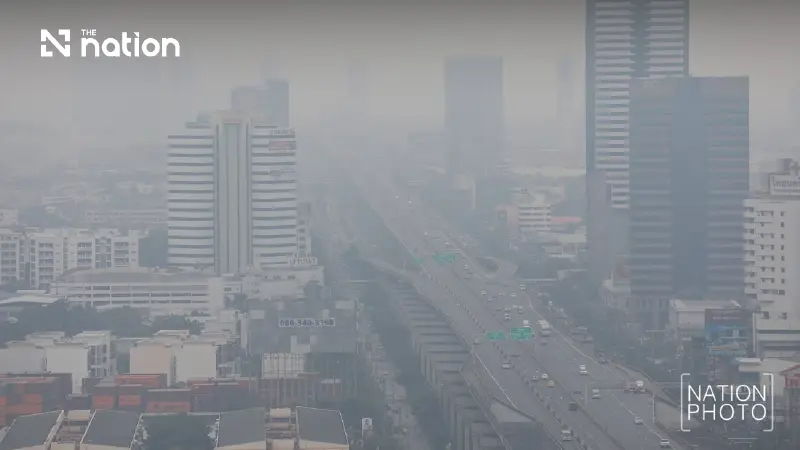


Bangkok urges residents to check air quality before going out as it steps up pollution controls and highlights eight air pollution clinics.
- PM2.5 pollution levels are expected to increase across Bangkok on November 19–20 due to a cold air mass trapping pollutants.
- The rise is attributed to weather conditions combined with pollution from traffic, open burning, industry, and road dust.
- In response, the city is increasing inspections, monitoring, and issuing more frequent alerts to the public.
- Residents are urged to check air quality levels before going outside, reduce strenuous activities, and wear protective masks when necessary.
The Bangkok Metropolitan Administration (BMA) expects PM2.5 pollution to increase across many parts of Bangkok and surrounding provinces on November 19–20, 2026, and is urging residents to check air quality before leaving home.
The city attributed the anticipated rise to a strengthening cold air mass and weather conditions that favour the accumulation of fine particles near ground level, combined with pollution from traffic, open burning, industry and road dust.
Thailand’s cool season began on November 9, according to the Thai Meteorological Department. The BMA explained that periods of poor atmospheric ventilation can limit the dispersal of pollutants, allowing them to build up close to the surface.

City steps up inspections and pollution controls
The BMA is strengthening monitoring and measures to control pollution at its sources. Its actions include:
- Providing real-time air-quality monitoring and reports through the city’s air quality information centre.
- Deploying environmental inspectors and special teams to check large construction projects, enforce dust-control measures and inspect vehicles emitting black smoke.
- Encouraging private businesses to register trucks and other vehicles with the Green List programme to reduce emissions.
- Continuing low emission zone (LEZ) measures in coordination with relevant agencies and all 50 district offices.
- Issuing more frequent pollution alerts so residents have time to take protective action.
How to respond to Bangkok’s PM2.5 colour bands
The city advises residents to adjust outdoor activities according to local pollution levels. The following bands refer to PM2.5 concentrations measured in micrograms per cubic metre (µg/m³).
- Blue — 0–15 µg/m³, very good: Outdoor activities can continue as normal.
- Green — 15.1–25 µg/m³, good: Outdoor activities can continue as normal, but people should watch for unusual symptoms.
- Yellow — 25.1–37.5 µg/m³, moderate: Reduce the time spent on strenuous outdoor activities. Vulnerable people should avoid outdoor activities and wear a mask designed to filter PM2.5 if going outside is necessary.
- Orange — 37.6–75 µg/m³, starting to affect health: Reduce strenuous outdoor activities and wear a PM2.5-filtering mask outside. Vulnerable people should avoid outdoor activities and follow their doctor’s advice.
- Red — above 75 µg/m³, affecting health: Avoid outdoor activities and stay in a room protected from dust. Wear a PM2.5-filtering mask if going outside is unavoidable, and seek medical attention promptly if symptoms such as coughing, breathing difficulties or chest tightness develop.
Groups requiring particular care include young children, older people, pregnant women and people with existing medical conditions, especially respiratory or heart disease. The BMA advises them to monitor readings closely and minimise exposure.
Where to check local air quality
Residents can follow area-specific PM2.5 readings through AirBKK and Greener Bangkok.
They can also add @linealert on LINE to receive LINE Alert notifications when pollution levels exceed the standard.
Eight hospitals provide air pollution clinics
The BMA operates air pollution clinics at eight hospitals, offering free consultations on pollution-related health problems. Listed services also include general health checks and lung-function testing.
The clinics are located at:
1. Klang Hospital — Pom Prap Sattru Phai district.
2. Taksin Hospital — Khlong San district.
3. Charoenkrung Pracharak Hospital — Bang Kho Laem district.
4. Luang Pho Thaweesak Chutintharo Uthit Hospital — Nong Khaem district.
5. Vejkarun Rasmi Hospital — Nong Chok district.
6. Lat Krabang Hospital — Lat Krabang district.
7. Ratchaphiphat Hospital — Bang Khae district.
8. Sirindhorn Hospital — Prawet district.
Opening days, operating hours and contact numbers for each clinic are available on Greener Bangkok’s air pollution clinic page.
