
Mae Sai households bear extra water costs amid arsenic pollution
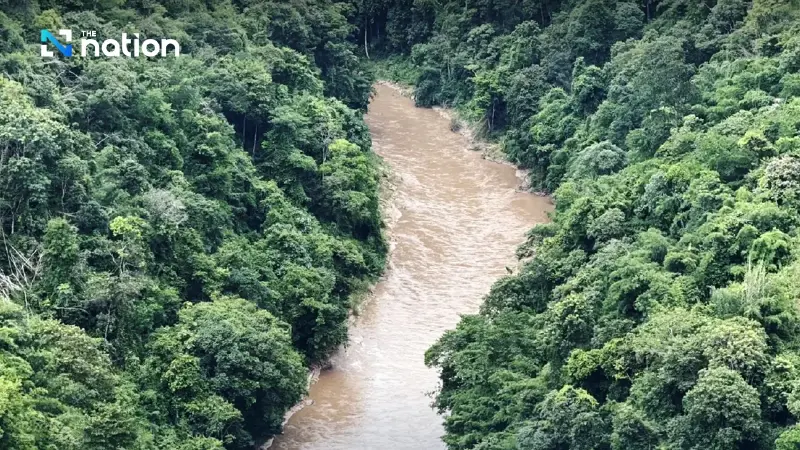


Chiang Rai residents have bought alternative water supplies after service disruptions as Thailand steps up monitoring and action on river pollution.
- Over 20,000 households in Mae Sai district are forced to pay for alternative water supplies, such as bottled water, due to arsenic contamination in the local water system.
- Tests revealed arsenic levels in the raw water of the Sai River at up to 28 times the accepted safety standard.
- The pollution is linked to rare-earth mines in Myanmar's Shan State, which are accused of discharging untreated hazardous waste into regional waterways.
- A government response providing treated water has been criticized for only reaching 15% of the affected area, leaving the majority of residents to find their own safe water sources.
Households in Mae Sai district, Chiang Rai, have had to pay for alternative water supplies following disruptions to the local water system amid arsenic contamination in the Sai River.
A report published by Post Today on November 17, 2026, put the number of affected households at more than 20,000, describing residents buying drinking water and larger containers of water for daily use after emergency interruptions to supply.
River contamination and water-supply disruption
Earlier tests by the Pollution Control Department and research agencies recorded arsenic in the Sai River at up to 28 times the safety standard. Those readings concerned raw river water, not treated tap water.
In an update on November 11, the Provincial Waterworks Authority (PWA) reported that raw-water conditions on November 10 allowed normal production and that water in its treatment system met its standards.
The crisis was linked to rare-earth mines in Myanmar’s Shan State, and multinational investors were alleged with using hazardous extraction chemicals and discharging untreated residues into natural waterways.
The contamination spread to the Kok and Ruak rivers, the Mekong in Chiang Saen district and the separate Salween basin. The Department of Fisheries has sampled and found excessive heavy-metal accumulation in some aquatic species.
Six measures and questions over water access
Deputy Prime Minister and Higher Education, Science, Research and Innovation Minister Yodchanan Wongsawat, who chairs the committee responsible for disaster prevention and response in northern Thailand, has directed agencies to pursue six urgent measures following visits to affected areas.

These cover restrictions on raw-mineral imports and tighter heavy-metal controls; restoration of water sources; monitoring of soil, water and agricultural produce; health screening for residents; alternative raw-water supplies; and faster assistance for affected communities.
The Ministry of Agriculture and Cooperatives is also accelerating work on a traceability system for agricultural products from northern Thailand.
Senator Nantana Nantavaropas has questioned the reach of the government response, criticising some ministers’ demonstrations of drinking water treated through reverse osmosis (RO) systems as publicity stunts.
She argued that treated-water services covered only 15% of the affected area, while 85% of residents still relied on natural water sources and remained at risk of contamination.
In Bangkok, the Metropolitan Waterworks Authority (MWA) has reaffirmed the safety of supplies to all 50 districts and surrounding areas. It uses raw water from the Chao Phraya and Mae Klong rivers, outside the affected Kok and Sai river basins.
Diplomatic efforts to tackle pollution upstream
The government under Prime Minister Anutin Charnvirakul has raised transboundary pollution at the Association of Southeast Asian Nations (ASEAN) summit in the Philippines and is pushing for a joint ASEAN working group.

Deputy Prime Minister and Foreign Minister Sihasak Phuangketkeow has discussed joint responses with senior Myanmar leaders. Thailand is also looking to bring in wastewater-treatment technology from China.
Opposition leader Natthaphong Ruengpanyawut, who leads the People’s Party, and former diplomat Pisan Manavapat have called for stronger international action.
Their proposals include a message from the prime minister to Chinese President Xi Jinping, using mineral-related laws to block imports from environmentally damaging mines, involving ASEAN+5 partners and asking the Anti-Money Laundering Office (AMLO) to investigate suspicious financial flows.
Democrat Party deputy leader Issara Sunthornwat has submitted a statement calling on the international community to impose customs restrictions and sanctions on investment groups and rare-earth mining operations in Shan State accused of discharging pollutants into transboundary waterways.
Separate scrutiny of waste imports and recycling plants
Separately, civil society groups in Prachin Buri are demanding a crackdown on recycling factories over allegations that containers of electronic waste and hazardous chemical residues have repeatedly entered Thailand illegally through customs checkpoints.
Deputy Government Spokeswoman Lalida Perisvivatana has maintained that the Cabinet’s October 27 decision allocated US$300,000 from the Lancang–Mekong Cooperation Special Fund for research into recycling electric vehicle (EV) batteries and solar panels. She stressed that the decision did not authorise waste imports from China.
In Samut Sakhon, inspections of 146 waste-management and recycling factories found 134 suspected of breaching factory regulations. Three were ordered to suspend operations temporarily, while criminal proceedings were initiated against 54.
On the broader waste-import issue, Special Professor Vicha Mahakun, a former commissioner of the National Anti-Corruption Commission (NACC), accused what he called “grey officials” of accepting improper benefits and allowing hazardous-waste containers through customs for disposal in Thailand.
Source: Post Today
