
Arsenic levels exceed limit in Salween River on Thai–Myanmar border
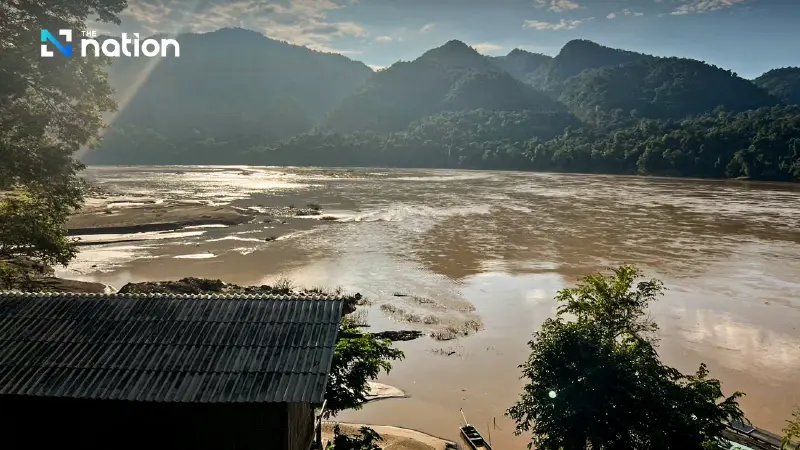


Villagers in Thailand’s Mae Hong Son province are drawing water from other rivers. Government budget cuts stalled an earlier project to pipe water from the mountains.
- Arsenic levels in the Salween River, along the Thai-Myanmar border, have been found to be several times higher than the safety limit.
- Authorities in both Thailand and Myanmar's Karen State have warned residents to stop using the river water for drinking and other household needs.
- Thai villagers are turning to alternative river sources for water, which they have been advised to boil before use.
- Health officials have advised that fish from the river are safe to eat only if the internal organs and gills, where arsenic has been detected, are removed.
Villagers on both banks of the Salween River are urgently looking for new sources of uncontaminated raw water after tests found arsenic levels above the limit.
The contamination has caused serious hardship along the stretch of the Thai–Myanmar border from Mae Sariang to Sop Moei, two districts in Thailand’s Mae Hong Son province.
Residents are afraid to drink the river water or use it for other household needs.
Pongpipat Meebenjamart, head of the Mae Sam Laep Subdistrict Administrative Organisation in Sop Moei, said on Tuesday (November 17, 2026) that communities in both Myanmar and Thailand were suffering from the contamination.

On the Thai side, villagers from Mae Sariang downstream to Sop Moei were afraid to drink from the Salween after the Pollution Control Department warned that tests had found arsenic levels several times the limit.
In the Brigade 5 area of Myanmar’s Karen State, officials from the Karen National Union (KNU) sent representatives to meet their Thai counterparts.
The KNU officials also issued a public warning telling residents in their area to stop using Salween water for drinking and other household purposes.
On the Thai side, other rivers flow through the villages, giving each village a source of water unaffected by the arsenic contamination in the Salween.
Residents have turned to these rivers for drinking water and household use.

They have been advised to bring water from these sources to the boil each time before drinking it.
Villagers and officials from the Mae Sam Laep Subdistrict Administrative Organisation had earlier tried to survey potential water sources for a project to supply the villages with piped mountain water in place of water from the Salween.
Government budget cuts stalled the project.
Riverside villagers continue to earn a living by catching and selling fish from the Salween.
Government agencies advised that the fish could be eaten if the internal organs and the part of the head attached to the gills were first removed and discarded.
Arsenic had been detected in those parts of the fish.

