
Thai Cabinet backs direct EGAT power sales to 200 MW-plus data centres
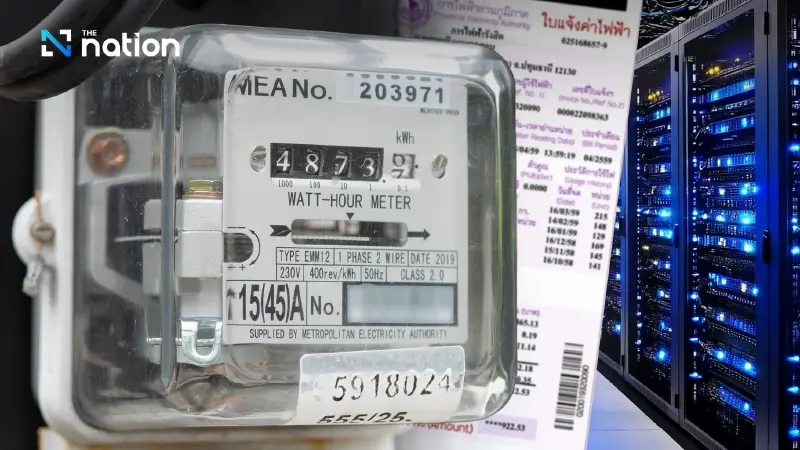


Thailand's Cabinet has approved a draft decree to let data centres requiring at least 200 MW per project buy power directly from EGAT, supporting grid stability and investment.
- The Thai Cabinet has approved a proposal allowing data centres with electricity demands over 200 MW to purchase power directly from the state-owned Electricity Generating Authority of Thailand (EGAT).
- This policy aims to protect the stability of the national electricity grid by connecting these high-consumption facilities directly to the high-voltage transmission network, preventing disruption to smaller consumers.
- By providing a more reliable, high-quality power supply, the government seeks to attract significant foreign investment in digital infrastructure, such as AI and cloud computing.
- The initiative is a key part of Thailand's strategy to bolster its economic competitiveness and establish the country as a regional digital hub.
Thailand's Cabinet has approved a draft royal decree that would allow data centres requiring at least 200 megawatts (MW) of electricity per project to purchase power directly from the Electricity Generating Authority of Thailand (EGAT), in a move aimed at strengthening grid stability and attracting investment in digital infrastructure.
According to a Government House source, the Cabinet recently endorsed the Ministry of Energy's proposal to amend Section 3 of the 1989 Royal Decree on Electricity Users.
The amendment would establish a new category of electricity consumers, enabling qualifying data centres to become direct EGAT customers connected to its high-voltage transmission network.
Protecting grid stability amid rising AI demand
The proposed changes respond to the rapid growth in artificial intelligence (AI) services and large-scale data centres, which require substantial, continuous electricity supplies.
Projects with electricity demand of 200 MW or more could place significant pressure on the national electricity network, potentially affecting grid stability, reliability and the balance between supply and demand.
Connecting these facilities directly to EGAT's high-voltage transmission system, rather than through medium- and low-voltage distribution networks, is intended to minimise disruption to smaller consumers and avoid unnecessary investment in duplicate infrastructure.
The arrangement would also help EGAT manage electricity generation covered by existing and future power purchase agreements more efficiently.
More reliable power for data centre operators
Direct access to EGAT's transmission network is expected to provide data centre operators with a more stable, high-quality electricity supply.
Such connections could help operators manage rapid fluctuations in demand, known as dynamic load swings, while supporting the N-1 reliability standard and 2N power redundancy arrangements.
These technical safeguards are particularly important for data centres, where even brief power interruptions can disrupt critical digital operations.
Improved supply reliability could also reduce operators' need to invest in duplicate backup power systems, lowering project costs.
Three major benefits for Thailand
According to the Government House source, the Energy Ministry outlined three areas in which the proposed amendment would benefit the country.
- Stronger electricity infrastructure: Managing large, continuous electricity loads through the transmission network would improve overall grid reliability, reduce the risk of voltage fluctuations and power outages, and make better use of existing generation capacity.
- Greater economic competitiveness: Reliable power access would encourage foreign investment in high-value digital infrastructure, create highly skilled jobs, promote the transfer of advanced technologies and strengthen Thailand's ambition to become a regional digital hub.
- Long-term benefits for consumers: Avoiding duplicate distribution infrastructure and making more efficient use of existing power purchase agreements could help contain electricity costs over time while protecting households and smaller businesses from disruptions caused by large electricity loads.
Managing power costs and existing contracts
The ministry also expects the measure to improve EGAT's management of electricity generation under existing and future power purchase agreements.
Steady, high-volume consumption from data centres could help optimise electricity generation and make better use of capacity already subject to contractual availability payment obligations.
More efficient use of existing generation capacity, combined with reduced investment in duplicate distribution infrastructure, could ease long-term cost pressures on the electricity system and help limit the financial burden on other consumers.
Supporting Thailand's regional digital hub ambitions
Beyond electricity management, the government views the proposal as an important step towards attracting major international technology investors.
Providing large data centres with reliable, high-quality electricity would strengthen Thailand's appeal as a location for AI services, cloud computing and other advanced digital operations.
If enacted, the measure is expected to reinforce Thailand's competitiveness and support its long-term ambition to become a regional digital hub.
