
Anutin orders action on water pollution, PM2.5 and flood risks
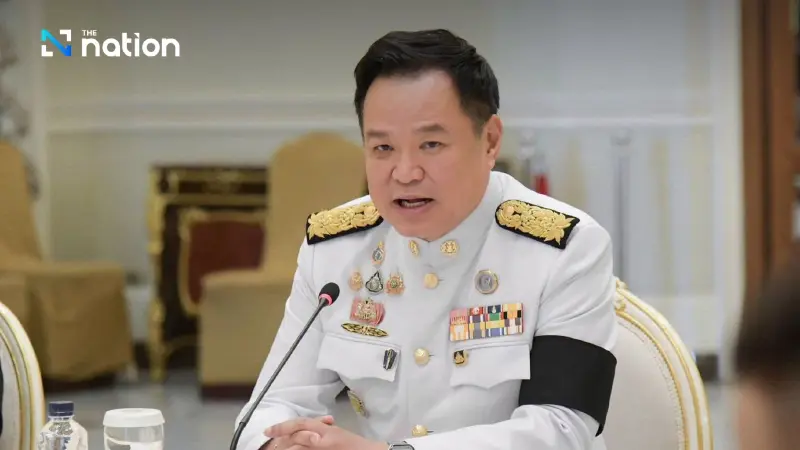


PM Anutin Charnvirakul orders eight water contamination measures, including testing and clean supplies, as authorities plan for northern PM2.5 and southern flood risks.
- Thailand's Prime Minister has ordered eight urgent measures to tackle water contamination, including a crackdown on illegal hazardous chemicals, increased environmental monitoring, and support for affected communities.
- Northern provinces have been instructed to strengthen preparations for PM2.5 air pollution by strictly enforcing laws against open burning in forests and on agricultural land.
- Authorities in southern Thailand have been directed to bolster flood preparedness, ensuring emergency assistance plans are in place and that hospitals can continue to operate during floods.
Prime Minister and Interior Minister Anutin Charnvirakul has ordered eight urgent measures to tackle water contamination in Thailand, alongside preparations for PM2.5 air pollution in the North and potential flooding in the South.

Anutin chaired a meeting of the National Disaster Prevention and Mitigation Command (NDPMC) at Government House at 11am on Saturday (November 21) to review water contamination concerns and coordinate the government's response.
Eight measures to tackle water contamination
The prime minister issued eight directives covering law enforcement, environmental monitoring, public health, agriculture and international cooperation.
- Crack down on illegal hazardous chemicals: Provincial governors will lead coordinated investigations and enforcement operations targeting the illegal import, possession and transport of hazardous substances and chemicals that could contaminate water sources.
- Strengthen water quality monitoring: The Ministry of Natural Resources and Environment will establish testing standards and methods, along with maps identifying areas where contamination has and has not been detected. The ministries of Higher Education, Science, Research and Innovation, Interior, and Public Health will provide support.
- Test agricultural produce: The Ministry of Agriculture and Cooperatives will establish contamination testing standards for agricultural products and map areas where contamination has and has not been detected, with support from the ministries of Higher Education, Science, Research and Innovation, and Public Health.
- Protect public health: The Ministry of Public Health will deploy medical teams to assess the health of residents in high-risk areas and provide guidance on avoiding exposure to harmful substances.
- Secure alternative clean water supplies: The ministries of Interior, Natural Resources and Environment, and Agriculture and Cooperatives will arrange alternative water supplies for affected communities. Measures include distributing clean water, establishing central water distribution points and deploying mobile drinking-water production units.
- Support affected farmers: The ministries of Agriculture and Cooperatives and Commerce will introduce measures in contaminated areas, including potential temporary restrictions on farming, scientifically guided land rehabilitation and assistance for affected farmers. Authorities must also clearly communicate which areas are affected.
- Centralise contamination reporting: The Department of Disaster Prevention and Mitigation (DDPM) and the Public Relations Department will compile information on water quality, agricultural produce contamination and public health impacts. Relevant agencies must designate responsible officials and submit standardised reports regularly.
- Strengthen international cooperation: The Ministry of Foreign Affairs and the Ministry of Natural Resources and Environment will use international mechanisms to identify sources of contamination, exchange water quality data and tackle pollution at its source. Continuous monitoring and measures to prevent cross-border contamination will also be prioritised.
Anutin assigned deputy prime ministers to oversee responses in their respective areas.
The Ministry of Public Health will also support health screenings, medical treatment and public safety advice, while relevant agencies coordinate efforts across environmental protection, public health, agriculture, communication and international cooperation to prevent contamination from recurring.

Northern provinces ordered to tighten PM2.5 controls
The prime minister also instructed northern provinces, particularly Chiang Mai and Chiang Rai, to strengthen preparations for PM2.5 air pollution.
Local authorities must strictly enforce laws against open burning, including:
- Burning weeds and other vegetation.
- Illegal burning in forest areas.
- Burning agricultural crop residues.
Provincial officials have been directed to step up public awareness campaigns, increase inspections and ensure personnel and firefighting equipment are ready for immediate deployment when burning is detected.
The DDPM will support preparedness and response operations in high-risk areas.
Southern provinces told to prepare for flooding
Meanwhile, Anutin directed the Ministry of Interior to strengthen flood preparedness across southern Thailand.
Relevant agencies must prepare emergency assistance plans, mobilise resources and arrange operational support in advance of potential flooding.
The Ministry of Public Health has also been instructed to ensure that hospitals, particularly major medical facilities and intensive care units (ICUs), can continue operating during floods.
The measures aim to maintain uninterrupted medical services and minimise disruption to patient care during emergencies.
