
Breaches found at 53% of Thai waste and recycling plants inspected
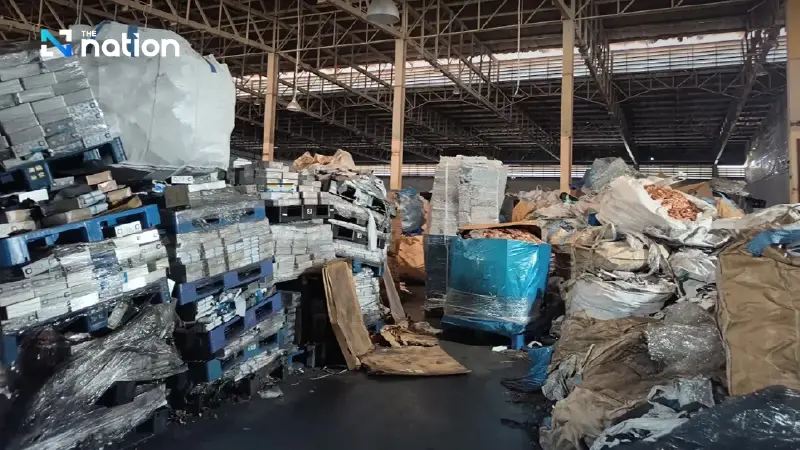


Officials issued 599 administrative orders and identified possible criminal offences at 293 plants during the nationwide inspections.
- A nationwide inspection of Thailand's 3,049 waste and recycling plants has so far covered one-third of the sites, with 53% of those inspected found to have legal breaches.
- Violations discovered include companies operating recycling factories without a license, illegally stockpiling thousands of tonnes of battery materials, and concealing hazardous components.
- Enforcement actions have included immediate operational shutdowns, seizure of materials, and legal proceedings; one company causing severe water contamination had its license revoked and was ordered to pay over THB 1.77 billion in damages.
- In response to the findings, the government is pushing for a new law to increase penalties for industrial waste offenses and allow for the seizure of offenders' assets by linking the crimes to money laundering.
Thailand’s Ministry of Industry found breaches at 538 plants, or 53% of the 1,014 waste and recycling sites inspected nationwide, permanent secretary Passakorn Chairat said on Friday (November 27, 2026).
Inspectors found no breaches at the remaining 476 sites.
The checks covered 33% of the 3,049 plants targeted under Industry Minister Varawut Silpa-archa’s order for close oversight and firm enforcement at category 105 waste sorting and landfill plants and category 106 recycling plants.
A ministry task force inspected buildings at an industrial park in a customs-free zone in Tha Kham, Bang Pakong district, Chachoengsao, on November 5.
Inspectors found about 10,000 tonnes of materials stockpiled in a building rented by A Plus Battery & Tire (Thailand) Co., Ltd., including battery cells and modules, graphite, copper and aluminium.
A building rented by Green Smart Power Company Limited, which shares a managing director with A Plus, contained machinery installed to turn discarded batteries into raw materials for other industries.
The operation appeared to fall within the recycling category.
Officials ordered the activity to stop, sealed the machinery, seized the materials and began legal proceedings over the alleged setting up and running of a factory without a licence.

A Plus was ordered to explain the circumstances and provide evidence of the materials’ origin, purchase and sale.
Provincial industry and customs officials found about 168 tonnes of lithium battery components concealed in a building during a further inspection on November 25.
A Plus identified itself as the owner.
Officials seized the components and said they would take legal action if they found a breach of the Hazardous Substance Act involving those components.
Samples from both inspections were sent for analysis.
Passakorn said officials could act without waiting for a court ruling if tests confirmed the seized batteries were type 3 hazardous substances and posed a risk to the public.
Under the minister’s policy, officials would file a criminal complaint, seek urgent action on the seized materials with investigators and order the suspects to arrange proper disposal at their own expense.
In the longer term, the ministry is pushing for a draft law to increase penalties for industrial waste offences and allow them to form the basis of money laundering cases, so that offenders’ assets could be seized.
In a separate case in Chachoengsao, the Department of Industrial Works issued a top-priority order closing a factory operated by THH Molyprocessing Company Limited and immediately revoking its licence after the company missed a deadline for corrective work.

The Department of Groundwater Resources and other agencies sued for environmental damage.
The Chachoengsao Provincial Court ordered the company to pay more than THB1.77097 billion in damages.
Wastewater from the factory had left groundwater and water in the Lum Nam Jone Reservoir in Phanom Sarakham district acidic, contaminated with toxic substances and unusable.
The Department of Special Investigation has taken on the criminal investigation as a special case.
The Industry Ministry is working with the Anti-Money Laundering Office to trace assets and has instructed the Department of Industrial Works to continue assessing the impact at the factory site with other agencies.
Passakorn said the ministry was ready to work with all sectors to take legal action against everyone involved in wrongdoing and to protect the public and the environment.
It generally serves as the secretariat for provincial inspection teams drawn from several ministries.
Checks are complete in 38 of the 66 provinces where the plants operate, and the ministry expects that total to reach 50 by the end of November.
Officers from provinces that have finished will help speed up checks in the remaining 16, particularly in Chon Buri, Pathum Thani, Rayong and Chachoengsao, which have requested reinforcements.
