
Thailand advances two regional rail routes into design
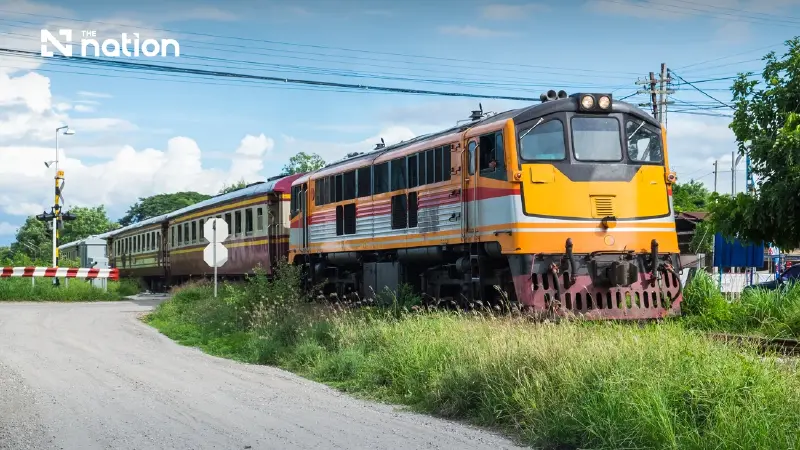


SRT plans to sign THB392 million in consultancy contracts in September, while two other proposed routes await environmental or government clearance.
The State Railway of Thailand is advancing two proposed regional rail corridors into detailed design and environmental assessment, while two other new routes remain subject to environmental or government approval.
The SRT board approved the procurement of detailed-design and environmental impact assessment consultancy services for the Nakhon Sawan–Ban Phai railway and the Chatturat–Chaiyaphum–Nong Bua Lamphu double-track line on August 11, 2026.
The two consultancy contracts are valued at a combined THB392 million and are expected to be signed in September.
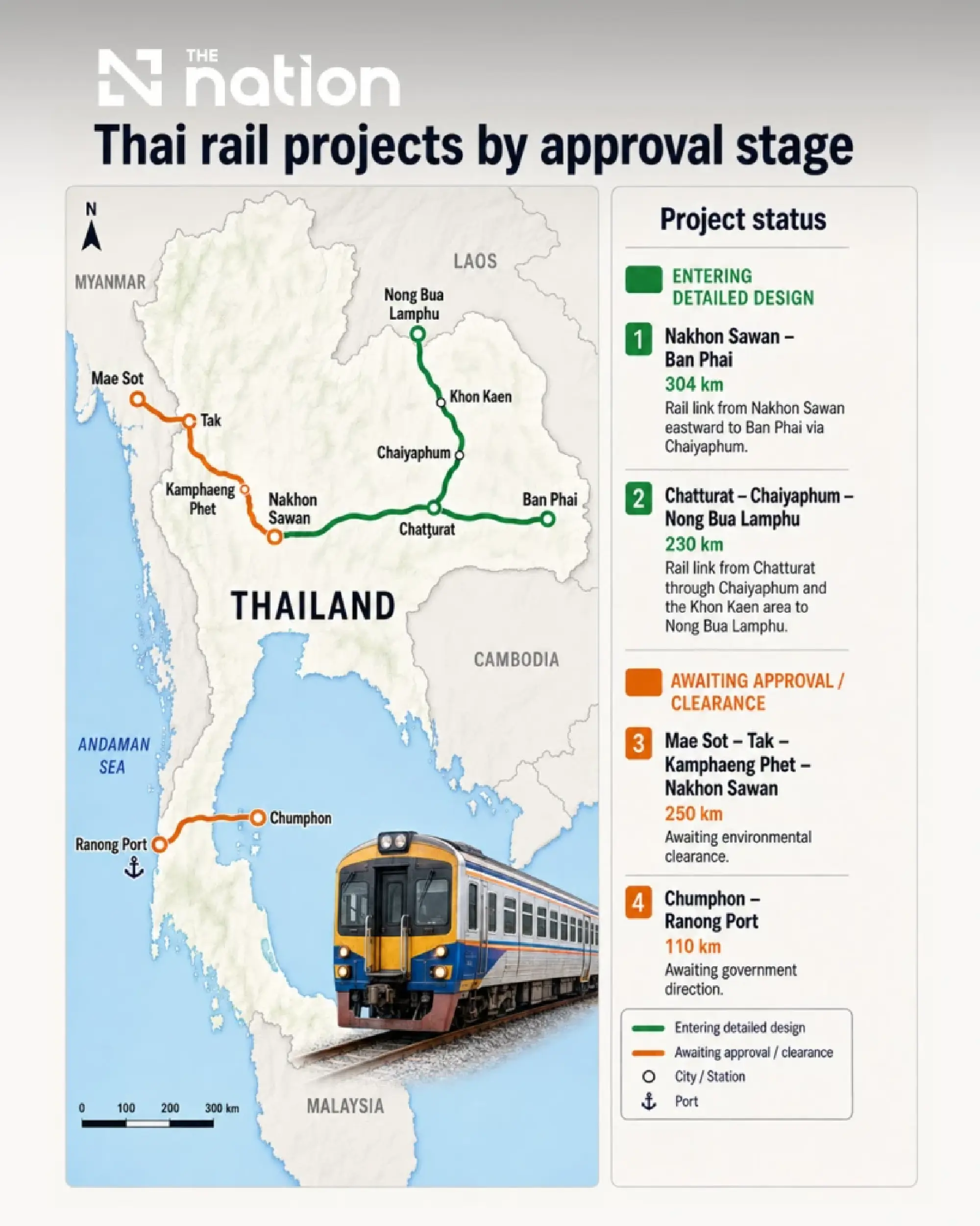
A Ministry of Transport source identified the projects as part of a four-route railway pipeline that also includes the Mae Sot–Tak–Kamphaeng Phet–Nakhon Sawan double-track line and a new railway between Chumphon station and Ranong Port.
The projects are at different stages. The Nakhon Sawan–Ban Phai and Chatturat–Nong Bua Lamphu routes are moving towards detailed design, the Mae Sot route is undergoing environmental consideration, and the Chumphon–Ranong line is awaiting clearer policy direction from the government.
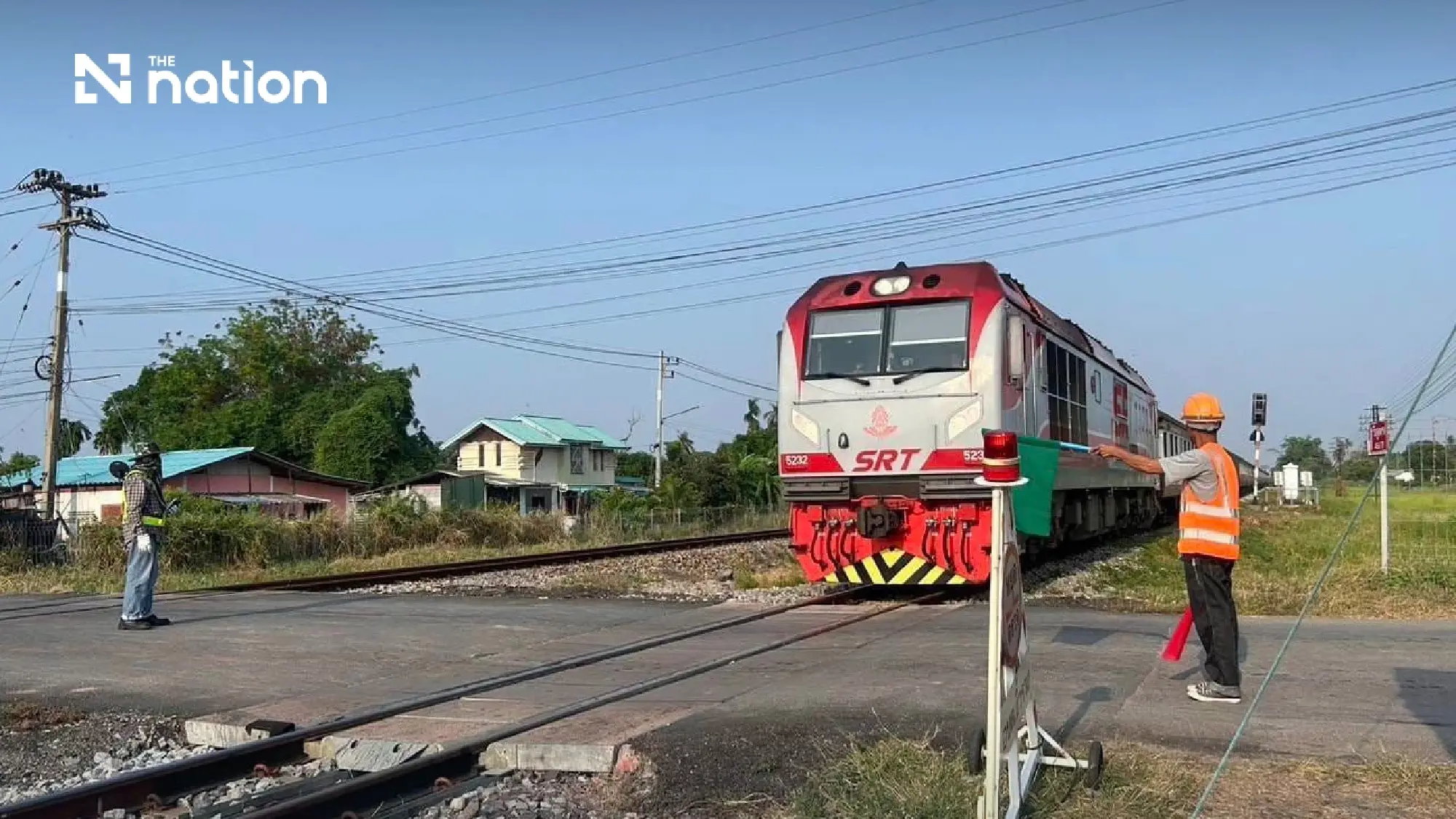

Nakhon Sawan–Ban Phai design contract set at THB200 million
The planned Nakhon Sawan–Ban Phai railway would be built as a 304-kilometre single-track line, based on the preferred alignment identified in an earlier feasibility study.
The project has an estimated investment value of THB41.849 billion and would include two tunnels. It would also involve improvements to 66.20km of existing railway between Kud Nam Sai Junction, Chatturat station and Bua Yai Junction.
The SRT received THB210 million from the 2026 fiscal-year budget for detailed design and preparation of the EIA. The reference price was set at THB209 million, while the Budget Bureau approved a consultancy budget of THB200 million.
The winning consortium is led by MAA Consultant Co Ltd and also includes Asian Engineering Consultants Corp Ltd, Tesco Co Ltd, MHPM Co Ltd, Chotichinda Consultants Limited and Decade Consultants Company Limited.
The consortium reduced its proposed fee from THB275 million to THB200 million, including 7% VAT, without changing the work required under the terms of reference.
The consultancy programme will run for 450 days from the day after the notice to proceed is issued. The contract is expected to be signed in September, with design work scheduled to begin in late 2026.
The SRT began a feasibility study in 2019 for the Nakhon Sawan–Ban Phai section of the East-West Corridor Upper railway project and completed it in 2020.
The study concluded that the route was economically viable. Its preferred alignment runs from Nakhon Sawan through Kud Nam Sai and Chaiyaphum to Ban Phai, together with the connection to and upgrading of the existing railway between Kud Nam Sai, Chatturat and Bua Yai.

Mountainous route requires longer design programme
The second consultancy covers the proposed 230km Chatturat–Chaiyaphum–Nong Bua Lamphu double-track railway.
The SRT received THB200 million from the 2026 fiscal-year budget for the work, while the Budget Bureau approved a consultancy ceiling of THB192 million.
The winning group is led by TEAM Consulting Engineering and Management Public Company Limited. Its other members are MHPM Co Ltd, Asian Engineering Consultants Corp Ltd, TLT Consultants Co Ltd, Chotichinda Consultants Limited and PSK Consultants Co Ltd.
The consortium initially proposed a fee of THB251 million before agreeing to reduce it to THB192 million, including 7% VAT, without cutting the scope or quality required under the terms of reference.
The detailed design and EIA work must be completed within 540 days from the day after the notice to proceed is issued. The consultancy contract is also expected to be signed in September.
SRT Governor Anan Phonimdang attributed the longer design period, despite the route being shorter than the Nakhon Sawan–Ban Phai line, to its more demanding terrain.
“The Chatturat–Nong Bua Lamphu route presents greater engineering challenges because it must cross mountainous areas, including Khao Phang Hoei in Chaiyaphum,” he explained.
“This requires more time for detailed design. The project would connect the central and northern parts of the Northeast.”
The line would begin at Chatturat station in Chatturat district before passing through Ban Khwao, Mueang Chaiyaphum, Khon Sawan, Kaeng Khro and Phu Khiao districts in Chaiyaphum province.
It would then continue through Chum Phae and Si Chomphu districts in Khon Kaen before entering Si Bun Rueang and Nong Bua Lamphu districts. The route would have 22 stations and four container yards.

Mae Sot route awaits environmental clearance
The proposed Mae Sot–Tak–Kamphaeng Phet–Nakhon Sawan double-track railway has completed its detailed survey and design but has not yet received final environmental approval.
The route is described as covering about 250km, with a stated investment value of THB108.498 billion.
The listed expenditure includes THB101.918 billion for construction, THB2.557 billion for construction supervision, THB112 million for surveys of property affected by expropriation, THB3.895 billion for land and property expropriation, and THB15 million for consultancy services to manage the tender process.
The SRT previously received THB161 million to complete the detailed design and prepare the EIA.
The assessment is now being considered by the expert committee responsible for environmental impact reports on land and air transport infrastructure projects. It must subsequently be submitted to the National Environment Board for approval.
The one-metre-gauge railway would include four tunnels in Mae Sot district and a maintenance centre at Dan Mae Sot station.
It would pass through Nakhon Sawan, Kamphaeng Phet and Tak provinces and be divided into two construction sections.
The first would run 183km from Nakhon Sawan through Kamphaeng Phet to Mueang Tak district, with 23 stations.
It would also include container storage and handling yards at Charoen Phon and Nong Pling stations in Nakhon Sawan and Nong Bua Tai station in Tak.
The second section would run 67.02km from Mueang Tak to Mae Sot, with four stations and a container yard at Mae Sot station.
Chumphon–Ranong line awaits government direction
The proposed railway between Chumphon station and Ranong Port remains dependent on clearer direction from the government.
The 110km route has a stated investment value of THB27.287 billion.
Its listed expenditure comprises THB300 million for detailed design and preparation of the EIA, THB1.640 billion for land acquisition and compensation for affected structures, THB692 million for construction supervision, THB21.548 billion for civil works, and THB3.106 billion for track and signalling systems.
The SRT has completed a detailed route study and is preparing the EIA for submission to the National Environment Board.
Before the project can move forward, it must be considered by the SRT board and subsequently submitted to the Ministry of Transport.
Should the government advance the proposal within 2026, environmental approval could be secured before construction tenders are opened in 2027. Construction is expected to take about three years.
The route would pass through Mueang Chumphon district in Chumphon province and Kra Buri, La-un and Mueang Ranong districts in Ranong province.
It would connect the Southern Line with Ranong Deep Sea Port and include a branch into Ranong town.
The alignment would combine embankments, bridges and tunnels within a standard right-of-way measuring 50 metres across.
The railway would be designed for speeds of up to 160 kilometres per hour in general areas and 120 kilometres per hour where space or terrain imposes constraints.
Source: Thansettakij
