
Cabinet approves THB106.8bn southern double-track rail plan


Thailand approves three southern double-track rail projects worth THB106.8bn, while three more routes receive in-principle Cabinet backing.
Thailand's Cabinet has approved three southern double-track railway projects worth a combined THB106.798 billion, while giving in-principle approval to three additional routes pending further feasibility and business reviews.
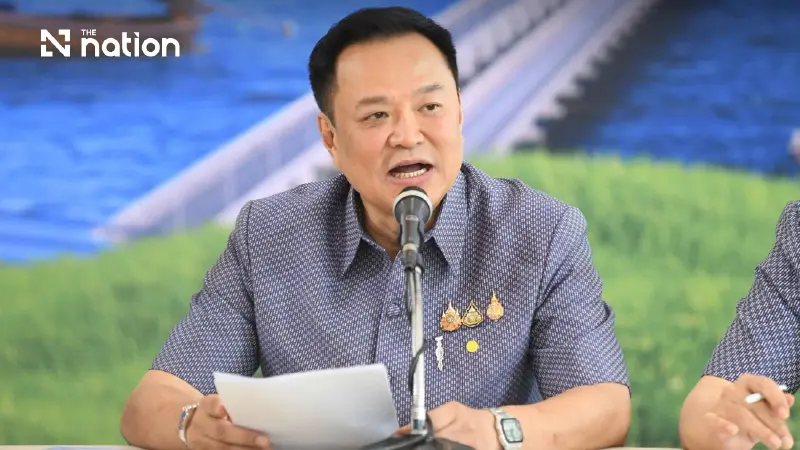
Prime Minister and Interior Minister Anutin Charnvirakul announced the decisions on Tuesday (September 1, 2026) after a mobile Cabinet meeting at the 60th Anniversary of His Majesty the King's Accession to the Throne International Convention Center at Prince of Songkla University's Hat Yai campus in Songkhla.
Anutin said the Cabinet had approved several major measures, including the establishment of a national disaster insurance system and infrastructure investment projects.
Among the most significant was the second phase of the double-track railway programme, with three southern sections approved for construction at a combined cost of THB106.798 billion.
The routes are Chumphon–Surat Thani, Surat Thani–Hat Yai Junction and Hat Yai Junction–Padang Besar.
Anutin also instructed the Office of the National Economic and Social Development Council (NESDC) to accelerate a study into extending rail connectivity from Hat Yai Junction to Sungai Kolok district, with the aim of completing the southern rail network and improving connections in line with government policy.
Three southern routes approved for construction

Deputy government spokeswoman Ploytalay Rasmeesangchan said the Cabinet had approved a Transport Ministry proposal concerning six projects under the second phase of Thailand's double-track railway development programme.
Three southern projects were authorised to proceed immediately through the State Railway of Thailand (SRT), with the government bearing the full cost.
The Budget Bureau will allocate funding through annual budgets, while the Finance Ministry will arrange domestic borrowing and government guarantees as appropriate.
The three approved projects are:
- Chumphon–Surat Thani: THB36.89232 billion, with a seven-year implementation period from fiscal 2026 to 2032.
- Surat Thani–Hat Yai Junction: THB61.53455 billion, with an eight-year implementation period from fiscal 2026 to 2033.
- Hat Yai Junction–Padang Besar: THB8.37145 billion, with a six-year implementation period from fiscal 2026 to 2031.
The government expects the projects to strengthen the southern transport network and support economic activity in the region.
Costs rise after design and flood-protection revisions

The Transport Ministry said the SRT had needed to revise the three southern projects to manage volatile construction costs and ensure they met required standards.
Changes included modifications to railway construction designs and solutions for level crossings and other crossing points to better suit current conditions.
The designs were also revised to incorporate infrastructure intended to reduce flood risks following flooding in southern Thailand.
Construction estimates were updated to reflect higher material and diesel prices, which the ministry attributed partly to conflict in the Middle East.
Land-acquisition costs and compensation for buildings, crops and trees were also revised to current valuations.
The proposed construction-supervision budget was increased from 2.25% to 2.75% of construction costs.
These changes raised the cost of the Chumphon–Surat Thani project from the THB30.42253 billion proposed to the Cabinet in 2025 to THB36.89232 billion, an increase of THB6.46979 billion.
The Hat Yai Junction–Padang Besar section rose from THB7.77290 billion to THB8.37145 billion, an increase of THB598.55 million.
Hat Yai–Songkhla section postponed
The Surat Thani–Hat Yai Junction–Songkhla project had previously been estimated at THB66.27051 billion. Following the revisions, the cost rose by THB11.18646 billion to THB77.55697 billion.
To prevent the overall budget from becoming too high and affecting the construction timetable, the SRT decided to proceed initially only with the Surat Thani–Hat Yai Junction section, valued at THB61.53455 billion.
Construction of the Hat Yai Junction–Songkhla section, estimated at THB15.92242 billion, will be postponed until encroachers have been removed from the railway's land.
Three more double-track projects receive in-principle approval
The Cabinet also approved in principle three other projects under the second phase of the double-track railway programme:
- Pak Nam Pho–Den Chai
- Den Chai–Chiang Mai
- Thanon Chira Junction–Ubon Ratchathani
The SRT was instructed to review the feasibility of the projects and prepare stronger marketing strategies and business plans in line with observations from the NESDC.
Authorities assessed that existing passenger and freight projections could be lower than previously forecast and might no longer reflect current conditions.
The SRT must therefore update the relevant information before submitting the three projects to the Cabinet for final approval.
Songkhla Lake and Koh Lanta bridges move ahead
Anutin said the government was also advancing the Songkhla Lake bridge and Koh Lanta bridge projects.
He recently witnessed the formal start of implementation involving the Department of Rural Roads under the Transport Ministry and the contractors responsible for the projects.
The Koh Lanta bridge will connect the Krabi mainland with Koh Lanta Noi. Koh Lanta Noi and Koh Lanta Yai are already linked by a bridge, meaning the new connection will eventually allow residents and tourists to travel between the mainland and the islands by car or motorcycle instead of relying on boats.
The Songkhla Lake bridge will connect Songkhla and Phatthalung provinces.
The project is expected to cut travel time between the two areas from about 90 minutes to around 20 minutes.
The government expects the route to reduce household, freight and travel costs while improving economic and tourism connections between the two provinces.
