
PM Anutin says Japanese firms will keep investing in Thailand
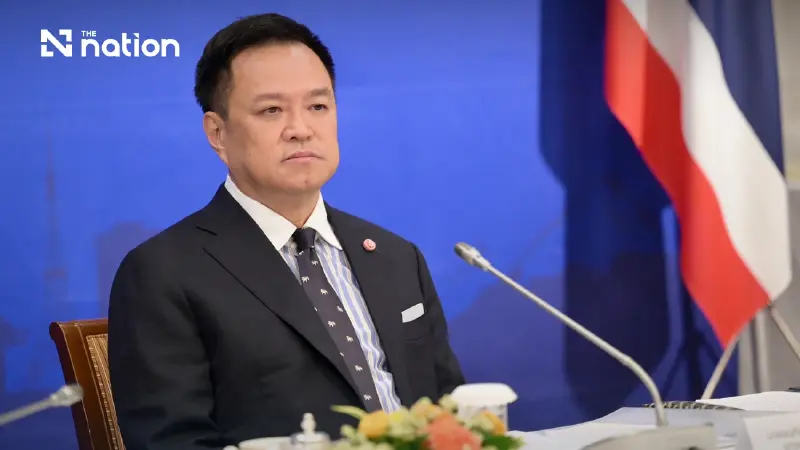


PM Anutin rejects reports of a full Japanese manufacturing withdrawal from Thailand, highlighting electric vehicles and clean energy cooperation.
Prime Minister and Interior Minister Anutin Charnvirakul has expressed confidence that Japanese companies will continue investing in Thailand, rejecting reports of a complete manufacturing withdrawal and highlighting opportunities in electric vehicles and clean energy.
Anutin said Japan’s ambassador to Thailand had dismissed reports that Japanese manufacturers were planning to move all their production out of the country during an earlier discussion between the two. He acknowledged that Japanese investment might have slowed or changed in character, but said this should be viewed against Thailand’s evolving economy.
He was speaking at a meeting of “Team Thailand”, comprising Thai diplomatic representatives and government agencies in Japan, at the Imperial Hotel in Tokyo on Monday (September 21, 2026). The meeting addressed foreign policy priorities, closer Thai-Japanese relations and coordination among Thai agencies ahead of his onward journey to New York for the 81st session of the United Nations General Assembly.
Participants included Deputy Prime Minister and Commerce Minister Suphajee Suthumpun, Foreign Ministry representatives, Thailand’s ambassador to Japan, the Thai consuls-general in Osaka and Fukuoka, and representatives of other relevant agencies.
Anutin said the information presented by Thailand’s ambassador on various aspects of bilateral relations would be considered in the government’s policymaking.

Investment changes reflect Thailand’s evolving economy
Anutin described Thailand and Japan as friendly countries with close relations. Although Japanese investment might no longer match the scale seen in the past, he said Thailand had developed greater capabilities and reduced its dependence on Japan in several areas.
Thailand could now produce a number of raw materials domestically that it previously had to import, he said.
He cited the automotive industry’s transition from internal combustion engines to electric vehicles (EVs), alongside increasing competition in the EV market, particularly from Chinese manufacturers.
Anutin also said Thailand’s trade deficit with Japan had fallen from tens of billions of baht to approximately THB6 billion, although the supplied account did not specify the periods being compared.

Clean energy offers scope for cooperation
Japan’s focus on clean-energy industries aligns with Thailand’s efforts to advance its own energy transition, Anutin said.
He pointed to the government’s enactment of a 2026 emergency decree authorising the Finance Ministry to borrow funds to address the effects of the energy crisis and support the country’s energy transition.
Thailand remained secure in its energy supplies, he said, although oil prices were a concern that required close monitoring.
Anutin also identified action against scam networks as a shared priority for Thailand and Japan. He said suspicious financial transactions had become more difficult to carry out in Thailand and described the country’s transaction-monitoring standards as credible.
Thailand’s geographical advantages, together with the two countries’ familiarity and close relationship, would help sustain Japanese cooperation and investment, he added.
Anutin denies Cabinet links to illegal businesses
Anutin said his government remained committed to tackling scam networks, illegal businesses and all forms of drug-related crime, continuing work begun under his first administration.
Referring to three months of operations under his previous government and seven months under the current administration, he said assets worth more than THB20 billion had been seized from scam networks.
He insisted that no one in his government profited from such activities and that no Cabinet member had ties to so-called “grey” businesses or illegal enterprises of any kind. There was therefore no reason for the government to compromise with lawbreakers, he said.
Political stability cited in investment assurances
Anutin said the government was continuing to improve standards and strengthen its measures, pointing to a revision of Thailand’s credit outlook from negative to stable as evidence of greater international confidence.
He referred to assessments by Fitch Ratings, S&P and Moody’s. According to the government’s September 19 announcement, Fitch revised Thailand’s outlook to stable while affirming its BBB+ sovereign rating, effective September 18. The announcement said all three agencies now assigned Thailand a stable outlook.
Anutin presented the ratings assessments as recognition of Thailand’s improving direction and its management standards.
“The government is highly stable, both in terms of parliamentary support and relations among coalition parties. The civil service and the armed forces are also working well together,” he said.
“Security and political stability are among the country’s strengths that we can highlight to reassure the Japanese government and the international community.”
Anutin said the government’s actions demonstrated Thailand’s determination to tackle crime and illegal activities.
He also acknowledged concerns about some Thai nationals overstaying their permitted periods of residence in Japan. Thailand was ready to cooperate with Japanese authorities, he said, adding that he had instructed the Royal Thai Police to take further action to prevent and address such offences.
