
Thailand extends use of Internal Security Act in 19 southern districts


The Cabinet approves another year of measures under the Internal Security Act in four southern border provinces to maintain public safety and continuity in local administration.
- The Thai Cabinet has approved a one-year extension of the Internal Security Act, effective from October 1, 2026, to September 30, 2027.
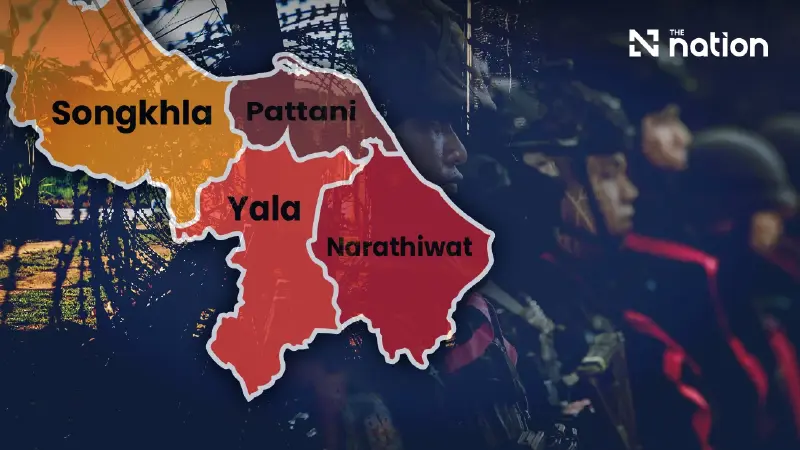
- The extension applies to 19 districts across the four southern border provinces of Narathiwat, Pattani, Yala, and Songkhla.
- This decision follows a security assessment which concluded that measures are still needed to protect residents from ongoing unrest and security risks.
- A survey of local residents indicated high support for the act, with over 75% in favor of its use and 70% not wanting the declaration lifted.
Thailand’s Cabinet has approved a one-year extension of the use of the Internal Security Act 2008 in 19 districts in four southern border provinces, Deputy Government Spokesperson Lalida Persvivatana announced on Tuesday (September 29, 2026).
The Cabinet acknowledged a security assessment and agreed to extend the designation of the districts as areas where incidents affecting internal security have occurred.
The extension runs from October 1 to September 30, 2027, to ensure continuity in local administration and public safety operations.

The 19 districts are:
- Narathiwat (three districts): Yi-ngo, Waeng and Sukhirin.
- Pattani (seven districts): Yaring, Panare, Mayo, Mai Kaen, Thung Yang Daeng, Kapho and Mae Lan.
- Yala (five districts): Betong, Yaha, Raman, Kabang and Krong Pinang.
- Songkhla (four districts): Na Thawi, Chana, Thepha and Saba Yoi.
Lalida explained that the extension covers the same 19 districts.
The Cabinet had agreed on April 11 to remove Su-ngai Kolok district in Narathiwat from the areas covered by the Act, reducing the total from 20 to 19.
This is the 22nd extension of the designation.
An assessment by the Internal Security Operations Command (ISOC) found that coordinated operations by local agencies, together with efforts to track down and arrest operatives involved in violence, had made it harder to carry out acts of violence.
However, activity and attempts to cause unrest continued in some areas, while lightly guarded targets remained at risk.
The assessment concluded that measures under the Internal Security Act were still needed to allow officials to continue protecting residents’ lives and property.
An assessment of local residents’ views on the use of the Internal Security Act reported an overall figure of 75.40%, described as high.
It also found that 70.36% did not want the declaration lifted, while 29.64% wanted it lifted.
The Cabinet also approved related draft announcements and regulations to ensure continued implementation of the Internal Security Act, including measures under Section 21.
People who committed offences out of misguided beliefs or without understanding the consequences may, if they repent and surrender, undergo court-ordered training as an alternative to the normal criminal justice process.
They must comply with conditions set by the court.
The aim is to give them an opportunity to reintegrate into society and support peace in the area.
Lalida explained that the Act applied to areas still experiencing security incidents where declaring a state of emergency was not yet necessary.
The government’s policy was to progressively reduce the areas covered by the Emergency Decree on Public Administration in Emergency Situations 2005, replacing measures under the decree with legal measures suited to the security situation so that the areas could gradually return to normal administration.
“The government will continue to assess the situation in each area, prioritising public safety while using legal measures only as necessary and appropriate to the circumstances. The aim is to scale back security measures and return areas to normal administration when conditions allow, while continuing to build peace and public confidence in the southern border provinces,” Lalida said.
