
PM Anutin Champions Global Trade and Private Sector Collaboration as Thai Economy Records Strong Growth
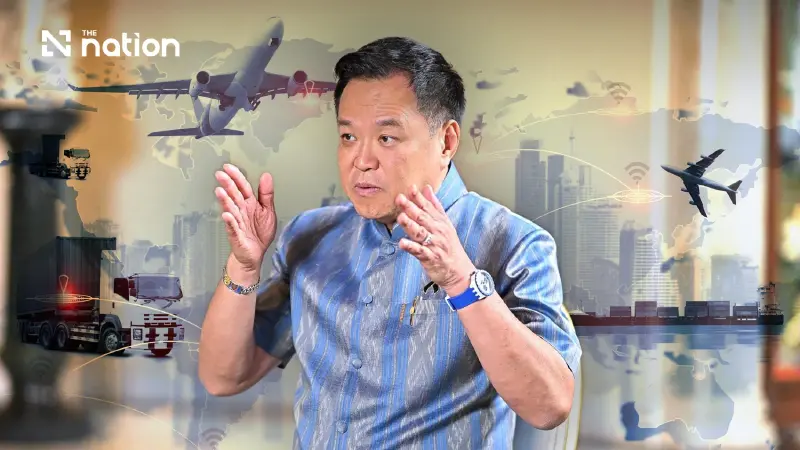


Prime Minister Anutin Charnvirakul outlines robust economic expansion, citing a 30 per cent investment surge and growing global partnerships
- Thailand's economy has recorded strong growth, evidenced by a 30% surge in private investment and a 25% increase in exports in the first half of the year.
- Prime Minister Anutin is expanding global trade through strategic international engagements to position Thailand as a trusted economic partner and a pillar of regional food security.
- The government is actively collaborating with the private sector by establishing joint economic committees to streamline business regulations and remove administrative bottlenecks.
Prime Minister Anutin Charnvirakul outlines robust economic expansion, citing a 30 per cent investment surge and growing global partnerships.
Prime Minister Anutin Charnvirakul has reaffirmed his administration's commitment to positioning Thailand prominently on the global stage, pledging to expand international trade partnerships, streamline business regulations, and work closely with the private sector to accelerate national economic growth.
Speaking during the television broadcast "Talking with the Cabinet: Anutin" on Saturday, 24 October 2026, the Prime Minister highlighted positive economic indicators for the first half of the year, reporting an approximate 30 per cent increase in private investment compared to the previous year, alongside export growth approaching 25 per cent, which peaked during August.
Anutin stressed that his government’s foreign engagements are structured around clear strategic objectives rather than diplomatic formality. By meeting international leaders, Thailand aims to reinforce its position not merely as a commercial exporter but as a trusted economic partner and a pillar of regional food security.
Addressing critics of government travel, the Prime Minister maintained that proactive international diplomacy is vital for securing long-term economic agreements and fostering sustainable bilateral relations, bolstered by the collaborative efforts of "Team Thailand".

On the domestic front, the Prime Minister pointed to Thailand’s successful hosting of the 2026 IMF–World Bank Group Annual Meetings as a testament to the nation's infrastructural readiness, security standards, and organisational capacity.
Welcoming delegates from over 190 countries, the event underscored Thailand's potential as a premier hub for international conferences and the MICE (Meetings, Incentives, Conferences, and Exhibitions) sector, overseen by the Thailand Convention and Exhibition Bureau (TCEB).
To maintain this economic momentum, the government has established dedicated economic committees alongside private sector leaders to identify and dismantle regulatory bottlenecks, cut administrative red tape, and reduce compliance timelines, thereby fostering a more agile business and investment climate.
A Collaborative Cabinet Model
Addressing questions regarding internal political stability, Anutin defended the composition of his administration, which blends seasoned career civil servants, private sector executives, and political representatives.
The Prime Minister praised the expertise of key non-political cabinet ministers, including veteran diplomat Sihasak Phuangketkeow, former Council of State Secretary-General Pakorn Nilprapan, financial expert Ekniti Nitithanprapas, corporate executive Suphajee Suthumpun, and Defence Minister General Adul Boonthumcharoen.
He emphasised that their specialised technical expertise, combined with grassroots political insight from parliamentary members, creates an effective governance framework.
"Today, as Prime Minister, I cannot think of politics first; I must think of the country first," Anutin stated, emphasising his focus on building a secure, stable, and unified foundation for Thailand's future.
In closing, the Prime Minister commended the dedication of the civil service in co-developing impactful public policies, such as the "Khon La Khrueng" and "Thai Chuay Thai Plus" initiatives, urging public confidence as the administration continues working to raise citizen incomes and overall living standards.
